

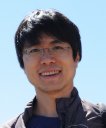
 Ruoming Pang
· 4 previous affiliations
- Meta (United States)Since 2025
- Researcher · Since 2025
- Apple (United States)2021–2025
- Researcher · 2021–2025
- Google (United States)2006–2021
- Researcher · 2006–2021
- Princeton University2000–2006
- PhD student · 2000–2006
Research Overview
Ruoming Pang focuses on end-to-end speech processing, distributed systems for large-scale machine learning, and the optimization of foundation models. His early work advanced text-to-speech synthesis and unified streaming architectures for automatic speech recognition. More recently, he investigates efficient scaling strategies, including mixture-of-experts architectures, reinforcement learning frameworks, and inference-time compute methods for large language models.
Research Trajectory
Pang's early trajectory spans foundational systems engineering and end-to-end speech processing. In 2018, he introduced Tacotron 2 in Natural TTS Synthesis by Conditioning Wavenet on MEL Spectrogram Predictions, a sequence-to-sequence architecture that combined mel spectrogram predictions with a modified WaveNet vocoder to generate highly natural speech. Alongside this focus on audio, he contributed to mobile-optimized architectures in MnasNet: Platform-Aware Neural Architecture Search for Mobile., which directly incorporated real-world hardware latency into the search objective to balance accuracy and inference speed. He also developed large-scale distributed infrastructure, detailing a globally consistent authorization system in Zanzibar: Google's Consistent, Global Authorization System.
Returning to speech recognition, he advanced the research direction of Cascaded Architectures for Unified Streaming and Non-Streaming Speech Recognition with Cascaded Encoders for Unifying Streaming and Non-Streaming ASR. This work proposed a model where input features pass through a streaming encoder before reaching a non-streaming encoder, allowing a single decoder to operate in either mode simultaneously. He further explored self-supervised speech pre-training in w2v-BERT: Combining Contrastive Learning and Masked Language Modeling for Self-Supervised Speech Pre-Training. In parallel, he contributed to the area of Factorizing Speech into Content Timbre and Prosody by developing Unsupervised Learning of Disentangled Speech Content and Style Representation, which utilized discrete vector quantization and mutual information minimization to separate spoken content from speaker identity without manual labels.
In recent years, Pang's focus shifted toward the architectural optimization and distributed training of large language models (LLMs). He addressed the evaluation of sparse models in Revisiting MoE and Dense Speed-Accuracy Comparisons for LLM Training, demonstrating that Mixture-of-Experts (MoE) models significantly outperform dense counterparts when measured by actual wall-clock step time rather than theoretical FLOPs. Continuing in the broader area of Memory Efficient Inference for Mixture of Experts Models, he introduced MC-Suite in Finding Fantastic Experts in MoEs: A Unified Study for Expert Dropping Strategies and Observations, an iterative pruning framework that allows for high expert sparsity while restoring instruction-following capabilities through fine-tuning.
To support the training of these massive models, he detailed a production-grade, modular training system in AXLearn: Modular Large Model Training on Heterogeneous Infrastructure, which enforces strict encapsulation to manage complexity across diverse hardware accelerators like GPUs and TPUs. He also addressed the challenges of applying reinforcement learning to LLMs at scale in RLAX: Large-Scale, Distributed Reinforcement Learning for Large Language Models on TPUs. This systems and modeling expertise culminated in the architectural design of generative engines, as detailed in Apple Intelligence Foundation Language Models: Tech Report 2025, which outlines both a highly optimized on-device model and a larger Parallel-Track MoE server model. Additionally, he proposed memory-efficient attention mechanisms in RATTENTION: Towards the Minimal Sliding Window Size in Local-Global Attention Models, combining Sliding Window Attention with Residual Linear Attention to drastically reduce inference overhead.
Pang's most recent work explores novel scaling paradigms, multimodal integration, and conversational dynamics. He contributed to the research direction of Unified Architectures for Real-Time Spoken Dialogue by evaluating how well audio foundation models handle human turn-taking in Talking Turns: Benchmarking Audio Foundation Models on Turn-Taking Dynamics. He also participated in the development of MANZANO: A Simple and Scalable Unified Multimodal Model with a Hybrid Vision Tokenizer, which bridges continuous and discrete visual representations to achieve high performance across image understanding and generation tasks.
Addressing the limits of traditional scaling, he explored the area of Sequential Monte Carlo for Inference-Time Scaling in Step-by-Step Reasoning for Math Problems via Twisted Sequential Monte Carlo, using a learned value function to guide LLM generation through complex reasoning paths. He further investigated inference-time compute in Reusing Pre-Training Data at Test Time is a Compute Multiplier, demonstrating that models can reclaim significant knowledge by accessing their training corpora during inference. Finally, to overcome the impending exhaustion of high-quality human text, he directed research on Synthetic Bootstrapped Pretraining, a method that trains models to understand document relationships and generate massive synthetic datasets to drive further performance gains.
Current Directions
The most recent papers in the evidence address the limits of traditional model scaling by shifting focus toward inference-time compute and synthetic data generation. Recent work investigates how large language models can reclaim latent knowledge by accessing pre-training data during inference, alongside sequential Monte Carlo methods that dynamically allocate compute to complex reasoning steps. Additionally, ongoing research involves bootstrapping massive synthetic corpora to overcome the exhaustion of human-generated text, as well as refining unified multimodal architectures that bridge continuous and discrete visual representations for seamless image and text generation.
Profile updated
Loading new papers…
Other researchers whose papers cluster into the same research directions — a proxy for overlapping technical interests and shared intellectual neighborhoods.
See something wrong? Report a mistake