

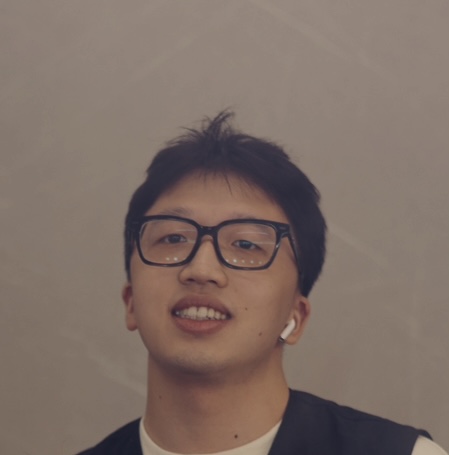
 Ruixiang Xue
· 3 previous affiliations
- Nanjing UniversitySince 2021
- MS student · 2021–2027
- PhD student · Since 2023
- OPPO2024
- 研究实习生 · 2024
- Hangzhou Dianzi University2017–2021
- Undergrad student · 2017–2021
Research Overview
Ruixiang Xue focuses on 3D point cloud compression, implicit neural representations, and deep learning for unstructured spatial data. Early work addressed the limitations of convolutional representations for sparse LiDAR geometry by integrating attention mechanisms and neighborhood selection. More recently, this trajectory has expanded to encompass versatile multiscale conditional coding frameworks for both static and dynamic point cloud attributes and geometry.
Research Trajectory
Xue's research initially concentrated on the inefficiencies of applying standard convolutional networks to sparse, irregularly distributed 3D data. In 2022, as a first author, Xue contributed to the area of Deep Learning on Unstructured 3D Point Clouds by identifying that the fixed receptive fields of traditional convolutions struggle to characterize uneven LiDAR points. To resolve this, Xue proposed Efficient LiDAR Point Cloud Geometry Compression Through Neighborhood Point Attention. This work introduced a neighborhood point attention mechanism designed to dynamically capture local geometric contexts, directly engaging with the research direction of Adaptive Neighborhood Selection for Non-Uniform Data.
Building on this foundation, Xue extended these concepts in Efficient Point Cloud Geometry Compression Through Neighborhood Point Transformer. This first-author paper introduced the NPFormer architecture, which combined the strengths of both convolution and attention mechanisms to better exploit cross-scale and same-scale correlations in point cloud geometry (PCG). This approach aligned with the broader theme of Sparse Spatial Attention for Efficient 3D Perception, mitigating the computational challenges of processing millions of points by focusing attention selectively.
By 2024, Xue's focus evolved to include implicit neural representations (INRs) and geometry restoration for compressed data. In NeRI: Implicit Neural Representation of LiDAR Point Cloud Using Range Image Sequence, Xue led the development of an INR-based compressor that transforms 3D LiDAR frames into 2D range image sequences over time. By optimizing a neural network conditioned on temporal frame indices and sensor poses, the network parameters themselves act as a lossily compressed representation of the LiDAR data. Concurrently, Xue contributed as a second author to GRNet:Geometry Restoration for G-PCC Compressed Point Clouds Using Auxiliary Density Signaling. This research analyzed the specific distortions—namely point vanishing and point displacement—introduced by standard Geometry-based Point Cloud Compression (G-PCC) and proposed a restoration network guided by local point density.
In 2025, Xue co-authored a comprehensive two-part study introducing "Unicorn," a universal multiscale conditional coding framework. A Versatile Point Cloud Compressor Using Universal Multiscale Conditional Coding - Part I: Geometry detailed the construction of multiscale sparse tensors for voxelized frames, leveraging lower-scale priors from current and temporal reference frames to improve the predictive reconstruction of geometry occupancy. The companion paper, A Versatile Point Cloud Compressor Using Universal Multiscale Conditional Coding - Part II: Attribute, adapted the framework to handle the distinct intrinsic characteristics of point cloud attributes, such as 8-bit RGB color versus 1-bit occupancy. Together, these works represent a significant step toward unified, learning-based compression solutions for diverse 3D data sources, intersecting with the broader field of Parallelizing Autoregressive Entropy Models in Neural Compression.
Current Directions
The most recent papers in the evidence indicate a sustained focus on universal, learning-based compression frameworks capable of handling both static and dynamic point clouds. Current work investigates multiscale conditional coding techniques that jointly optimize the compression of spatial geometry and complex attributes (such as color and reflectance). Additionally, the exploration of implicit neural representations for sequential LiDAR data suggests an ongoing interest in decoupling 3D spatial-temporal information into highly compressible neural parameters, moving beyond traditional voxel- or point-based codecs toward end-to-end neural compression architectures.
Profile updated
Loading new papers…
Loading research neighbors…
See something wrong? Report a mistake