

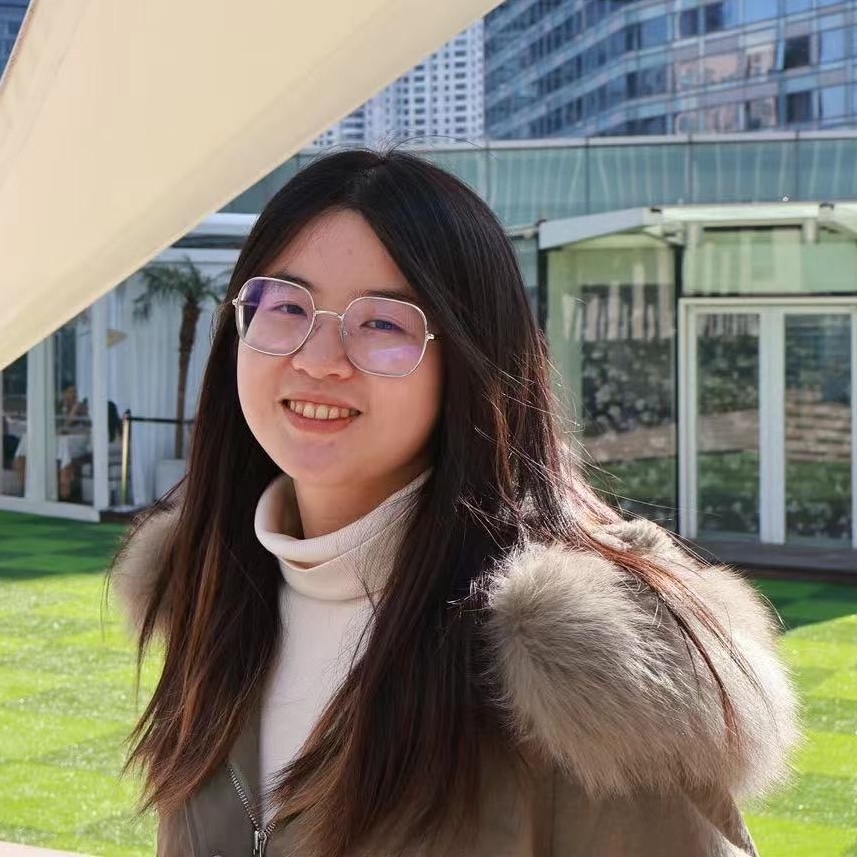
 Ruisi Zhang
· 2 previous affiliations
- Current
- PhD student · 2021–2026
- Shanghai Jiao Tong University2017–2021
- Undergrad student · 2017–2021
Research Overview
Ruisi Zhang focuses on large language model efficiency, algorithm-system co-design, and the security of scalable artificial intelligence applications. His trajectory spans distributed training acceleration, robust federated learning, and intellectual property protection for generative models. Recently, his work emphasizes cryptographic and hardware-software co-design techniques to enable verifiable, privacy-preserving inference for billion-scale models deployed on edge devices.
Research Trajectory
Zhang’s early research investigated privacy risks and vulnerabilities in natural language processing models. In 2022, he introduced Text Revealer: Private Text Reconstruction via Model Inversion Attacks against Transformers, exploring adversarial optimization in discrete token spaces to demonstrate how popular transformer architectures are susceptible to data extraction. Expanding into distributed systems and hardware-software co-design, he developed methods for accelerating the training of large-scale graph neural networks, presenting AdaGL: Adaptive Learning for Agile Distributed Training of Gigantic GNNs. Concurrently, he contributed to the area of Securing Decentralized Learning Against Colluding Malicious Majorities through his collaborative work on SABRE: Robust Bayesian Peer-to-Peer Federated Learning. This framework addressed vulnerabilities in peer-to-peer networks by utilizing variational Bayesian methods to maintain robustness in non-IID settings without requiring a benign majority, touching on the broader research direction of Stealthy Parameter Space Embedding in Deep Neural Networks. To synthesize the growing intersection of these fields, he also authored Systemization of Knowledge: Robust Deep Learning using Hardware-software co-design in Centralized and Federated Settings.
In 2024, Zhang’s research broadened to encompass complex combinatorial optimization and the intellectual property (IP) protection of generative models. Guiding the research as the principal investigator, he oversaw the development of Distributed constrained combinatorial optimization leveraging hypergraph neural networks, a framework named HypOp that utilizes hypergraph neural networks and simulated annealing fine-tuning to solve high-dimensional optimization tasks with higher-order constraints. Simultaneously, he established a strong focus on the research direction of Robust Watermarking for AI Intellectual Property Protection. He outlined the foundational challenges of this domain in Watermarking Large Language Models and the Generated Content: Opportunities and Challenges and developed concrete solutions such as REMARK-LLM: A Robust and Efficient Watermarking Framework for Generative Large Language Models. He also adapted these techniques for resource-constrained environments, introducing EmMark: Robust Watermarks for IP Protection of Embedded Quantized Large Language Models. Furthering the sophistication of these techniques, he collaborated on Token-Specific Watermarking with Enhanced Detectability and Semantic Coherence for Large Language Models, which dynamically adjusts watermarking parameters using multi-objective optimization to preserve text quality.
Moving into 2025, Zhang increasingly integrated cryptographic primitives with machine learning systems to ensure verifiable and secure AI. He introduced the RoSeMary framework in Robust and Secure Code Watermarking for Large Language Models via ML/Crypto Codesign, which combines deep learning models like CodeT5 with Zero-Knowledge Proofs (ZKPs) to verify model authorship without revealing secret signatures. This work advanced the specific research areas of Semantic Preserving Transformations for Code Watermarking and Watermarking and Detection for Low-Entropy Source Code. He further explored hardware-software co-design for secure inference, contributing to the area of Efficient Private Inference via Non-linear Operator Optimization through his work on Optimizing Privacy-Preserving Primitives to Support LLM-Scale Applications. This research demonstrated how techniques like 1-bit quantization and automated circuit optimization can bridge the practicality gap for secure LLM inference.
Addressing the deployment of massive models on edge devices, Zhang developed AttestLLM: Efficient Attestation Framework for Billion-scale On-device LLMs, combining layer-wise watermarking with Trusted Execution Environment (TEE) protocols to ensure only authorized models execute on local hardware. His IP protection research also extended beyond language models to hardware design itself, as seen in ICMarks: A Robust Watermarking Framework for Integrated Circuit Physical Design IP Protection. Most recently, in 2026, he returned to decentralized security with SureFED: Robust Federated Learning via Uncertainty-Aware Inward and Outward Inspection, a framework that utilizes Bayesian models and local introspection to defend against stealthy, colluding poisoning attacks in federated networks. Zhang also collaborated on automated hardware verification in RTLDetective: Agentic RTL Debugging through Dataflow Analysis and Simulation-Guided Fault Localization, a multi-agent framework that pairs signal dependency analysis with simulation-guided fault localization and hardware design knowledge to isolate and repair RTL bugs.
Current Directions
The most recent papers in the evidence indicate a strong focus on verifiable machine learning, cryptographic co-design, and the secure deployment of large-scale models. Recent work investigates the intersection of machine learning and cryptography, utilizing Zero-Knowledge Proofs and Trusted Execution Environments to create robust attestation frameworks for billion-parameter models on edge devices. This includes developing techniques for functionality-preserving watermarks in low-entropy domains, such as source code generation and integrated circuit physical design. Additionally, ongoing research addresses the scalability of privacy-preserving primitives through algorithm-system co-design, alongside continued efforts to secure federated learning environments against sophisticated poisoning attacks using uncertainty-aware introspection.
Profile updated
Loading new papers…
Other researchers whose papers cluster into the same research directions — a proxy for overlapping technical interests and shared intellectual neighborhoods.
See something wrong? Report a mistake