

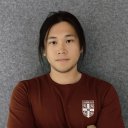
 RuiKang OuYang
· 3 previous affiliations
- University of CambridgeSince 2023
- PhD student · Since 2025
- Research Assistant · 2024–2025
- MPhil student · 2023–2024
- Harbin Institute of Technology2019–2023
- Undergrad student · 2019–2023
- Visiting student · 2022
Research Overview
RuiKang OuYang focuses on probabilistic machine learning, generative modeling, and the development of advanced sampling methods for scientific applications. His trajectory spans from scalable graph representation learning to the design of highly efficient neural samplers and energy-based models. Currently, his work addresses the computational challenges of molecular generation and physics-informed training through diffusion models and stochastic interpolants.
Research Trajectory
OuYang’s early research addressed scalability challenges in graph representation learning, a critical tool for analyzing real-world networks. In 2023, he introduced L2G2G: A Scalable Local-to-Global Network Embedding with Graph Autoencoders, a method designed to improve the speed and accuracy of graph autoencoders. By combining graph patch embeddings based on eigenvector synchronization, this work provided a more efficient foundation for generating low-dimensional representations used in downstream tasks such as node classification and edge prediction.
By 2025, his research transitioned deeply into probabilistic machine learning, focusing on the design of neural samplers and energy-based models for applications in molecular dynamics and physics. A major theme of this period involves the fundamental problem of drawing samples from distributions where the density is known only up to a normalization constant. With collaborators, he investigated the heavy computational overhead caused by simulating trajectories during model training in No Trick, No Treat: Pursuits and Challenges Towards Simulation-free Training of Neural Samplers. This work proposed modifications utilizing time-dependent mechanisms to enable simulation-free training procedures, contributing to the broader research area of The Computational Bottleneck of Physics-Informed Training.
Building on the need for efficient sampling in complex physical systems, OuYang developed BNEM: A Boltzmann Sampler Based on Bootstrapped Noised Energy Matching. This approach improved upon existing diffusion-based methods by learning "noised energies" rather than scores, facilitating more robust and efficient generation of samples from complex Boltzmann distributions. In parallel, he contributed to Progressive Tempering Sampler with Diffusion, which bridged classical Markov Chain Monte Carlo (MCMC) techniques with modern neural samplers. By training diffusion models sequentially across a temperature schedule and employing a novel temperature guidance mechanism to extrapolate samples from high to low temperatures, this method achieved high sampling quality with orders-of-magnitude fewer target density evaluations. This work advanced several key research directions, including Tempered Sampling for Multimodal Distributions, Overcoming the MCMC Sampling Bottleneck in Energy Models, and the critical challenge of Overcoming Local Mode Entrapment in Multimodal Sampling.
Moving into 2026, OuYang’s focus expanded to refining the objective functions and flow maps underlying energy-based generative models. He introduced A Diffusive Classification Loss for Learning Energy-based Generative Models, proposing the DiffCLF objective to overcome the "mode blindness" often encountered in traditional score-matching methods. By reframing the learning process as a classification problem across varying noise levels, this approach enabled more accurate energy estimation for downstream tasks like compositional sampling and Boltzmann Generator training. Continuing this trajectory toward scalable and accurate generation in the sciences, he developed Few-Step Boltzmann Generators via Scalable Likelihood Flow Maps. This work presented SCALLOP, a method designed to efficiently generate high-quality samples while accurately estimating their likelihoods. By overcoming the high variance and computational bottlenecks of previous approaches, SCALLOP demonstrated significant improvements in training and inference speeds for molecular science and image generation.
Current Directions
The most recent papers in the evidence indicate a strong focus on optimizing generative models for scientific applications, particularly in molecular modeling and physics. Recent work investigates the refinement of energy-based models and Boltzmann generators to achieve both high-quality sampling and accurate likelihood estimation with minimal computational steps. By addressing fundamental issues like mode blindness and the high variance of traditional flow-based methods, these current directions aim to make sophisticated probabilistic modeling more scalable and reliable for complex, high-dimensional physical systems.
Profile updated
Loading new papers…
Other researchers whose papers cluster into the same research directions — a proxy for overlapping technical interests and shared intellectual neighborhoods.
See something wrong? Report a mistake