

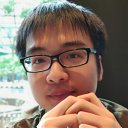
 Ruihong Qiu
· 1 previous affiliation
- The University of QueenslandSince 2019
- Assistant Professor · Since 2024
- Current
- Postdoc · 2022–2024
- PhD student · 2019–2022
Research Overview
Ruihong Qiu focuses on data science and machine learning, specifically developing graph neural networks, sequential recommender systems, and methods for legal case retrieval. His trajectory spans from foundational work in session-based recommendation to continual graph learning and text-attributed graph modeling. Currently, his research addresses out-of-distribution detection, graph foundation models, and reinforcement learning techniques for large language models.
Research Trajectory
Qiu’s early work focused on improving session-based recommender systems by moving beyond simple sequential modeling. He introduced methods to capture complex item transitions by constructing session graphs, as detailed in Rethinking the Item Order in Session-based Recommendation with Graph Neural Networks. Recognizing that real-world e-commerce and social media platforms generate data continuously, he subsequently developed GAG: Global Attributed Graph Neural Network for Streaming Session-based Recommendation to handle streaming scenarios where retraining over entire datasets is computationally infeasible. To address the limitations of analyzing anonymous sessions in isolation, he proposed Exploiting Cross-session Information for Session-based Recommendation with Graph Neural Networks. This work contributed to the broader research direction of Global Transition Graphs for Sequential Recommendation and advanced techniques in the area of Edge Weighted Message Passing in Graph Neural Networks.
Continuing his focus on sequential recommendation, Qiu investigated how to better capture user intent and overcome sparse supervision signals. In Memory Augmented Multi-Instance Contrastive Predictive Coding for Sequential Recommendation, he designed a memory-augmented framework to improve long-term preference modeling. He also explored the internal dynamics of user sessions, identifying how local shifts in intention occur between early and late interactions in Exploiting Positional Information for Session-Based Recommendation. Concurrently, he analyzed the representation degeneration problem in sequential models—where item embeddings collapse into anisotropic shapes—and proposed a contrastive regularization approach in Contrastive Learning for Representation Degeneration Problem in Sequential Recommendation. Exploring the theoretical scaling properties of these systems, he introduced Beyond Double Ascent via Recurrent Neural Tangent Kernel in Sequential Recommendation, leveraging infinite-width neural networks to achieve high performance without computationally expensive training.
As graph neural networks scaled, Qiu’s research expanded into continual learning and graph condensation to manage evolving data streams efficiently. He developed PUMA: Efficient Continual Graph Learning with Graph Condensation, a framework that mitigates catastrophic forgetting by condensing massive incoming graphs into highly informative synthetic versions, contributing significantly to the area of Continual Graph Learning for Evolving Data Streams. Recognizing the need for standardized evaluation in this emerging subfield, he co-authored GCondenser: Benchmarking Graph Condensation, providing a comprehensive pipeline to assess the efficiency and transferability of condensed graphs.
Parallel to his work on graph efficiency, Qiu applied GNNs to complex, text-rich domains, particularly legal case retrieval. This work directly addresses the research direction of Bridging the Gap Between Semantic Similarity and Legal Relevance. In CaseGNN: Graph Neural Networks for Legal Case Retrieval with Text-Attributed Graphs, he modeled legal documents as text-attributed case graphs to bypass the token limits of standard Transformers and capture structural nuances. He extended this paradigm to handle unseen queries and candidate cases in CaseLink: Inductive Graph Learning for Legal Case Retrieval. Further integrating the semantic capabilities of large language models with the structural precision of GNNs, he developed the LEXA framework in CaseGNN++: Graph Contrastive Learning for Legal Case Retrieval with Graph Augmentation.
In recent years, Qiu’s trajectory has incorporated reinforcement learning and out-of-distribution (OOD) detection to build more robust and adaptable models. For recommender systems, he introduced a dynamic reward mechanism in DARLR: Dual-Agent Offline Reinforcement Learning for Recommender Systems with Dynamic Reward. His team also tackled unsupervised accuracy estimation for deployed models with ALSA: Anchors in Logit Space for Out-of-Distribution Accuracy Estimation, mapping logit variations to correctness probabilities without requiring labeled target data. Collaborating on the adaptation of foundation models, he contributed to Break the Block: Dynamic-size Reasoning Blocks for Diffusion Large Language Models via Monotonic Entropy Descent with Reinforcement Learning, which improves reasoning coherence in diffusion LLMs. In the graph domain, he co-authored GFMate: Empowering Graph Foundation Models with Test-time Prompt Tuning to adapt models to unseen domains efficiently, and What Information Matters? Graph Out-of-Distribution Detection via Tri-Component Information Decomposition, which separates graph data into specific components to filter out spurious noise and improve OOD detection.
Current Directions
Recent work investigates the robustness and adaptability of foundation models across both graph and language domains. A primary focus is on out-of-distribution (OOD) detection and test-time adaptation, exploring how models can reliably estimate their own accuracy on unlabeled data or adapt to unseen domains using prompt tuning and information decomposition techniques. Additionally, current research addresses the integration of reinforcement learning into large language models and recommender systems, developing dynamic-size reasoning blocks for diffusion LLMs and dual-agent frameworks that refine reward estimations in offline recommendation environments.
Profile updated
Loading new papers…
Other researchers whose papers cluster into the same research directions — a proxy for overlapping technical interests and shared intellectual neighborhoods.
See something wrong? Report a mistake