

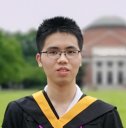
 Ruichen Jiang
· 2 previous affiliations
- The University of Texas at AustinSince 2020
- PhD student · Since 2020
- Tsinghua University2016–2020
- Undergrad student · 2016–2020
Research Overview
Ruichen Jiang focuses on convex and non-convex optimization, with a particular emphasis on using online learning techniques to design efficient optimization methods. His trajectory spans the development of second-order algorithms, min-max optimization frameworks, and bilevel optimization strategies. Recently, his work investigates parameter-free optimization and online-to-nonconvex conversion techniques for complex loss landscapes.
Research Trajectory
Jiang’s early published work establishes a foundation in complex optimization landscapes, particularly saddle point and bilevel problems. In 2023, he proposed a generalized framework encompassing the optimistic gradient method in Generalized Optimistic Methods for Convex-Concave Saddle Point Problems. This work provided a structured approach to handling constrained saddle point problems with composite objective functions. Transitioning to hierarchical optimization, he and his collaborators addressed the research direction of Optimization over the Solution Set of an Implicit Problem with A Conditional Gradient-based Method for Simple Bilevel Optimization with Convex Lower-level Problem. They introduced a method that locally approximates the lower-level solution set via a cutting plane, followed by a conditional gradient update to decrease the upper-level objective. He continued this focus on bilevel optimization the following year with An Accelerated Gradient Method for Simple Bilevel Optimization with Convex Lower-level Problem, introducing the AGM-BiO algorithm and advancing the area of Matching Single Level Efficiency in Bilevel Optimization.
In 2024, a major theme emerged in Jiang's research around the design and analysis of second-order and quasi-Newton methods. To address the computational bottlenecks and memory requirements of second-order updates in high dimensions, he developed Krylov Cubic Regularized Newton: A Subspace Second-Order Method with Dimension-Free Convergence Rate. He also integrated online learning into quasi-Newton methods, introducing the QNPE algorithm in Online Learning Guided Quasi-Newton Methods with Global Non-Asymptotic Convergence. This algorithm uses online learning to approximate Jacobians for solving monotone nonlinear equations, contributing significantly to the research directions of Global Convergence for Superlinear Quasi-Newton Methods and Second Order Online Learning via Curvature Approximation.
Expanding on the Hybrid Proximal Extragradient framework, Jiang presented the Stochastic Newton Proximal Extragradient Method. This method achieves superlinear convergence while reducing the global convergence dependency on the condition number, offering the rapid local convergence of second-order methods without the typical computational costs required to manage noise. For minimax problems—central to generative adversarial networks and reinforcement learning—he authored Adaptive and Optimal Second-order Optimistic Methods for Minimax Optimization, designing second-order methods that avoid the computational tax of expensive line searches. Further improving complexity bounds, he developed Improved Complexity for Smooth Nonconvex Optimization: A Two-Level Online Learning Approach with Quasi-Newton Methods. This algorithm utilizes a two-level online learning approach to achieve better gradient query complexity, advancing work in the broader area of Explicit Superlinear Convergence for Quasi-Newton Methods.
Alongside his extensive work on second-order methods, Jiang also provided theoretical grounding for widely used first-order adaptive optimizers. In Convergence Analysis of Adaptive Gradient Methods under Refined Smoothness and Noise Assumptions, he offered mathematical proofs reconciling the practical success of algorithms like AdaGrad and Adam with their theoretical performance in non-convex settings.
Moving into 2025 and 2026, his focus shifted toward parameter-free optimization and automated learning rate adaptation. He introduced the GALA framework in Online Learning-guided Learning Rate Adaptation via Gradient Alignment, which treats learning rate selection as a one-dimensional online learning problem by tracking gradient alignment and estimating local curvature on the fly. Finally, he formalized a unified approach to nonconvex optimization in Improving Online-to-Nonconvex Conversion for Smooth Optimization via Double Optimism and its subsequent iteration Improving Online-to-Nonconvex Conversion for Smooth Optimization via Double Optimism. These papers present a "doubly optimistic" algorithm that bridges deterministic and stochastic settings using a gradient hint at an extrapolated point, contributing to the broader area of Parameter-Free Optimization via Distance and Gradient Adaptivity.
Current Directions
Recent work investigates the intersection of online learning and non-convex optimization, with a particular focus on parameter-free methods and automated learning rate adaptation. The most recent papers in the evidence address online-to-nonconvex conversion strategies, utilizing "double optimism" to bridge deterministic and stochastic optimization settings without relying on complex subroutines or extra logarithmic factors. Additionally, current research explores frameworks that dynamically adjust learning rates by tracking gradient alignment and estimating local curvature on the fly, aiming to make standard optimizers more robust to initial hyperparameter settings.
Profile updated
Loading new papers…
Other researchers whose papers cluster into the same research directions — a proxy for overlapping technical interests and shared intellectual neighborhoods.
See something wrong? Report a mistake