

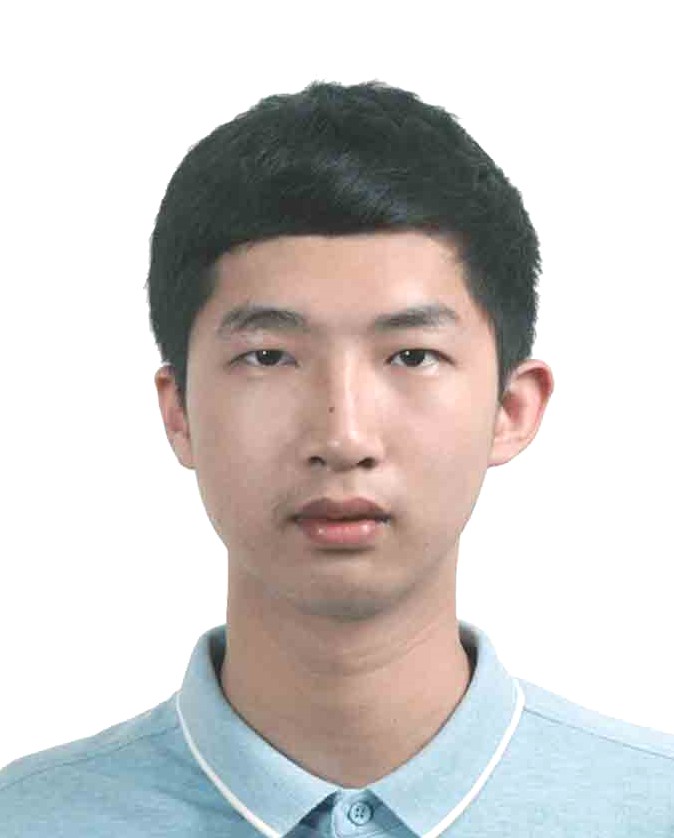
 Rui Hu
· 1 previous affiliation
- Tsinghua UniversitySince 2020
- PhD student · Since 2024
- Undergrad student · 2020–2024
6 other authors named Rui Hu: Rui Hu (University of Nevada, Reno · 36 papers), Rui Hu (Vivo · 25 papers), Rui Hu (Waabi · 13 papers), Rui Hu (Beijing Jiaotong University · 2 papers), Rui Hu (Vivo · 1 paper), and 1 more
Research Overview
Rui Hu focuses on the theoretical and algorithmic foundations of modern machine learning, with a primary emphasis on reinforcement learning (RL) and generative flow networks (GFlowNets). His work investigates the convergence properties and optimization landscapes of complex learning systems, including multi-agent environments, non-stationary reward structures, and generative modeling frameworks. Currently a Ph.D. student at the Institute for Interdisciplinary Information Sciences (IIIS) at Tsinghua University, Hu’s research seeks to bridge the gap between empirical success and theoretical understanding in centralized training, offline learning, and diverse sampling.
Research Trajectory
Hu’s early research focused on the scalability and observability challenges inherent in multi-agent reinforcement learning (MARL). In 2023, he addressed the problem of partial observability in offline settings, investigating how agents can learn effective communication protocols from fixed datasets that lack explicit communication information. This work highlighted the intractability of end-to-end communication learning in the absence of such data and proposed methods to alleviate miscoordination. By 2024, his focus shifted toward the global convergence properties of cooperative MARL, specifically targeting the limitations of the Centralized Training with Decentralized Execution (CTDE) framework. He developed algorithmic designs to ensure convergence in tasks where standard soft Q-learning approaches often fail.
In 2025, Hu expanded his research into the design and analysis of generative models. This transition involved a dual focus: improving the training stability and exploration capabilities of GFlowNets through novel loss functions and providing finite-time convergence analyses for stochastic interpolants. His work in this period established theoretical connections between standard regression losses and f-divergences, offering a more principled approach to sampling diverse, high-reward objects in complex state spaces.
His most recent work in 2026 continues to deepen the theoretical foundations of RL and generative modeling. He has produced non-asymptotic analyses of actor-critic algorithms operating under evolving reward functions, a common but theoretically under-explored scenario in curriculum learning and reward shaping. Additionally, he has contributed to the development of proxy-free frameworks for offline GFlowNet training, utilizing inverse reinforcement learning to provide dense structural guidance for faster convergence.
Current Directions
Hu’s current research is characterized by an analytical approach to the temporal dynamics of learning. One major direction involves the finite-time convergence analysis of algorithms under Markovian sampling, particularly when the underlying reward parameters change at each time step. This work is critical for understanding the stability of practical RL techniques like entropy regularization. Another significant direction is the refinement of generative modeling through stochastic interpolants, where he investigates the discretization errors that occur when continuous-time theoretical frameworks are implemented in discrete steps. His ongoing work in GFlowNets focuses on removing the dependency on external proxy models, instead distilling guidance directly from offline trajectories to improve mode discovery and training efficiency.
Representative Work
In Multi-agent Optimistic Soft Q-Learning: A co-MARL Algorithm with a Global Convergence Guarantee, Hu addressed the lack of theoretical guarantees in the CTDE framework. He proposed the MAOSQL algorithm, which utilizes an optimistic local Q-function and a softmax local policy. The work demonstrates that this design leads to a different optimization objective than existing algorithms, providing a global convergence guarantee for cooperative multi-agent tasks that were previously problematic for standard methods.
Hu’s investigation into the optimization of generative models is detailed in Beyond Squared Error: Exploring Loss Design for Enhanced Training of Generative Flow Networks. This research provides a rigorous theoretical bridge between regression losses and f-divergences. By introducing novel loss designs such as Shifted-Cosh and Linex, the work demonstrates significant improvements in convergence speed and sample diversity across various domains, including drug discovery and grid navigation, challenging the "one-size-fits-all" approach of standard squared error losses.
In the area of reinforcement learning theory, Hu developed the first finite-time convergence analysis for single-timescale actor-critic algorithms in Finite-time Convergence Analysis of Actor-Critic with Evolving Reward. The study considers a setting where reward functions evolve—due to reward shaping or curriculum learning—and derives non-asymptotic bounds for both actor and critic errors. The results show that as long as the rewards evolve at a controlled rate, the algorithm maintains an $O(1/\sqrt{T})$ convergence rate, providing a theoretical justification for common empirical practices.
Hu co-developed a method for learning in partially observable environments in Offline Communication Learning with Multi-source Datasets. This work identifies the fundamental difficulties of learning communication in an end-to-end manner from offline datasets that do not contain communication labels. The research proposes strategies to enable agents to coordinate effectively by extracting useful information from multi-source data, thereby improving the scalability of offline MARL.
Hu also participated in research concerning the discretization of generative paths in Finite-Time Analysis of Discrete-Time Stochastic Interpolants. This work analyzes the stochastic interpolant framework, which constructs paths between arbitrary distributions. The study focuses on the practical reality of discrete-step implementations, providing a finite-time analysis that accounts for the errors introduced when moving from continuous-time theory to messy, real-world execution.
Finally, Hu contributed to the development of a proxy-free offline training framework in Beyond the Proxy: Trajectory-Distilled Guidance for Offline GFlowNet Training. This research introduces Trajectory-Distilled GFlowNet (TD-GFN), which employs Inverse Reinforcement Learning to extract "edge rewards" from offline trajectories. This approach provides dense structural guidance, allowing the model to discover high-reward modes significantly faster than state-of-the-art methods that rely on potentially unreliable proxy models.
Profile updated
Loading new papers…
Other researchers whose papers cluster into the same research directions — a proxy for overlapping technical interests and shared intellectual neighborhoods.
See something wrong? Report a mistake