

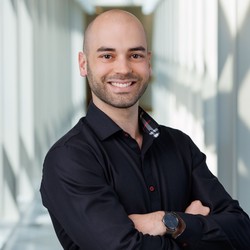
 Romain Lopez
· 3 previous affiliations
- New York UniversitySince 2025
- Assistant Professor · Since 2025
- Stanford University2021–2025
- Postdoc · 2021–2025
- PhD student · 2016–2021
Research Overview
Romain Lopez focuses on the intersection of machine learning and computational biology, with specific emphasis on deep generative models, causal inference, and applied statistics. His work develops probabilistic frameworks to interpret high-dimensional biological data, particularly at the single-cell level, to uncover the mechanisms governing cellular behavior, disease progression, and response to perturbations. Currently an Assistant Professor at New York University, his research trajectory has moved from foundational generative modeling of transcriptomic data toward the integration of multi-modal signals, lineage information, and causal representation learning for interventional biology.
Research Trajectory
The early phase of Lopez’s research, beginning around 2017 during his doctoral studies at UC Berkeley, addressed the fundamental challenge of analyzing single-cell RNA sequencing (scRNA-seq) data. At the time, the field struggled with technical noise, sparsity, and the inability of existing statistical methods to scale to the rapidly increasing size of datasets. Lopez pioneered the use of variational autoencoders (VAEs) for this domain, developing scVI (Single-cell Variational Inference). This work established a biologically-informed probabilistic framework that could perform dimensionality reduction, denoising, and batch correction while scaling to millions of cells. This period was characterized by a transition from traditional linear models to non-linear deep generative models (DGMs) that could capture the complex, non-Gaussian distributions inherent in cellular gene expression.
Following the success of scVI, Lopez’s work expanded to address the increasing complexity of experimental protocols. By 2019 and 2020, his research shifted toward multi-modal integration and spatial context. He developed methods to bridge the gap between different data types, such as imputing missing gene expression measurements by joining unpaired scRNA-seq and spatial transcriptomics data. This effort culminated in the development of totalVI, a framework for the joint probabilistic modeling of paired transcriptome and proteome measurements. This work was significant for its ability to handle the distinct technical biases of different modalities—such as protein background noise and RNA sparsity—within a single unified model.
In 2021, Lopez began integrating temporal and evolutionary structures into generative frameworks. Recognizing that cells are not independent points but part of a lineage-connected history, he developed TreeVAE. This model combined VAEs with phylogenetic trees to reconstruct unobserved ancestral cellular states, moving the field toward a more dynamic understanding of cellular differentiation. During this time, he also focused on the democratization of these methods through the co-development of scvi-tools, a standardized software library designed to host a variety of probabilistic models for single-cell omics.
More recently, as a postdoctoral fellow at Genentech and Stanford and now as a faculty member at NYU, Lopez has shifted his focus toward causal inference and Generalizing Machine Learning Across Unseen Cellular Contexts. This transition reflects a move from descriptive modeling (what a cell looks like) to interventional modeling (how a cell will change). His recent work explores how to learn identifiable causal representations from non-stationary data, leveraging sparse mechanism shift modeling to achieve disentanglement in biological pathways. He has also applied these principles to Overcoming Handcrafted Feature Limitations in Biomedical Imaging, using interventional style transfer to extract biological signals from microscopy images in optical pooled screening.
Current Directions
Lopez’s current research program is centered on the development of "virtual cells"—in silico models capable of predicting cellular dynamics in health and disease. This involves several converging themes:
- Causal Representation Learning: Developing models that can disentangle the effects of genetic and chemical perturbations from the underlying biological context. This includes work on Multi-Task Discriminators for Structured Adversarial Learning and factorized causal representations to predict how specific cell types respond to novel drugs.
- System Dynamics and Flow Matching: Extending generative models to capture complex system dynamics across time. By using flow matching, his group aims to predict the trajectory of cells under various conditions, moving beyond static snapshots of gene expression.
- Cross-Modal Translation: Leveraging techniques like Learning to Translate Images Without Paired Data to integrate disparate biological data sources, such as imaging and sequencing, where paired ground-truth data is often unavailable.
- Scaling and Robustness: Ensuring that deep learning models for biology can generalize to out-of-distribution (OOD) contexts, which is critical for therapeutic discovery where the goal is to predict the effects of previously untested compounds.
Representative Work
A deep generative model for gene expression profiles from single-cell RNA sequencing This 2017 paper introduced scVI, a foundational tool in the single-cell field. By implementing a VAE with a zero-inflated negative binomial (ZINB) likelihood, Lopez demonstrated that deep learning could outperform traditional methods in accuracy while providing the scalability necessary for modern genomics. This work shifted the standard for scRNA-seq analysis toward probabilistic, neural-network-based approaches.
Joint probabilistic modeling of paired transcriptome and proteome measurements in single cells As the second author of this 2020 study, Lopez contributed to the development of totalVI. This framework was among the first to provide an end-to-end probabilistic treatment of CITE-seq data, allowing for the simultaneous denoising and integration of RNA and surface protein measurements. It addressed the critical problem of protein background noise, which had previously hindered multi-modal analysis.
Reconstructing unobserved cellular states from paired single-cell lineage tracing and transcriptomics data In this 2021 first-author paper, Lopez introduced TreeVAE. The model represents a significant methodological step in incorporating biological priors—specifically phylogenetic trees—into the latent space of a VAE. This allowed for the inference of transcriptomic states of ancestral cells, providing a tool for studying the history of cellular differentiation and development.
scvi-tools: a library for deep probabilistic analysis of single-cell omics data Lopez served as a primary contributor to this 2021 software initiative. The library unified several disparate models into a single, scalable ecosystem. This work was essential for the community-wide adoption of probabilistic methods, providing a robust interface for researchers to apply DGMs to diverse omics tasks, including dimensionality reduction and differential expression.
Learning Causal Representations of Single Cells via Sparse Mechanism Shift Modeling This 2022 first-author work marks Lopez’s transition toward causal discovery. It addresses the theoretical challenges of disentanglement in latent variable models. By leveraging non-stationary data and the "sparse mechanism shift" assumption, the paper proposes a method to identify latent variables that correspond to specific biological pathways, moving toward more interpretable and interventional models of the cell.
Gene-Level Representation Learning via Interventional Style Transfer in Optical Pooled Screening In this 2024 work, Lopez participated in the development of GRAPE, a model that applies style-transfer techniques to microscopy images. By treating genetic perturbations as "styles" applied to the "content" of a cell's morphology, the method extracts biologically informative representations that outperform traditional handcrafted features. This work demonstrates the utility of computer vision techniques in uncovering functional relationships between genes.
Profile updated
Loading new papers…
Other researchers whose papers cluster into the same research directions — a proxy for overlapping technical interests and shared intellectual neighborhoods.
See something wrong? Report a mistake