

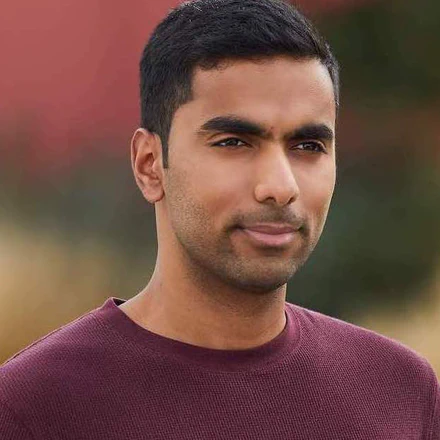
 Rohit Girdhar
· 7 previous affiliations
- Meta (United States)Since 2019
- Research Scientist · Since 2019
- Current
- Research Scientist · 2019–2026
- Research Intern · 2017
- AMI - Advanced Machine IntelligenceSince 2026
- Research Scientist · Since 2026
- Carnegie Mellon University2014–2019
- PhD student · 2014–2019
- Research Intern · 2018
- Research scientist intern · 2018
- Research Scientist intern · 2016
- Undergraduate · 2010–2014
- Bachelor of Technology - BTech, Computer Science
1 other author named Rohit Girdhar: Rohit Girdhar (6 papers)
Research Overview
Rohit Girdhar focuses on computer vision, multimodal representation learning, and generative video modeling. His early work addressed spatiotemporal aggregation and action recognition in video, eventually expanding into unified architectures capable of processing images, video, and 3D data simultaneously. Currently, his research investigates advanced video generation techniques, multimodal alignment, and scalable image tokenization for generative models.
Research Trajectory
Girdhar’s early research focused on establishing robust representations for video understanding and action recognition. In 2017, he contributed to ActionVLAD: Learning Spatio-Temporal Aggregation for Action Classification, which introduced a method to aggregate local convolutional features across the full spatio-temporal extent of a video. This work advanced the broader area of temporal aggregation for global video representations while addressing the representational capacity bottleneck of neural backbones. Building on this foundation, he introduced the Video Action Transformer Network in 2019, repurposing Transformer architectures to aggregate spatiotemporal context around individuals for precise action localization. Recognizing that existing video datasets often allowed models to rely on static scene biases rather than true temporal understanding, he subsequently created CATER: A diagnostic dataset for Compositional Actions & TEmporal Reasoning. This diagnostic tool was designed to support research in overcoming static bias in video understanding and reasoning with temporal intervals for durative events.
By 2022, his focus expanded toward unified architectures capable of handling multiple visual tasks and modalities simultaneously. He was a key contributor to the Mask2Former architecture in Masked-attention Mask Transformer for Universal Image Segmentation, which replaced global cross-attention with masked attention to unify panoptic, instance, and semantic segmentation. This work significantly impacted the field of Unified Image Segmentation via Mask Classification and contributed to research in hierarchical feature pyramids for multi-scale object detection. Concurrently, he designed Omnivore: A Single Model for Many Visual Modalities, demonstrating that a single Transformer model could achieve competitive performance across image, video, and single-view 3D classification tasks. These efforts collectively advanced the broader paradigm of unified generalist architectures for computer vision and the research direction of Closing the Performance Gap in Generalist Multimodal Models.
In 2023, Girdhar’s work further bridged the gap between distinct modalities and unsupervised learning paradigms. He presented CutLER in Cut and Learn for Unsupervised Object Detection and Instance Segmentation, a method leveraging self-supervised models to discover and segment multiple objects without human labels, intersecting with domains like learning from sparse labels via partial loss and class-agnostic localization for open-world object detection. Continuing the theme of unification, he collaborated on OmniMAE: Single Model Masked Pretraining on Images and Videos, which explored high-ratio masked spatiotemporal autoencoders to advance the area of Unified Architectures for Omni-Modal Visual Understanding.
During the same period, he co-authored ImageBind One Embedding Space to Bind Them All, which learned a joint embedding space across six distinct modalities to facilitate emergent zero-shot alignment, driving progress in semantic vector arithmetic across multimodal latent spaces. His research also delved into complex video-language alignment and physical reasoning. With HierVL: Learning Hierarchical Video-Language Embeddings, he proposed a hierarchical contrastive objective to capture both short- and long-term semantic associations in video. To address the noise inherent in instructional videos, he developed What You Say Is What You Show: Visual Narration Detection in Instructional Videos, introducing a bootstrapping approach to identify visually grounded narrations. Additionally, he directed research in physical commonsense and intuitive physics in AI through Physical Reasoning Using Dynamics-Aware Models, which augmented reinforcement learning with self-supervised signals to implicitly learn object dynamics.
Most recently, Girdhar’s trajectory has emphasized generative video modeling and multimodal synthesis. In 2023, he guided the creation of MoCA in Motion-Conditioned Image Animation for Video Editing, utilizing optical flow as a motion constraint to improve video editing and address challenges in overcoming structural rigidity in video diffusion editing. He subsequently spearheaded Emu Video: Factorizing Text-to-Video Generation by Explicit Image Conditioning (2024), which simplified high-resolution video generation by factorizing the process into text-to-image and image-to-video steps, advancing the area of decoupling motion and appearance in video diffusion.
In 2025, his generative research continued with MotiF: Making Text Count in Image Animation with Motion Focal Loss, which introduced a novel loss function to prevent conditional image leakage and improve motion alignment, contributing to trajectory controllable video diffusion. He also investigated the foundational components of generative models in Diffusion Autoencoders are Scalable Image Tokenizers, exploring scalable latent space compression to support progressive trajectory distillation for fast diffusion models. Concurrently, he oversaw the design of a training-free multimodal framework in LLMs can see and hear without any training, which treated large language models as iterative optimizers to achieve zero-shot multimodal capabilities, advancing the domain of textual gradient backpropagation for compound AI systems.
Current Directions
The most recent work in the evidence focuses heavily on advancing generative video models and expanding the multimodal capabilities of foundational architectures. A primary research direction involves improving the fidelity and controllability of text-to-video generation. This includes factorizing the generation process into distinct text-to-image and image-to-video stages to achieve high-resolution outputs without deep model cascades, as well as developing novel loss functions that prioritize moving regions to ensure generated videos accurately reflect dynamic text prompts rather than defaulting to static scenes.
In parallel, recent efforts address the underlying infrastructure of generative AI by exploring scalable image tokenization. This work investigates how diffusion autoencoders can compress high-resolution visual data into compact latent spaces more robustly than traditional methods relying on complex, multi-objective loss functions. Finally, current research explores training-free frameworks that grant large language models zero-shot multimodal capabilities—such as image and video captioning—by treating the language models as iterative optimizers guided by off-the-shelf visual scorers.
Profile updated
Loading new papers…
Other researchers whose papers cluster into the same research directions — a proxy for overlapping technical interests and shared intellectual neighborhoods.
See something wrong? Report a mistake