

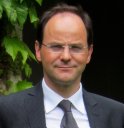
 Roberto Cipolla
· 3 previous affiliations
- University of CambridgeSince 1992
- Full Professor · Since 1992
- Undergrad student · 1981–1984
- University of Oxford1988–1991
- PhD student · 1988–1991
- University of Pennsylvania1984–1985
- MS student · 1984–1985
Research Overview
Roberto Cipolla focuses on computer vision, geometric modeling, and machine learning for visual understanding. His trajectory spans foundational work in camera calibration and motion estimation to modern deep learning architectures for multi-task scene reasoning. Recently, his research investigates hierarchical representations and uncertainty-weighted optimization for autonomous systems.
Research Trajectory
Roberto Cipolla’s early research heavily emphasized geometric computer vision, particularly the extraction of 3D information from 2D images. In the 1990s and early 2000s, he contributed to the broader area of Integral Measures for Robust Shape Analysis and the research direction of Decoupling Rotation and Translation in Optical Flow. As a principal investigator, he developed practical techniques for motion estimation and 3D reconstruction that did not rely on traditional point correspondences. In Epipolar Geometry from Profiles under Circular Motion., his group demonstrated how to reconstruct object shape from apparent contours during circular motion by exploiting the symmetry of surfaces of revolution. This geometric focus naturally extended to Camera Calibration from Surfaces of Revolution., which introduced a novel calibration technique that utilized these same symmetries rather than relying on precisely machined calibration grids.
Moving into the mid-2000s, Cipolla’s focus expanded to dynamic scenes, robust recognition, and visual tracking, engaging with themes such as Addressing the Recall Ceiling in Tracking by Detection. A key contribution to robust tracking was Visual Tracking in the Presence of Motion Blur. Rather than attempting the computationally expensive task of deblurring images, the proposed method matched regions by applying blur to the templates, significantly improving efficiency. As datasets grew larger and more complex, his lab also addressed scalable learning methods. This effort culminated in work like Incremental Linear Discriminant Analysis Using Sufficient Spanning Sets and Its Applications., which provided an online solution for object recognition that matched batch processing accuracy while drastically reducing computational complexity.
In the 2010s, Cipolla’s research transitioned toward deep learning architectures and optimization for complex visual reasoning. His group investigated the fundamental properties of neural networks, as seen in Symmetry-invariant optimization in deep networks, which proposed weight updates that account for the scale invariance present in networks using max-pooling and sub-sampling layers. A major milestone in his applied deep learning research was Multi-Task Learning Using Uncertainty to Weigh Losses for Scene Geometry and Semantics. This highly influential paper introduced a principled approach to weighing multiple loss functions based on homoscedastic uncertainty, enabling the simultaneous learning of classification and regression tasks with vastly different scales—a critical advancement for real-time autonomous driving systems.
Current Directions
The most recent papers and themes in the evidence indicate a continued focus on optimizing network architectures and improving the robustness of autonomous systems. Recent work investigates how to accelerate classification times by structurally modifying networks, such as converting flat boosting classifiers into hierarchical trees to preserve smooth decision regions while speeding up inference.
Additionally, Cipolla contributes to the research direction of Hierarchical Vision Transformers for Multi Scale Feature Extraction, addressing the challenges of scale variance and high resolution in visual domains. His recent research also intersects with the area of Reducing Error Propagation in Modular Autonomous Pipelines, focusing on creating more robust, efficient, and unified architectures for joint semantic reasoning in robotics and autonomous driving.
Profile updated
Loading new papers…
Other researchers whose papers cluster into the same research directions — a proxy for overlapping technical interests and shared intellectual neighborhoods.
See something wrong? Report a mistake