

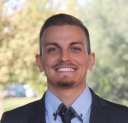
 Roberto Amoroso
· 5 previous affiliations
- Nvidia (United States)Since 2024
- Senior Research Engineer · Since 2025
- Intern · 2024
- AImageLab2021–2025
- PHD Student · 2021–2025
- Research Assistant · 2021
- Doctor of Philosophy - PhD, AI & Computer Vision · 2021–2024
- Master of Science - MS, Computer Engineering · 2018–2020
- PhD Intern · 2023
- Research Engineer · 2020–2021
Research Overview
Roberto Amoroso focuses on computer vision, specifically semantic segmentation and self-supervised representation learning. His early work addresses the challenges of fine-grained indoor scene segmentation through boundary-level training objectives. More recently, he investigates vision transformer pre-training and the application of large-scale vision-language models to open-vocabulary segmentation tasks.
Research Trajectory
Roberto Amoroso’s published research begins in 2021 with a primary focus on dense prediction tasks in computer vision, specifically semantic segmentation for indoor environments. While contemporary literature heavily emphasized outdoor scenarios, Amoroso identified indoor segmentation as a critical but under-investigated area with applications in augmented reality, image retrieval, and personalized robotics. As the first author of Improving Indoor Semantic Segmentation with Boundary-Level Objectives, he developed novel boundary-level training objectives designed to generate highly accurate delineations between semantic classes. He further expanded on this methodology in Assessing the Role of Boundary-Level Objectives in Indoor Semantic Segmentation, providing a deeper analysis of how these objectives foster fine-grained boundary generation in complex indoor scenes.
By 2023, Amoroso’s research expanded to include self-supervised representation learning and the adaptation of large-scale foundational models. As a second author, he contributed to Learning to Mask and Permute Visual Tokens for Vision Transformer Pre-Training. This work addressed limitations in the Masked Image Modeling paradigm, specifically the introduction of noise and the neglect of dependencies between corrupted patches, proposing new methods to improve downstream fine-tuning performance. In parallel, he participated in research bridging vision-language models with dense prediction tasks. In Enhancing Open-Vocabulary Semantic Segmentation with Prototype Retrieval, he co-authored an approach to adapt models like CLIP for open-vocabulary segmentation, addressing the domain shift between global image features and the semantically detailed pixel-level features required for accurate mask generation.
Current Directions
Based on the most recent papers in the evidence from 2023, Amoroso's current research investigates the optimization and application of large-scale pre-trained models in computer vision. A major focus involves refining self-supervised pre-training paradigms for Vision Transformers to mitigate noise and structural inconsistencies during the fine-tuning phase. Additionally, recent work explores open-vocabulary semantic segmentation, specifically developing techniques to translate the global, zero-shot capabilities of vision-language models into precise, pixel-level predictions without suffering from significant domain shifts.
Profile updated
Loading new papers…
Other researchers whose papers cluster into the same research directions — a proxy for overlapping technical interests and shared intellectual neighborhoods.
See something wrong? Report a mistake