

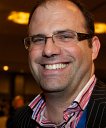
 Robert W. Heath
· 7 previous affiliations
- MIMO Wireless Inc.Since 2003
- President and CEO · Since 2003
- University of California San DiegoSince 2024
- Full Professor · Since 2024
- North Carolina State University2020–2023
- Lampe Distinguished Professor · 2021–2023
- Full Professor · 2020–2021
- Kuma Signals LLC2009–2023
- Chief Innovation Officer · 2009–2023
- The University of Texas at Austin2002–2020
- Cockrell Family Regents Chair in Engineering #7 · 2019–2020
- Full Professor · 2002–2020
- Cullen Trust Endowed Professor #6 · 2013–2019
- Professor and David and Doris Lybarger Endowed Faculty Fello in Engineering · 2012–2013
- Stanford University1997–2002
- PhD student · 1997–2002
- University of Virginia1996–1997
- M.S., Electrical Engineering · 1996–1997
Research Overview
Robert W. Heath focuses on wireless communication systems, millimeter-wave signal processing, and distributed optimization. His early trajectory established foundational techniques in multiple-input multiple-output (MIMO) beamforming and cellular network analysis. More recently, his research investigates federated learning, multi-task reinforcement learning, and the theoretical convergence of stochastic gradient methods.
Research Trajectory
His early trajectory established foundational techniques in orthogonal frequency-division multiplexing (OFDM) and multiple-input multiple-output (MIMO) systems. This began with Exploiting input cyclostationarity for blind channel identification in OFDM systems (1999). He subsequently advanced the design of MIMO wireless systems in Grassmannian beamforming for multiple-input multiple-output wireless systems (2003), proposing a quantized maximum signal-to-noise ratio beamforming technique that utilized predetermined codebooks to optimize performance under limited channel knowledge.
By the mid-2010s, his research expanded to encompass network-level modeling and user experience. Contributing to the research direction of Spatial Point Processes for Wireless Network Analysis, he developed mathematical frameworks to model random building blockages using Poisson point processes in Analysis of Blockage Effects on Urban Cellular Networks (2014). Concurrently, he addressed the area of Perceptual Quality-Driven Video Delivery and the specific direction of Asymmetric Temporal Pooling for Perceptual Quality Assessment. This work included Modeling the Time - Varying Subjective Quality of HTTP Video Streams With Rate Adaptations (2014), which introduced a Hammerstein-Wiener model to predict real-time subjective quality, and Rate Adaptation and Admission Control for Video Transmission With Subjective Quality Constraints (2015), which demonstrated how rate-adaptation algorithms could incorporate empirical cumulative quality distributions to improve user experience.
In the latter half of the decade, his focus shifted heavily toward the area of Scaling Next-Generation Wireless Protocols to Multi-Antenna MIMO Systems, particularly for millimeter-wave (mmWave) communications. To address the challenges of mobility in mmWave networks, he developed an extended Kalman filter approach for analog beamforming architectures in Beam tracking for mobile millimeter wave communication systems (2016). He also contributed to the area of Statistical Linearization for Low Resolution Massive MIMO with Channel Estimation in Broadband Millimeter Wave MIMO Systems With Few-Bit ADCs. (2018), exploiting channel sparsity to achieve near-optimal performance while significantly reducing hardware complexity.
Addressing frequency division duplexing (FDD) massive MIMO systems, Channel Feedback Based on AoD-Adaptive Subspace Codebook in FDD Massive MIMO Systems (2018) tackled feedback overhead by leveraging the slow variation of path angles of departure. This research intersected with several broader areas, including subspace constrained beamforming and the area of Block Level Guard Intervals for High Efficiency Wideband Communication. He further refined mmWave alignment strategies in Side-information-aided Noncoherent Beam Alignment Design for Millimeter Wave Systems (2019), designing a compressive sensing-based algorithm that utilized non-coherent measurements to overcome practical hardware impairments.
In the early 2020s, machine learning techniques became increasingly prominent in his wireless research. MmWave Codebook Selection in Rapidly-Varying Channels via Multinomial Thompson Sampling (2021) applied multi-armed bandit frameworks to balance beamwidth and alignment overhead. Concurrently, Optimizing Coverage and Capacity in Cellular Networks using Machine Learning (2021) explored the joint optimization of transmit power and downtilt settings across sectors using realistic geographic simulation models.
Most recently, the trajectory has pivoted toward the theoretical foundations of distributed learning and stochastic optimization. Towards Fast Rates for Federated and Multi-Task Reinforcement Learning (2024) proposed a federated policy gradient algorithm with bias-correction for heterogeneous Markov Decision Processes. Building on this, Achieving Tighter Finite-Time Rates for Heterogeneous Federated Stochastic Approximation under Markovian Sampling (2025) provided finite-time guarantees without relying on projection steps, advancing research in provable reinforcement learning and the minimization of local update divergence in federated learning. Finally, A Short and Unified Convergence Analysis of the SAG, SAGA, and IAG Algorithms (2026) introduced a unified proof framework that treats major optimization algorithms as delayed versions of gradient descent, yielding new high-probability bounds and sharpening theoretical convergence rates.
Current Directions
The most recent papers in the evidence address the sample complexity and convergence rates of distributed optimization methods and reinforcement learning. Current work investigates federated policy gradient algorithms for heterogeneous environments and establishes finite-time guarantees for federated stochastic approximation under Markovian sampling. Additionally, recent research focuses on unifying the analytical frameworks for stochastic gradient methods (such as SAG, SAGA, and IAG), treating them as delayed versions of gradient descent to derive high-probability convergence bounds for heavy-tailed stochastic optimization.
Profile updated
Loading new papers…
Other researchers whose papers cluster into the same research directions — a proxy for overlapping technical interests and shared intellectual neighborhoods.
See something wrong? Report a mistake