

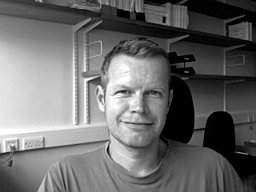
 Rob Koeling
· 6 previous affiliations
- Elsevier BV (Netherlands)Since 2019
- Principal Researcher · Since 2019
- Mrs Wordsmith2018–2019
- Principal Researcher · 2018–2019
- BenevolentAI (United Kingdom)2014–2018
- Researcher · 2014–2018
- Ai-Applied2011–2014
- Computational Linguist · 2011–2014
- University of Sussex2002–2012
- Postdoc · 2002–2012
- Research Fellow · 2005–2008
- University of Groningen1990–2000
- PhD student · 1995–2000
- MA, Computational Linguistics · 1990–1994
Research Overview
Rob Koeling focuses on computational linguistics, specifically the application of machine learning to grammar acquisition and the cross-lingual modeling of verbal semantics. His early collaborative work investigated the factors influencing the successful learning of computational grammars, particularly noun phrase syntax. His subsequent research shifted toward semantic-driven methodologies for automatically acquiring verbal models across multiple languages and domains.
Research Trajectory
The available evidence captures Rob Koeling's research activity between 2001 and 2004. His trajectory during this period is characterized by a progression from collaborative efforts in syntactic parsing to senior leadership in cross-lingual semantic modeling.
In 2001, Koeling was a contributing researcher to the "Learning Computational Grammars" (LCG) project, a postdoctoral network exploring how machine learning could be effectively applied to grammars designed for computational use. As a middle author on the project's foundational report, Learning Computational Grammars, and its associated presentation at the ACL 2001 Workshop on Computational Natural Language Learning, he participated in a systematic survey evaluating the conditions necessary for successful grammar learning. This work specifically examined the impact of annotated data availability, data dependencies, and existing knowledge bases on learning outcomes, with a particular emphasis on noun phrase syntax.
By 2004, Koeling's focus had expanded from syntax to semantics, taking on a senior role in cross-lingual natural language processing research. As the last author of Cross-Language Acquisition of Semantic Models for Verbal Predicates, he guided the development of a semantic-driven methodology for automatically acquiring verbal models. This research leveraged existing semantic resources—such as domain labels, Named Entity categories, and the SUMO ontology—to extract generalizable semantic patterns. The methodology was validated through experiments on comparable corpora across four languages (Italian, Spanish, Basque, and English) and two distinct domains (finance and sports), demonstrating that automatically acquired semantic patterns could be successfully ported across linguistic boundaries.
Current Directions
Based on the provided corpus, the most recent paper in the evidence is from 2004. At that time, Koeling's research investigated the automated acquisition of semantic models and cross-lingual natural language processing. This work addressed the challenge of porting semantic patterns across languages by utilizing established ontologies and named entity categories to build robust, domain-adaptable verbal models.
Profile updated
| Title | Venue | Year |
|---|---|---|
| Cross-Language Acquisition of Semantic Models for Verbal Predicates | LREC | 2004 |
| Learning Computational Grammars | Conll | 2001 |
Loading new papers…
Other researchers whose papers cluster into the same research directions — a proxy for overlapping technical interests and shared intellectual neighborhoods.
See something wrong? Report a mistake