

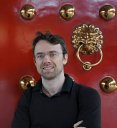
 Rob Fergus
· 3 previous affiliations
- New York UniversitySince 2007
- Professor · Since 2007
- Meta (United States)Since 2025
- Researcher · Since 2025
- Research scientist · 2013–2020
- Google (United States)2020–2025
- Research scientist · 2020–2025
Research Overview
Rob Fergus focuses on sample-efficient reinforcement learning, embodied agent navigation, and the training of language models for sequential decision-making. His earlier work addressed exploration and representation learning in complex, sparse-reward environments like NetHack. More recently, his research investigates multimodal pretraining architectures and iterative, diff-based code synthesis for software engineering agents.
Research Trajectory
Starting in 2022, Fergus's work frequently tackled the challenges of navigation and exploration in environments with massive state spaces. In Learning to Navigate Wikipedia by Taking Random Walks, he and his collaborators demonstrated that behavioral cloning of randomly sampled trajectories could yield effective link-selection policies for navigating the massive graph structure of Wikipedia, successfully routing an agent across a network of 38 million nodes.
Moving into 2023, his group extensively used the notoriously difficult NetHack environment as a testbed for advancing reinforcement learning. In NetHack is Hard to Hack, they introduced the HiHack dataset—comprising three billion transitions labeled with hierarchical strategies—and a novel Transformer-LSTM architecture to narrow the performance gap between neural agents and rule-based symbolic systems. To further address the sparse rewards inherent in such complex games, he guided research on Accelerating exploration and representation learning with offline pre-training, which showed that offline human demonstrations could simultaneously improve an agent's state representations and exploration rewards via contrastive pre-training. This theme of leveraging human data continued in Learning About Progress From Experts, where his team extracted monotonically increasing progress functions from expert demonstrations to guide agent exploration through the multiple phases of long-horizon tasks.
By 2024 and 2025, Fergus's research expanded to address the inefficiencies of Large Language Models (LLMs) acting as embodied agents. A major bottleneck in this domain is "prompt bloat," where verbose observation histories exhaust context windows and obscure critical signals with redundant "no-op" information. He addressed this in diff History for Neural Language Agents by compressing environment interactions into concise differences rather than appending full text observations.
This focus on efficient representation also appeared in his reinforcement learning research. In Efficient Exploration and Discriminative World Model Learning with an Object-Centric Abstraction, he introduced the MEAD framework, which predicts high-level attribute changes rather than low-level pixel transitions. This approach significantly improved zero-shot transfer and advanced the broader area of Sample Efficient Visual Reinforcement Learning.
Simultaneously, Fergus applied the concept of iterative, diff-based processing to software engineering. He oversaw the development of the D3 dataset, detailed across two 2025 publications: D3: A Dataset for Training Code LMs to Act Diff-by-Diff and D3: A Large Dataset for Training Code Language Models to Act Diff-by-Diff. These works frame code synthesis as a goal-conditioned sequential decision-making problem, training models on 8 billion tokens of instruction and file-diff sequences to iteratively build software. Building on this paradigm, he contributed to Training Language Models on Synthetic Edit Sequences Improves Code Synthesis, which introduced the LintSeq algorithm to refactor static code into synthetic edit sequences. By teaching language models to write code incrementally, this method yielded performance gains across architectures ranging from 150 million to 14 billion parameters.
In 2026, Fergus participated in several collaborative efforts exploring multimodal architectures and the theoretical underpinnings of generative reinforcement learning. He contributed to the development of the Cambrian-S model family in Cambrian-S: Towards Spatial Supersensing in Video, which shifts video processing from reactive observation to predictive sensing by using prediction error to manage memory. He also collaborated on Beyond Language Modeling: An Exploration of Multimodal Pretraining, a study investigating the scaling asymmetries between vision and text and proposing Mixture-of-Experts architectures to harmonize them into unified world models. Finally, his collaborative work in KL-Regularized Reinforcement Learning for Generative Modelling is Designed to Mode Collapse identified that standard KL-regularized objectives inherently cause diversity loss in RL-tuned generative models. To counter this, the authors proposed Mode Anchored Reward Augmentation (MARA), a reward-rescaling technique designed to maintain distribution mass across high-quality solutions in domains like drug discovery and language modeling.
Current Directions
Recent work investigates the architecture and training dynamics of multimodal and generative models. The most recent papers in the evidence address the integration of spatial reasoning into video processing, exploring how predictive sensing and memory management can build implicit 3D world models from unbounded streams. Additionally, this recent research examines the fundamental scaling differences between visual and textual data, utilizing Mixture-of-Experts architectures to train native multimodal models from scratch. Alongside these architectural explorations, ongoing efforts address the theoretical limitations of reinforcement learning when applied to generative modeling, specifically developing reward-rescaling techniques to prevent mode collapse and preserve output diversity in large language models.
Profile updated
Loading new papers…
Other researchers whose papers cluster into the same research directions — a proxy for overlapping technical interests and shared intellectual neighborhoods.
See something wrong? Report a mistake