

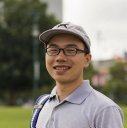
 Riqiang Gao
5 previous affiliations
- Siemens Healthcare (United States)2021–2025
- Senior Staff AI Scientist · 2025
- Scientist · 2022–2024
- Research Intern · 2021
- Vanderbilt University2018–2022
- Research Assistant · 2018–2022
- Imsight Technology2018
- Research Intern · 2018
- 清华大学2015–2018
- Graduate Student Research Assistant · 2015–2018
- Tsinghua University2015–2018
- MS student · 2015–2018
Research Overview
Riqiang Gao focuses on artificial intelligence for healthcare, medical image analysis, and advanced radiotherapy planning. His early work developed deep learning methods for lung cancer risk estimation using longitudinal and incomplete clinical data. More recently, he investigates generative models and reinforcement learning to automate and personalize 3D radiation dose prediction and treatment workflows.
Research Trajectory
He began his research by addressing fundamental computer vision challenges, specifically focusing on improving feature representation. In Margin Loss: Making Faces More Separable (2018), he introduced a loss function designed to simultaneously enlarge interclass distances and reduce intraclass variations, providing a more direct measure of similarity for face recognition tasks than traditional softmax approaches.
Transitioning to medical imaging, his focus shifted extensively toward lung cancer detection from longitudinal CT scans. A major challenge in this domain is the irregular timing of patient visits. To address this, he developed architectures within the area of Temporal Decay Mechanisms for Irregular Clinical Sequences. He introduced the Distanced LSTM (DLSTM) in Distanced LSTM: Time-Distanced Gates in Long Short-Term Memory Models for Lung Cancer Detection, further detailing the methodology in Time-distanced gates in long short-term memory networks. These models explicitly incorporate the time intervals between scans, emphasizing the most recent imaging to improve detection accuracy in real-world clinical scenarios.
His work also encompasses anatomical alignment, contributing to the research direction of Standardized Coordinate Mapping for Anatomical Alignment. In Development and Characterization of a Chest CT Atlas, he helped construct a standardized coordinate system using a large-scale database of over 1,400 images. By optimizing a multi-stage non-rigid registration pipeline, this work enabled clinicians to normalize chest anatomy and precisely compare local tissue variations across different patients. Concurrently, he investigated predictive modeling for patient outcomes. In Deep multi-task prediction of lung cancer and cancer-free progression from censored heterogenous clinical imaging, he formulated a censored regression loss to simultaneously predict cancer diagnosis and estimate cancer-free progression time, offering a more personalized approach to risk assessment.
Recognizing the practical hurdles of deploying machine learning in clinical settings, he developed an automated pipeline for image quality assessment in Technical Report: Quality Assessment Tool for Machine Learning with Clinical CT, combining objective and subjective checks to identify problematic scans. He also tackled the pervasive issue of missing clinical data, advancing the field of Robust Multimodal Learning for Incomplete Clinical Data. In Lung Cancer Risk Estimation with Incomplete Data: A Joint Missing Imputation Perspective, he introduced C-PBiGAN, a generative approach that models the joint distribution of CT scans and patient risk factors to effectively impute missing modalities and improve prediction accuracy.
Continuing to refine generative and diagnostic methodologies, he proposed Taichi-GAN in You May Need both Good-GAN and Bad-GAN for Anomaly Detection to address diversity and generalization issues in pseudo-anomaly generation. He also explored model reliability in A Comparative Study of Confidence Calibration in Deep Learning: From Computer Vision to Medical Imaging, demonstrating that calibration techniques effective in natural images often require significant adaptation for specialized medical domains. Additionally, he participated in developing hybrid architectures for medical image analysis, contributing to the area of Hybrid CNN-Transformer Architectures for Global-Local Vision with the model detailed in UNesT: Local spatial representation learning with hierarchical transformer for efficient medical segmentation.
Joining Siemens Healthineers as an AI Scientist, his research expanded into automating and optimizing cancer treatment planning. In Flexible-Cm GAN: Towards Precise 3D Dose Prediction in Radiotherapy, he presented a conditional generative model that predicts 3D radiation dose maps while allowing dynamic adjustments to treatment parameters like beam angles. He subsequently applied reinforcement learning to complex combinatorial problems in Multi-Agent Reinforcement Learning Meets Leaf Sequencing in Radiotherapy, optimizing the movement of radiation-shielding leaves to accelerate a computationally intensive step in treatment planning.
His most recent work emphasizes personalization and scalability in clinical workflows. In Demo: Generative AI helps Radiotherapy Planning with User Preference, he demonstrated an interactive generative model that adapts dose distributions based on user-defined preferences via sliders. He also collaborated on adapting general vision models for clinical use in Revisiting 2D Foundation Models for Scalable 3D Medical Image Classification, which introduced a framework that efficiently adapts frozen 2D foundation models for diverse 3D medical tasks. Finally, he contributed to Automating High Quality RT Planning at Scale, detailing an automated iterative pipeline designed to drastically reduce the time required for contouring and dose optimization, accompanied by a large-scale benchmark dataset for the medical AI community.
Current Directions
Recent work investigates the end-to-end automation and personalization of radiotherapy planning. The most recent papers in the evidence address the computational bottlenecks of treatment planning by applying multi-agent reinforcement learning to leaf sequencing and utilizing generative AI to incorporate interactive user preferences into 3D dose prediction. Additionally, this recent research explores scalable approaches to medical imaging, demonstrating how 2D vision foundation models can be efficiently adapted for diverse 3D clinical classification tasks and introducing large-scale datasets to train the next generation of automated radiotherapy systems.
Profile updated
Loading new papers…
Other researchers whose papers cluster into the same research directions — a proxy for overlapping technical interests and shared intellectual neighborhoods.
See something wrong? Report a mistake