

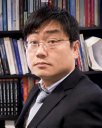
 Richard Jiang
· 4 previous affiliations
- Lancaster UniversitySince 2019
- Associate Professor · Since 2019
- Shanghai Jiao Tong University2022–2026
- Visiting Professor · 2022–2026
- Northumbria University2013–2019
- Assistant Professor · 2013–2019
- Queen's University Belfast2004–2008
- PhD student · 2004–2008
Research Overview
Richard Jiang focuses on computer vision, privacy-preserving machine learning, and the fundamental mechanics of neural network architectures. His trajectory spans from early work in visual saliency and secure biometric verification to robust perception in adverse environments using synthetic data. Currently, he investigates network efficiency, focusing on activation dynamics, model pruning, and the optimization of vision transformers.
Research Trajectory
Jiang’s early research addressed the computational bottlenecks of real-time medical imaging. He developed hardware-accelerated architectures, detailing an area-efficient approach in FPGA Implementation of 3D Discrete Wavelet Transform for Real-Time Medical Imaging. Moving into computer vision, his focus shifted toward visual saliency—how biological and robotic systems identify noticeable objects in a scene. He introduced a robust model for robotic cameras in Visual Saliency Estimation through Manifold Learning, which minimized local variation while preserving global contrast. Building on biological conjectures about how stimuli propagate along the visual cortex, he subsequently proposed a successive Markov random field approach in Deep Salience: Visual Salience Modeling via Deep Belief Propagation.
As Internet-of-Things (IoT) devices proliferated, Jiang began investigating privacy-preserving machine learning, specifically focusing on biometric verification in encrypted or scrambled domains. Because standard face models degrade into chaotic signals when scrambled, he developed novel data-driven classification schemes to discover discriminative patterns. This included an ensemble approach detailed in Face Recognition in the Scrambled Domain via Salience-Aware Ensembles of Many Kernels and a complementary methodology in Privacy-Protected Facial Biometric Verification Using Fuzzy Forest Learning. He later extended these privacy-preserving frameworks to medical edge computing. In Private Facial Prediagnosis as an Edge Service for Parkinson's DBS Treatment Valuation, he designed an Artificial-Intelligence-of-Things (AIoT) system to analyze facial biometrics for Parkinson's disease treatment assessment without compromising patient data. Alongside this specialized edge deployment, he continued to refine core biometric techniques, as seen in his collaborative work Improving face recognition using deep autoencoders and feature fusion.
A significant portion of Jiang’s recent trajectory addresses computer vision under severe environmental degradation, contributing heavily to the research direction of Bridging the Domain Gap for Synthetic Training Data. To overcome the scarcity of labeled data in adverse weather and nighttime conditions, his group introduced a multi-task learning approach trained on a novel synthetic dataset in Semantic Segmentation under Adverse Conditions: A Weather and Nighttime-aware Synthetic Data-based Approach. This synthetic-first methodology was similarly applied to video processing in Leveraging Synthetic Data to Learn Video Stabilization Under Adverse Conditions, which utilized a custom generation engine to train stabilization models for fog, rain, and low-light scenarios.
He has also applied robust perception techniques to challenging remote sensing and marine environments. To assist automated underwater vehicles in biodiversity data collection, he proposed a cascaded framework utilizing deep convolutional generative adversarial networks in Robust and Fair Undersea Target Detection with Automated Underwater Vehicles for Biodiversity Data Collection. For orbital surveillance, his research evaluated attention mechanisms for instance segmentation in Marine Debris Detection in Satellite Surveillance Using Attention Mechanisms. Beyond spatial vision, he adapted adversarial learning and wavelet transforms to complex temporal data, addressing the detection of sporadic stock market manipulation in WALDATA: Wavelet transform based adversarial learning for the detection of anomalous trading activities. Exploring alternative computational paradigms for medical imaging, he also contributed to 3-D Quantum-Inspired Self-Supervised Tensor Network for Volumetric Segmentation of Medical Images, which processes volumetric data without traditional supervision.
Most recently, Jiang has investigated the fundamental expressivity and internal dynamics of deep neural networks. In Delve Into Neural Activations: Toward Understanding Dying Neurons, he analyzed how activation patterns dictate model expressivity, documenting the phenomenon of "dying neurons." Rather than treating this dormancy strictly as a defect, he subsequently leveraged it for model compression in DNR-Pruning: Sparsity-Aware Pruning via Dying Neuron Reactivation in Convolutional Neural Networks, dynamically monitoring inactive neurons to achieve highly efficient network pruning. Expanding this focus on internal network dynamics to transformer architectures, he co-authored Energy Landscape-Aware Vision Transformers: Layerwise Dynamics and Adaptive Task-Specific Training via Hopfield States, which treats Vision Transformer layers as energy-based memory systems to identify and freeze early-stabilizing layers during fine-tuning.
Current Directions
The most recent papers in the evidence investigate the intersection of model efficiency and fundamental network mechanics. A primary focus is the internal dynamics of deep learning architectures, including the role of activation dormancy and energy landscapes in both Convolutional Neural Networks and Vision Transformers. By understanding how individual layers and neurons stabilize or become inactive during training, this research aims to develop smarter pruning and fine-tuning strategies that reduce computational overhead without sacrificing accuracy. Concurrently, ongoing efforts address the challenge of robust perception in degraded environments, utilizing synthetic data generation to train models capable of operating in adverse weather, low light, and complex remote sensing scenarios.
Profile updated
Loading new papers…
Other researchers whose papers cluster into the same research directions — a proxy for overlapping technical interests and shared intellectual neighborhoods.
See something wrong? Report a mistake