

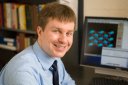
 Richard Hennig
· 1 previous affiliation
- University of FloridaSince 2014
- Full Professor · 2014–2040
Research Overview
Richard Hennig focuses on computational materials science, applying ab initio methods and machine learning to accelerate the discovery of novel materials. His early work emphasized quantum mechanical calculations for structural and electronic properties, evolving toward large-scale materials informatics. Currently, his research centers on generative artificial intelligence, graph neural networks, and high-throughput virtual screening to design advanced superconductors and quantum materials.
Research Trajectory
His early research investigated the fundamental electronic and structural properties of complex materials using advanced quantum mechanical methods. This foundational work included Structure of icosahedral quasicrystals and density-matrix functional theory for correlation effects, which explored correlation effects in quasicrystalline structures. He subsequently applied these rigorous computational techniques to semiconductor physics, detailing approaches for modeling imperfections in Quantum Monte Carlo calculations for point defects in semiconductors.
As the field of computational materials science expanded, his focus shifted toward data-driven methodologies. Transitioning toward large-scale computational screening, he outlined strategies for identifying new low-dimensional structures in Materials Informatics for the Discovery of Novel 2D Materials. By 2022, this informatics approach had matured into the development of deep learning frameworks. With collaborators, his lab developed techniques to improve the predictive accuracy of neural networks on unrelaxed crystal structures in Data-augmentation for graph neural network learning of the relaxed energies of unrelaxed structures. This work significantly advanced the area of Graph Neural Networks for Molecular and Materials Representation and contributed to the broader field of Data-Driven Materials Discovery and Inverse Design.
In parallel with computational advances, he participated in experimental efforts to realize high-performance materials. This included contributions to the domain of Controlled Thin-Film Deposition Techniques through the development of novel electrochemical synthesis methods, as detailed in ZrNb(CO) RF Superconducting Thin Film with High Critical Temperature in the Theoretical Limit, which demonstrated record-breaking critical temperatures for superconducting radio-frequency applications without the need for high pressure.
By 2025, his research output demonstrated a comprehensive integration of artificial intelligence across multiple domains of materials science. In the realm of atomistic simulations, his group investigated the optimization of training data for machine-learned interatomic potentials, as detailed in When more data hurts: Optimizing data coverage while mitigating diversity-induced underfitting in an ultrafast machine-learned potential. He also participated in applying the Ultra-Fast Force Field framework to simulate complex crystal growth, demonstrated in Machine-learning interatomic potential for AlN for epitaxial simulation.
Broadening the scope of machine learning applications, his lab addressed environmental and safety concerns by curating datasets to predict nanoparticle cytotoxicity in Data Curation to Develop Machine Learning Models for Assessing the Toxicity of Nanoparticles. Concurrently, his team advanced the area of Geometric Equivariance in 3D Molecular Deep Learning through Discovery of Spin-Crossover Materials with Equivariant Graph Neural Networks and Relevance-Based Classification, which utilized structural and spin-switching data to identify promising quantum materials. Further expanding into generative modeling, he contributed to MolGuidance: Advanced Guidance Strategies for Conditional Molecular Generation with Flow Matching, exploring advanced guidance strategies for 3D molecular design.
A major culmination of this data-driven trajectory is his recent focus on accelerating superconductor discovery through the research direction of Hierarchical Virtual Screening. His group introduced BETE-NET in Accelerating superconductor discovery through tempered deep learning of the electron-phonon spectral function, a model designed to predict complex spectral properties despite limited training data. This predictive capability was integrated into a broader framework in Developing a complete AI-accelerated workflow for superconductor discovery, which successfully screened over a million candidates to identify new synthesizable superconductors. Complementing these screening efforts, his lab developed generative approaches, such as the guided diffusion framework presented in Inverse Design of Novel Superconductors via Guided Diffusion, to propose hundreds of novel high-critical-temperature candidates.
Current Directions
The most recent papers in the evidence highlight a strong focus on artificial intelligence for materials design, particularly the discovery of novel superconductors and quantum materials. Current work investigates the use of generative models, such as guided diffusion and flow matching, to propose new crystal structures and optimize their properties. Additionally, his group is actively developing end-to-end machine learning workflows that predict complex physical properties—like the electron-phonon spectral function and critical temperatures—to enable high-throughput screening of candidate materials prior to experimental synthesis.
Profile updated
Loading new papers…
Other researchers whose papers cluster into the same research directions — a proxy for overlapping technical interests and shared intellectual neighborhoods.
See something wrong? Report a mistake