

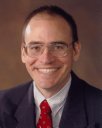
 Richard Braatz
· 7 previous affiliations
- Massachusetts Institute of TechnologySince 2010
- Full Professor · Since 2010
- Repligen CorporationSince 2019
- Member, Scientific Advisory Board · Since 2019
- A Biotechnology Startup CompanySince 2021
- Member, Scientific Advisory Board · Since 2021
- BioCurieSince 2021
- Co-Founder; Chief Scientist; Chair, Scientific Advisory Board · Since 2021
- Full Professor · 2002–2010
- Associate Professor · 2000–2002
- California Institute of Technology1988–1993
- MS and PhD, Chemical Engineering · 1988–1993
- Oregon State University1984–1988
- BS, Chemical Engineering · 1984–1988
Research Overview
Richard Braatz focuses on the control of complex chemical and nanoscale systems, advanced battery management, and high-performance computational methods for dynamic modeling. His trajectory spans from stochastic modeling of biochemical networks to the integration of machine learning for optimizing energy storage. Recently, his work emphasizes real-time optimization solvers and scalable diagnostic algorithms for safety-critical applications.
Research Trajectory
The trajectory begins with computational modeling and control of chemical processes at microscopic scales. Early collaborative work involved simulating copper electrodeposition using A hybrid multiscale kinetic Monte Carlo method for simulation of copper electrodeposition. Building on this foundation, he explored the integration of nanoscale devices into broader control architectures. This included reviewing experimental literature on nanoscale devices with systems functionality in Systems nanotechnology: Identification, estimation, and control of nanoscale systems and extending these principles in Control of nano and microchemical systems.
Concurrently, he investigated the dynamics of closed biochemical reaction networks modeled by chemical master equations. To address the challenge of highly sparse unknown kinetic parameters in these probability-distribution-characterized systems, his group developed robust statistical estimation algorithms based on regularized maximum likelihood estimation, as presented in Sparse identification in chemical master equations for monomolecular reaction networks. He continued to contribute to this domain with further algorithmic refinements in Regularized maximum likelihood estimation of sparse stochastic monomolecular biochemical reaction networks.
A major, sustained theme in his research is the optimization and health monitoring of lithium-ion batteries. Recognizing that existing battery management systems often rely on conservative, semiempirical models, he introduced a Quadratic Dynamic Matrix Control approach to minimize charge times while respecting physical temperature and voltage constraints in Real-time model predictive control for the optimal charging of a lithium-ion battery. This interest in process monitoring and safety naturally extended to general fault diagnosis methodologies, such as Locality preserving discriminative canonical variate analysis for fault diagnosis.
As machine learning techniques matured, he participated in large-scale collaborative efforts to accelerate battery research and diagnostics. This included identifying high-lifetime charging protocols to reduce experimental time in Closed-loop optimization of fast-charging protocols for batteries with machine learning. He also contributed to the broader research area of Processing One Dimensional Signals as Two Dimensional Images through work on automated identification of equivalent circuit models using feature-engineered XGBoost models, detailed in Machine learning benchmarks for the classification of equivalent circuit models from solid-state electrochemical impedance spectra. Furthering battery safety, he collaborated on modeling resistance from field data using recursive spatiotemporal Gaussian processes in Lithium-Ion Battery System Health Monitoring and Resistance-Based Fault Analysis from Field Data Using Recursive Spatiotemporal Gaussian Processes, which highlighted weakest-link failure mechanisms for cells connected in series.
Most recently, his focus encompasses high-performance computational tools for dynamic systems and real-time control. He contributed to vendor-agnostic methods for massively parallel GPU acceleration of ordinary and stochastic differential equations in Automated Translation and Accelerated Solving of Differential Equations on Multiple GPU Platforms, achieving significant performance gains by integrating with high-level solver libraries. In the research direction of Certifiable Infeasibility Detection for Robust Optimization, his group developed EIQP: Execution-time-certified and Infeasibility-detecting QP Solver. This quadratic programming solver, designed for safety-critical systems, utilizes a homogeneous formulation and an infeasible interior-point method to guarantee either an optimal solution or infeasibility detection within a strict time limit.
Current Directions
The most recent papers in the evidence address the intersection of high-performance computing, real-time optimization, and scalable diagnostics for physical systems. Recent work investigates the deployment of execution-time-certified quadratic programming solvers for safety-critical control applications, ensuring strict guarantees on iteration complexity and infeasibility detection. Additionally, ongoing efforts involve leveraging advanced probabilistic models, such as recursive spatiotemporal Gaussian processes, for online health monitoring and fault analysis in large-scale battery deployments, alongside the development of massively parallel GPU architectures for accelerating the simulation of complex differential equations.
Profile updated
Loading new papers…
Other researchers whose papers cluster into the same research directions — a proxy for overlapping technical interests and shared intellectual neighborhoods.
See something wrong? Report a mistake