

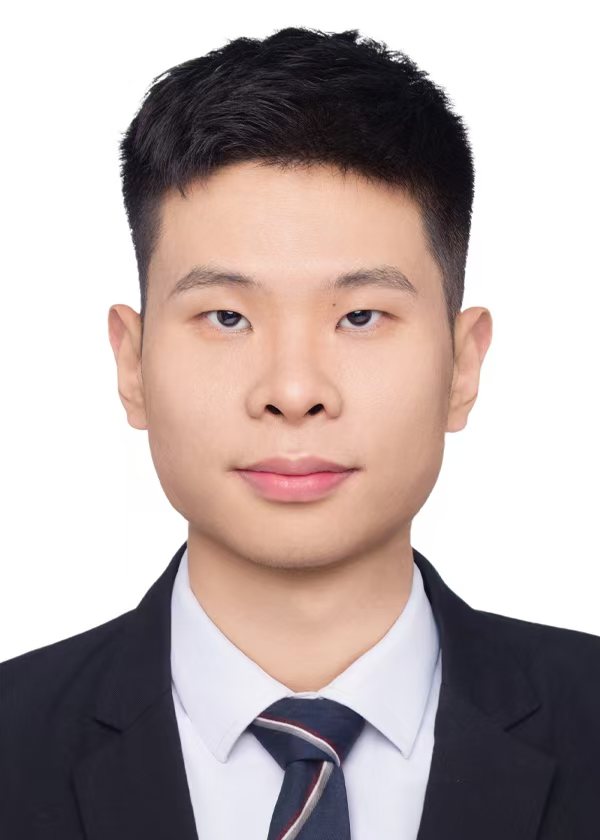
 Ri Cheng
· 3 previous affiliations
- Fuzhou UniversitySince 2025
- Associate Professor · Since 2025
- Fudan University2020–2025
- PhD student · 2020–2025
- Xiamen University2016–2020
- Undergrad student · 2016–2020
Research Overview
Ri Cheng focuses on computer vision and computational imaging, with a primary emphasis on image and video restoration, multi-view geometry, and the development of efficient neural architectures. Cheng’s research addresses the fundamental challenges of reconstructing high-fidelity visual information from degraded, sparse, or compressed inputs. This work frequently leverages geometric constraints in stereo and multi-view systems to overcome the ill-posed nature of single-image restoration, while more recent contributions emphasize dynamic computation and uncertainty-guided pruning to improve the efficiency of video processing tasks.
Research Trajectory
The early stage of Cheng’s documented research, beginning around 2022, centered on Cross-View Interaction for Stereo Image Restoration. During this period, Cheng investigated how the inherent redundancy in multi-view camera systems could be utilized to recover high-resolution (HR) details that are lost in individual low-resolution (LR) frames. A significant challenge in this domain is the "correspondence problem"—the difficulty of accurately aligning pixels across different views, especially when dealing with large-angle transformations or significant occlusions. Cheng’s work in this area involved developing geometry-aware synthesis methods that extract sharp details from across a multi-view set, moving beyond the limitations of standard single-image or video super-resolution techniques.
In parallel with multi-view restoration, Cheng contributed to research addressing Handling Binocular Occlusion in Stereo Depth Estimation. This work recognized that traditional triangulation-based stereo vision often fails at object boundaries where one view is occluded. Cheng participated in the development of methods for image-based rendering (IBR) on sparse scene geometry, utilizing depth completion to maintain robustness when only a limited number of views are available. Further contributions during this period touched upon Joint Luminance and Chrominance Optimization for Image Restoration, specifically in the context of removing JPEG artifacts from stereo image pairs. By employing parallax transformer modules, this research sought to match features with similar textures across views, bypassing the difficulties of pixel-level alignment in heavily compressed images.
By 2023, Cheng’s focus shifted toward the efficiency of video processing models, particularly in the domains of frame interpolation and optical flow estimation. Recognizing that standard convolutional models often perform redundant computations in regions with simple motion, Cheng led the development of uncertainty-guided spatial pruning architectures. This approach uses uncertainty estimation to identify "easy" regions where computation can be reduced without sacrificing visual quality. This period also saw Cheng addressing the computational overhead of recurrent networks in optical flow estimation by developing context-aware iteration policies. These policies allow a network to dynamically determine the optimal number of iterations for each sample, skipping updates when the expected improvement in flow accuracy is minimal.
Cheng also participated in research regarding Image Restoration for Downstream Machine Perception, contributing to frameworks for infrared UAV detection. This work utilized multi-scale temporal learning to distinguish small moving objects from complex background noise, highlighting an interest in applying restoration and detection techniques to challenging, non-ideal environmental conditions.
In 2024 and 2025, Cheng’s work expanded into image forensics and specialized biological imaging. This includes the development of transformer-based frameworks for image manipulation localization, which use mask-guided queries to improve the spatial precision of forgery detection. Most recently, Cheng has focused on zero-shot learning for time-lapse microscopy. This research addresses the scarcity of clean training data in biological contexts by proposing online learning strategies that reuse denoising models across temporal frames, achieving both noise suppression and super-resolution without the need for pre-labeled datasets.
Current Directions
Cheng’s current research appears to be converging on the intersection of zero-shot learning and high-efficiency video restoration. The transition from static multi-view geometry to dynamic, online-learning frameworks suggests a move toward more flexible and deployable vision systems. Key themes in the current work include:
- Zero-Shot and Online Learning: Developing models that can adapt to specific data distributions (such as microscopy videos) in real-time without extensive offline training.
- Dynamic Computation: Refining iteration policies and pruning masks to ensure that high-performance vision models can operate within the latency constraints of real-time rendering and mobile hardware.
- Forensic Localization: Enhancing the ability of transformers to identify subtle image manipulations by integrating spatial and shape-based priors into the learning process.
Representative Work
Geometry-Aware Reference Synthesis for Multi-View Image Super-Resolution In this work, Cheng proposes the MVSRnet to address the Multi-View Image Super-Resolution (MVISR) task. The paper identifies that existing video and image SR methods fail to handle the large-angle transformations common in multi-view setups. By integrating geometry information directly into the synthesis process, the model is able to effectively leverage sharp details from all available low-resolution views to reconstruct a high-resolution output.
Uncertainty-Guided Spatial Pruning Architecture for Efficient Frame Interpolation Addressing the computational redundancy in Video Frame Interpolation (VFI), Cheng introduces an Uncertainty-Guided Spatial Pruning (UGSP) architecture. The core contribution is a method to identify regions of "easy motion" using uncertainty-generated mask labels. This allows the model to skip unnecessary convolutions in stable areas of the frame, significantly reducing the computational cost while maintaining high visual fidelity in complex motion areas.
Context-Aware Iteration Policy Network for Efficient Optical Flow Estimation This paper targets the inefficiency of recurrent optical flow networks that use a fixed number of iterations for every pixel. Cheng develops a policy network that learns to recognize when flow improvements have reached a bottleneck. By using iteration embeddings and historical hidden cell information, the network dynamically stops the refinement process for each sample, optimizing the trade-off between inference speed and estimation accuracy.
MGQFormer: Mask-Guided Query-Based Transformer for Image Manipulation Localization As a primary contributor to this image forensics work, Cheng addresses the limitations of pixel-wise cross-entropy loss in tampering localization. The proposed MGQFormer uses ground-truth masks to guide learnable query tokens, forcing the transformer to focus on the spatial location and shape details of forged regions. This approach improves the efficiency and precision of identifying manipulated content in digital images.
Efficient Online Training for Zero-Shot Time-Lapse Microscopy Denoising and Super-Resolution In this 2025 work, Cheng presents MDSR-Zero, a plug-and-play method for microscopy video enhancement. The research introduces an online training strategy that reuses denoising models from previous frames to handle temporal noise and prevent over-smoothing. This zero-shot approach is particularly significant for biological imaging, where high-quality ground-truth data is often impossible to acquire.
Learning Parallax Transformer Network for Stereo Image JPEG Artifacts Removal Cheng participated in the development of PTNet, a transformer-based approach to stereo image restoration. The work addresses the difficulty of pixel-level alignment in the presence of heavy compression artifacts. The proposed symmetric bi-directional parallax transformer module matches features based on texture similarity across views, demonstrating how stereo information can be used to suppress noise and artifacts more effectively than single-view methods.
Profile updated
Loading new papers…
Loading research neighbors…
See something wrong? Report a mistake