

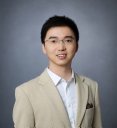
 Renshuai Tao
· 2 previous affiliations
- Beijing Jiaotong UniversitySince 2023
- Associate Professor · Since 2023
- Beihang University2013–2022
- PhD student · 2019–2022
- Undergrad student · 2013–2017
Research Overview
Renshuai Tao focuses on computer vision under constrained conditions, multimedia security, and synthetic media detection. His early work addressed object detection in complex X-ray security environments characterized by heavy occlusion and incomplete information. More recently, his research has shifted toward identifying AI-generated media, exploring semantic anomalies in deepfakes, and developing robust methods for generative model stylization and compression.
Research Trajectory
Initial work addressed the challenges of object detection in environments with highly constrained or incomplete visual data, particularly in X-ray security inspection. In 2020, he contributed to Occluded Prohibited Items Detection: An X-ray Security Inspection Benchmark and De-occlusion Attention Module, which introduced the OPIXray benchmark to evaluate detection performance on heavily overlapped objects like cutters. He formalized the broader theoretical challenges of these environments in Learning from Multimedia Data with Incomplete Information (2021), examining how background noise, small target sizes, and severe occlusion degrade traditional deep learning approaches. To provide more robust training data for the field, he subsequently developed Towards Real-world X-ray Security Inspection: A High-Quality Benchmark And Lateral Inhibition Module For Prohibited Items Detection (2021), releasing the large-scale HiXray dataset gathered from real-world airport environments.
Building on this foundation, the research expanded to address data scarcity and domain shifts inherent to security imaging. In Few-shot X-ray Prohibited Item Detection: A Benchmark and Weak-feature Enhancement Network (2022), he tackled the problem of identifying highly scarce prohibited items, such as firearms, by enhancing weak features that are difficult to learn under heavy occlusion. That same year, he investigated the often-overlooked intrinsic hardware and imaging differences across scanners in Exploring Endogenous Shift for Cross-domain Detection: A Large-scale Benchmark and Perturbation Suppression Network. With collaborators, he also explored the physical vulnerabilities of these detection systems, participating in the development of adversarial attacks detailed in X-Adv: Physical Adversarial Object Attacks against X-ray Prohibited Item Detection (2023).
By 2025, the trajectory expanded significantly into multimedia forensics and the detection of synthetic media. A major focus became the generalization of deepfake detection models in open-world scenarios. In ODDN: Addressing Unpaired Data Challenges in Open-World Deepfake Detection on Online Social Networks, he proposed a framework to handle the severe imbalance between readily available compressed images and scarce raw pairings on social platforms. He further addressed generalization challenges in SAGNet: Decoupling Semantic-Agnostic Artifacts From Limited Training Data for Robust Generalization in Deepfake Detection (2025), designing a network that performs consistently across unseen object categories by isolating semantic-agnostic artifacts. Alongside multimedia forensics, he investigated model efficiency, proposing a low-rank approximation and sparsification technique in LS-PRISM: A layer-selective pruning method via low-rank approximation and sparsification for efficient large language model compression (2025).
In 2026, the focus on synthetic media matured to encompass high-level semantic reasoning and generative control. He contributed to Semantic Visual Anomaly Detection and Reasoning in AI-Generated Images, which introduced the AnomReason benchmark and a multi-agent pipeline to explain complex violations of physics and anatomy in generated images. This work directly supports the research direction of Beyond Pixel Artifacts in Synthetic Media Detection and the broader area of Exploiting Temporal Inconsistencies to Detect Synthetic Video. Concurrently, he explored the constructive side of generative models in CoCoDiff: Correspondence-Consistent Diffusion Model for Fine-grained Style Transfer (2026). By mining semantic alignments within pretrained latent diffusion models, this training-free framework ensures stylistic elements are applied to matching regions while preserving image structure. This advances several research areas, including Localized and Semantic Control for Neural Stylization, Repurposing Pretrained Diffusion Models for Visual Perception, Structure Preserving Photorealistic Style Transfer, and Semantic Awareness in Neural Style Transfer. Alongside these generative advancements, he continued to probe deep learning vulnerabilities, participating in the design of non-poisoning exploits in Practical and Flexible Backdoor Attack Against Deep Learning Models via Shell Code Injection (2026).
Current Directions
Recent work investigates the intersection of generative AI, semantic reasoning, and model security. The most recent papers in the evidence address the limitations of pixel-level forensics by developing multi-agent pipelines capable of explaining complex physical, spatial, and anatomical violations in AI-generated images. Concurrently, research explores high-fidelity, training-free style transfer by establishing dense, pixel-level correspondences within pretrained latent diffusion models. Alongside these generative and forensic advancements, ongoing efforts examine the security of deep learning architectures, specifically focusing on non-poisoning backdoor attacks via shell code injection to better understand and mitigate threats in cyberspace applications.
Profile updated
Loading new papers…
Other researchers whose papers cluster into the same research directions — a proxy for overlapping technical interests and shared intellectual neighborhoods.
See something wrong? Report a mistake