

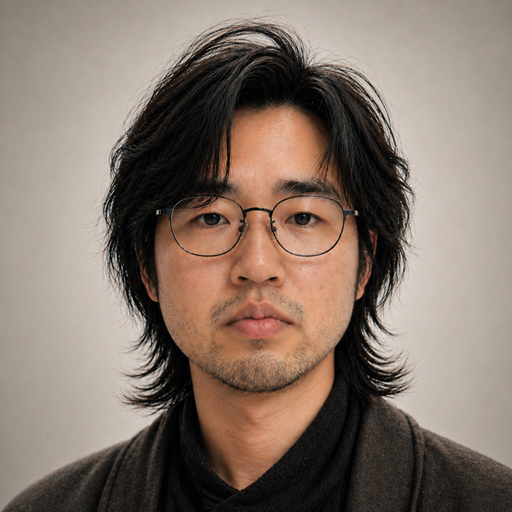
 Renjie Xu
· 3 previous affiliations
- Postdoc · Since 2024
- Joy Future AcademyCurrent
- Current
- Fudan University2013–2024
- PhD student · 2017–2024
- Undergrad student · 2013–2017
1 other author named Renjie Xu: Renjie Xu (1 paper)
Research Overview
Renjie Xu focuses on numerical linear algebra, optimization, and the acceleration of large model inference. His trajectory spans foundational matrix and tensor decompositions to applied methods for efficient transformer architectures and interpretable representations. Currently, his work investigates sparse attention mechanisms and hardware-aware designs to improve the stability and computational efficiency of deep learning models.
Research Trajectory
Xu’s early research addressed foundational problems in data recovery and optimization, beginning with his 2022 work on Low-rank traffic matrix completion with marginal information. Building on this numerical foundation, he expanded into the study of dual matrices—mathematical structures that extend real numbers to capture both standard values and infinitesimal changes, which are particularly useful in robotics and signal processing. In 2024, he introduced a novel algorithm in QR decomposition of dual matrices and its application. This method improved the identification of traveling wave patterns in complex data, such as brain activity, by offering enhanced orthogonality and computational efficiency. This work aligns with broader efforts in the research direction of Robust Orthogonalization for Stable High Dimensional Linear Algebra.
In 2025, Xu’s focus broadened significantly to encompass the acceleration of large-scale machine learning models and high-dimensional tensor analysis. He continued his theoretical work on matrix factorizations with LU Decomposition and Generalized Autoone-Takagi Decomposition of Dual Matrices and their Applications, providing a systematic way to factorize matrices containing both real and infinitesimal components and extending these methods to complex and quaternion domains. Alongside this, he developed geometric approaches to high-dimensional statistics, introducing a framework in sparseGeoHOPCA: A Geometric Solution to Sparse Higher-Order PCA Without Covariance Estimation. By treating Sparse Higher-Order Principal Component Analysis as a geometric column-selection problem, this method avoids explicit covariance matrix estimation, achieving linear scaling with tensor size and boosting computational efficiency.
Concurrently, Xu contributed to applied computer vision and remote sensing. He participated in the development of causal methods for synthetic aperture radar (SAR) automatic target recognition in Limited-Data SAR ATR Causal Method via Dual-Invariance Intervention.
A major theme of his 2025 research involves optimizing Transformer architectures for both training and inference. He collaborated on UniFormer: Unified and Efficient Transformer for Reasoning Across General and Custom Computing, an architecture combining global linear attention with local block-wise attention to achieve high performance on GPUs and significant acceleration on FPGAs. Further addressing the quadratic complexity bottleneck of Transformers, Xu participated in the design of DuSA: Fast and Accurate Dual-Stage Sparse Attention Mechanism Accelerating Both Training and Inference. This mechanism splits attention into two stages—one for local details and one for long-range dependencies—achieving substantial speedups across tasks ranging from image classification to long-context video generation. This contribution intersects with several active research areas, including Hardware-Aware Sparse Attention for Long-Context Transformers, Global Dependency Modeling in Sparse Transformers, and Window Based Attention for High Resolution Vision. He also explored efficient attention mechanisms specifically tailored for vision models in ELFATT: Efficient Linear Fast Attention for Vision Transformers.
Looking ahead to his 2026 publications, Xu continues to merge numerical linear algebra with complex system modeling. He investigated the stability of delay systems in Numerical radius approach to asymptotic stability of quaternion-tensor delay systems. Additionally, he guided the development of optimization techniques for tensor problems, as seen in An ADMM-based interior point method for solving nonnegative tensor least squares problems and its applications, which applies an alternating direction method of multipliers (ADMM) framework to nonnegative tensor least squares.
Current Directions
The most recent papers in the evidence point to two primary research directions. First, Xu is actively investigating efficient attention mechanisms and hardware-aware architectures to accelerate large-scale Transformer models. This includes developing dual-stage sparse attention and unified architectures that bridge general-purpose GPUs and custom computing platforms like FPGAs, addressing the broader challenge of Operator Fusion for Memory-Bound Deep Learning.
Second, he continues to advance numerical linear algebra through the study of dual matrices, quaternions, and higher-order tensors. Recent work addresses the stability of quaternion-tensor delay systems and develops optimization frameworks, such as ADMM-based interior point methods, for solving complex tensor least squares problems. This dual focus allows him to contribute both to the theoretical foundations of high-dimensional mathematics and to the practical deployment of efficient artificial intelligence systems.
Profile updated
Loading new papers…
Other researchers whose papers cluster into the same research directions — a proxy for overlapping technical interests and shared intellectual neighborhoods.
See something wrong? Report a mistake