

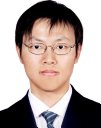
 Renchu Guan
· 1 previous affiliation
- Jilin UniversitySince 2019
- Full Professor · Since 2019
- PhD student · 2007–2010
Research Overview
Renchu Guan focuses on graph neural networks, short text understanding, and few-shot learning methodologies. His trajectory spans early work in semi-supervised text clustering and biomedical information extraction to recent advancements in graph contrastive learning and heterophilic network architectures. Currently, his research emphasizes adaptive spectral filtering and robust representation learning for complex, sparse data environments.
Research Trajectory
Guan's early work explored semi-supervised clustering techniques for text analysis. With collaborators, he developed An incremental affinity propagation algorithm and its applications for text clustering, which adapted the affinity propagation algorithm to incorporate prior knowledge via an adjusted similarity matrix and an incremental learning scheme. He subsequently introduced Text Clustering with Seeds Affinity Propagation, proposing a novel similarity metric to capture the structural information of texts and improve the semi-supervised clustering process compared to traditional k-means approaches.
Expanding into computational biology, his lab addressed challenges in the area of Overcoming Data Sparsity in Single Cell Sequencing. This led to the development of MISC: missing imputation for single-cell RNA sequencing data, a hybrid machine learning model designed to accurately identify and recover the high percentages of missing values inherent in scRNA-seq data caused by low capture efficiency. Concurrently, he advanced biomedical literature mining with Deep Residual Convolutional Neural Network for Protein-Protein Interaction Extraction. This work demonstrated that deep residual architectures could extract protein interactions effectively without relying on computationally expensive linguistic parsing tools, facilitating the processing of large-scale databases like PubMed.
A major theme in Guan's subsequent research is the integration of graph neural networks (GNNs) with natural language processing, particularly addressing the research direction of Overcoming Semantic Sparsity in Short Text Understanding. He introduced Deep Attention Diffusion Graph Neural Networks for Text Classification, a model that decouples feature transformation from graph propagation and employs an attention diffusion mechanism to capture long-range word interactions while mitigating the well-known over-smoothing problem. His group further tackled short text sparsity in Boosting Short Text Classification with Multi-Source Information Exploration and Dual-Level Contrastive Learning, combining statistical, linguistic, and factual information exploration with instance- and cluster-level contrastive learning. This was complemented by A Simple Graph Contrastive Learning Framework for Short Text Classification, which avoids the semantic corruption typical of explicit data augmentation by learning discriminative information from implicit potential views.
Guan's recent trajectory heavily emphasizes robust graph representation learning under limited supervision. His lab has proposed multiple frameworks for graph few-shot learning. In Enhancing Unsupervised Graph Few-shot Learning via Set Functions and Optimal Transport, they utilized permutation-invariant set features and optimal transport to align data distributions, eliminating the need for labeled base data. Addressing the scarcity of meta-training tasks, his group developed Dual-level Mixup for Graph Few-shot Learning with Fewer Tasks to prevent overfitting in few-shot scenarios. Furthermore, they introduced Graph Few-Shot Learning via Adaptive Spectrum Experts and Cross-Set Distribution Calibration, which employs a mixture-of-experts approach to adaptively filter local graph signals and bridge the distribution gap between labeled and unlabeled data. This work contributes to the broader area of Adaptive Spectral Filtering for Heterophilic Graph Neural Networks. He also extended these principles to hypergraphs, introducing Hypergraph Contrastive Learning for both Homophilic and Heterophilic Hypergraphs, an unsupervised framework that preserves distinct node characteristics across varying structural environments via high-pass filtering.
Beyond graph structures, Guan's research addresses fundamental machine learning optimization challenges. His group investigated Positive-Unlabeled (PU) learning in Balancing Positive and Negative Classification Error Rates in Positive-Unlabeled Learning, proposing a dual-constrained risk estimator to prevent models from over-optimizing for negative samples at the expense of positive ones. Most recently, he participated in research on large language models, contributing to Differential Fine-Tuning Large Language Models Towards Better Diverse Reasoning Abilities. This method selectively updates task-specific parameters to mitigate task interference when teaching models multiple reasoning skills simultaneously.
Current Directions
The most recent papers in the evidence indicate a strong focus on robust representation learning in low-resource and complex structural environments. Current work investigates graph few-shot learning, particularly developing adaptive spectral filtering mechanisms and optimal transport alignments to handle distribution shifts and heterophilic connections where connected nodes are highly dissimilar. Additionally, recent research addresses fundamental optimization challenges in weakly supervised scenarios, such as balancing error rates in Positive-Unlabeled learning, and explores parameter-efficient fine-tuning strategies to improve diverse reasoning capabilities in large language models without inducing task interference.
Profile updated
| Paper | Venue | Year |
|---|---|---|
| High-parameter spatial multi-omics through histology-anchored integrationGitHubKEAML-JLU/ | Nature Methods | 2025 |
Loading new papers…
Other researchers whose papers cluster into the same research directions — a proxy for overlapping technical interests and shared intellectual neighborhoods.
See something wrong? Report a mistake