

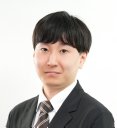
 Ren Fujiwara
· 2 previous affiliations
- The University of OsakaSince 2023
- Assistant Professor · Since 2026
- PhD student · 2023–2026
- Osaka University2021–2026
- 博士(情報システム) · 2023–2026
- 修士(情報システム) · 2021–2023
Research Overview
Ren Fujiwara focuses on data mining and machine learning, with a particular emphasis on time-series analysis and dynamical systems. His trajectory spans real-time forecasting for controlled sequences, modeling non-linear dynamics, and tracking time-evolving causality in data streams. Currently, his work addresses concept drift and model adaptation strategies for dynamic data environments.
Research Trajectory
Fujiwara’s early work addresses the challenges of predictive control in industrial applications, where accurate forecasting is critical. He introduced C-Cast: A Real-Time Forecasting Model for a Controlled Sequence, an adaptive method designed to forecast the future behavior of controlled sequences. This approach leverages exogenous sequences, such as manipulated variables and operation signals, to effectively capture important temporal patterns and improve real-time predictive control.
Expanding on the analysis of complex temporal data, his research progressed to capturing underlying structural changes and relationships within continuous data. He developed approaches for Modeling Latent Non-Linear Dynamical System over Time Series, focusing on representing the complex, non-linear behaviors hidden within temporal observations. During this period, he also collaborated on methods for Modeling Time-evolving Causality over Data Streams, contributing to techniques that track how causal links between variables shift as streaming data evolves over time.
More recently, Fujiwara has investigated the robustness of machine learning models in the presence of sudden data distribution shifts, contributing to the broader research direction of Event Driven Model Adaptation for Dynamic Data Streams. In this area, he presented When to Retrain after Drift: A Data-Only Test of Post-Drift Data Size Sufficiency. This work introduces CALIPER, a model-agnostic technique that analyzes the internal structure of a data stream to determine exactly when sufficient post-drift data has been collected for safe model retraining. By relying on data characteristics rather than probing the model itself, the method minimizes both system downtime and the risk of overfitting during adaptation.
Current Directions
The most recent papers in the evidence address the reliability and maintenance of machine learning models deployed in dynamic environments. Specifically, recent work investigates how to handle concept drift in continuous data streams. This involves developing data-centric, model-agnostic tests to evaluate post-drift data sufficiency, ensuring that predictive models can be retrained stably and efficiently without unnecessary downtime or vulnerability to overfitting.
Profile updated
Loading new papers…
Other researchers whose papers cluster into the same research directions — a proxy for overlapping technical interests and shared intellectual neighborhoods.
See something wrong? Report a mistake