

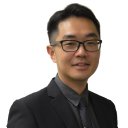
 Raphaël C-W Phan
· 2 previous affiliations
- Monash UniversitySince 2019
- Full Professor · Since 2019
- Multimedia University2012–2019
- Full Professor · 2012–2019
Research Overview
Raphaël C-W Phan focuses on computer vision, generative modeling, and medical image analysis. His trajectory spans foundational improvements in energy-based models and video action recognition to specialized architectures for clinical diagnostics. Recently, his work emphasizes multimodal neuroimaging fusion and the synthesis of functional brain networks to identify neurological disorders.
Research Trajectory
The trajectory begins with advancements in hybrid neural architectures for visual recognition and medical diagnostics. Contributing to the area of Synergizing Convolutions and Transformers for Visual Representation, he developed ActNetFormer: Transformer-ResNet Hybrid Method for Semi-supervised Action Recognition in Videos in 2024. Building on the broader area of Exploiting Temporal Redundancy in Video Neural Networks, this framework leverages cross-architecture pseudo-labeling and contrastive learning to reduce reliance on large annotated datasets. This interest in hybrid models extended to clinical applications, where he introduced CAFCT: Contextual and Attentional Feature Fusions of Convolutional Neural Networks and Transformer for Liver Tumor Segmentation. Concurrently, he enhanced object detection architectures for automated diagnostics in BGF-YOLO: Enhanced YOLOv8 with Multiscale Attentional Feature Fusion for Brain Tumor Detection, incorporating bi-level routing attention and generalized feature pyramid networks.
Alongside applied vision, he contributed to foundational machine learning algorithms. He proposed a novel framework to improve the extrapolation power of unsupervised learning in Hessian unsupervised extreme learning machine. A major thematic shift emerged toward energy-based generative modeling, specifically addressing the Markov chain Monte Carlo (MCMC) sampling bottleneck. He introduced the Variational Potential Flow (VAPO) framework in early preprints, including Variational Potential Flow: A Novel Probabilistic Framework for Energy-Based Generative Modelling and its expanded iteration Variational Potential Flow: A Novel Probabilistic Framework for Energy-Based Generative Modelling. This work culminated in Learning Energy-Based Generative Models via Potential Flow: A Variational Principle Approach to Probability Density Homotopy Matching, which formalizes a method to train energy-based models without implicit MCMC sampling by constructing a flow-driven density homotopy.
Returning to video analysis in 2025, he addressed challenges in low-light conditions. Advancing self-supervised video representation learning, he developed Seeing in the Dark: A Teacher-Student Framework for Dark Video Action Recognition via Knowledge Distillation and Contrastive Learning, which prevents spatial and temporal detail collapse in under-exposed environments. In medical imaging, he tackled inverse problems and volumetric context loss with Denoising via Repainting: an image denoising method using layer wise medical image repainting, a tuning-free framework that reconstructs MRI data using progressive Bézier-path redrawing without requiring massive labeled training sets.
Most recently, his research has focused heavily on multimodal neuroimaging and brain connectivity. He participated in developing Brain-MGF: Multimodal Graph Fusion Network for EEG-fMRI Brain Connectivity Analysis Under Psilocybin, which uses adaptive gating to fuse high-resolution fMRI with real-time EEG. This aligns with broader efforts in the research directions of Explaining Predictions in Graph Neural Networks and Overcoming Temporal Averaging Bias in Functional Brain Networks. Continuing this trajectory into 2026, he contributed to Functional MRI Time Series Generation via Wavelet-Based Image Transform and Spectral Flow Matching for Brain Disorder Identification, introducing Dual-Spectral Flow Matching to synthesize high-fidelity fMRI data for diagnosing conditions like Major Depressive Disorder. His ongoing clinical modeling work also includes A new time-decay radiomics integrated network (TRINet) for breast cancer risk prediction.
Current Directions
Recent work investigates the intersection of generative modeling and clinical neuroimaging. The most recent papers in the evidence address the synthesis and analysis of complex brain signals, utilizing flow-matching models and dual-spectral image representations to generate high-fidelity functional MRI time series. This research aims to decode noisy neural signals and capture task-evoked dynamics to better identify brain disorders such as Major Depressive Disorder and Autism. Additionally, current directions include advancing cross-modal fusion techniques—specifically integrating spatial fMRI data with temporal EEG data—and developing time-decay radiomics networks for longitudinal cancer risk prediction.
Profile updated
Loading new papers…
Other researchers whose papers cluster into the same research directions — a proxy for overlapping technical interests and shared intellectual neighborhoods.
See something wrong? Report a mistake