

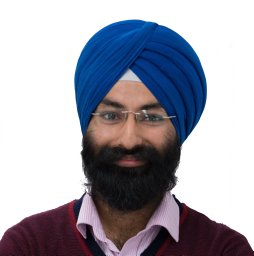
 Rajkarn Singh
· 6 previous affiliations
- Senior Machine Learning Engineer · Since 2022
- Huawei Technologies (China)2022–2025
- Researcher · 2022–2025
- University of Edinburgh2015–2021
- PHD Candidate · 2016–2021
- MSc (research) · 2015–2016
- The Alan Turing Institute2018–2019
- Enrichment Placement (Internship) · 2018–2019
- Research Scholar (MS) · 2012–2015
- Samsung Electronics (South Korea)2010–2011
- Software Engineer · 2010–2011
Research Overview
Rajkarn Singh focuses on spatiotemporal data analysis, mobile network optimization, and the development of foundation models for time series forecasting. His work spans the characterization of large-scale mobile service usage, the energy-efficient orchestration of telecommunications infrastructure, and the evaluation of zero-shot learning capabilities in deep temporal models. Currently, his research emphasizes the adaptation of large-scale pretrained models to specialized domains such as cloud infrastructure and the improvement of inference efficiency in sequence modeling.
Research Trajectory
The early phase of Singh’s research, beginning around 2018, was centered on the privacy and spatial dynamics of mobile trajectory data. This period involved developing comparative frameworks for privacy-preserving mechanisms, specifically addressing the theoretical differences between various adversary models and background knowledge assumptions. A significant contribution during this time was the investigation of national-scale mobile service consumption patterns. In Urban Vibes and Rural Charms: Analysis of Geographic Diversity in Mobile Service Usage at National Scale, Singh led an analysis of mobile data in France, demonstrating that while most service demands are uniform, specific categories like operating system updates and video streaming exhibit distinct geographic diversity that correlates with socio-economic indicators.
By 2021, Singh’s focus shifted toward the operational challenges of 5G Radio Access Networks (RAN) and the generation of synthetic network traffic. This work addressed the increasing complexity of 5G orchestration, particularly the trade-offs between computational load and energy consumption in virtualized RAN environments. During this period, he participated in the development of generative models for city-scale spatiotemporal traffic, such as SpectraGAN and CartaGenie, which utilized spectral analysis and context-driven synthesis to produce realistic mobile network snapshots. This transition marked a move from descriptive spatial analysis to the creation of generative tools for network planning and optimization.
In 2023 and 2024, Singh’s work increasingly intersected with cloud computing and serverless architectures. He contributed to large-scale characterizations of production serverless workloads, analyzing long-term trends and the factors influencing performance bottlenecks. This included a detailed examination of cold starts in serverless platforms, utilizing extensive traces from industrial cloud environments to identify the impact of trigger types, runtime languages, and resource allocation on system latency.
Most recently, Singh has moved into the field of Zero Shot Generalization in Time Series Foundation Models. This current phase of research explores the shift from bespoke, dataset-specific models to Foundation Models for General Purpose Time Series Analysis. His contributions in this area involve treating forecasting as a continuous function approximation problem, which allows for Flexible Horizons for Time Series Forecasting without the error accumulation typical of recursive methods. This work also explores the technical challenges of Piecewise Constant and Binned Representations for Discontinuous Data and the integration of Continuous Temporal Coordinates for Sequence Modeling to handle irregularly sampled data.
Current Directions
Singh’s current research agenda is defined by the critical evaluation and refinement of foundation models (FMs) in specialized industrial contexts. A primary focus is the performance of these models on cloud infrastructure data, where standard zero-shot predictors often struggle. His recent collaborative work has identified significant pathologies in how FMs handle the high-frequency, non-stationary nature of cloud metrics, often finding that simple linear baselines outperform complex pretrained architectures in these specific domains.
To address these limitations, Singh is exploring methods for lightweight online adaptation. This involves developing frameworks that allow static, pretrained models to adapt to real-time data shifts without the need for full retraining. This direction also encompasses the study of Modeling Cross-Variable Dependencies in Multivariate Time Series, seeking to move beyond channel-independent assumptions to better capture the complex interactions between variables in systems like power grids or data centers.
Additionally, Singh has begun investigating efficiency in large language model (LLM) inference. This includes work on speculative decoding, where he has participated in developing randomized drafting techniques to increase token-per-second throughput while maintaining distributional guarantees. This suggests a broadening of his sequence modeling expertise from purely numerical time series to include the computational optimization of generative text models.
Representative Work
Urban Vibes and Rural Charms: Analysis of Geographic Diversity in Mobile Service Usage at National Scale As the lead author, Singh conducted a comprehensive study of mobile service usage across France. The research identified that while most mobile service consumption is spatially homogeneous, a subset of services provides a "geographic signature" of a region. The study established that a limited set of consumption behaviors can characterize the majority of national usage, providing a foundational understanding of how digital service demand correlates with physical geography.
DAM: Towards a Foundation Model for Forecasting Singh participated in the development of the Deep Data-dependant Approximate analytical Model (DAM). This work represents a significant move toward foundation models in the time series domain. By framing forecasting as a continuous function approximation rather than a fixed-length vector prediction, the model achieves strong zero-shot performance across diverse datasets. This approach addresses the limitations of traditional models that are constrained by fixed input and output horizons.
Serverless Cold Starts and Where to Find Them In this collaborative effort, Singh contributed to the analysis of a massive trace from Huawei’s serverless platform, encompassing 85 billion requests. The study provides a detailed breakdown of the components of cold starts, such as pod allocation and dependency deployment. This work is critical for understanding the operational realities of cloud-native applications and informs the development of more efficient scheduling and resource allocation algorithms.
Performance of Zero-Shot Time Series Foundation Models on Cloud Data This research investigates the efficacy of prominent time series foundation models when applied to cloud-specific datasets. Singh and his collaborators demonstrated that many models claiming universal forecasting capabilities fail to outperform simple linear baselines in the cloud domain. The paper highlights specific pathologies in FM outputs, suggesting that the "one-size-fits-all" promise of current foundation models requires significant refinement for specialized industrial applications.
Lightweight Online Adaption for Time Series Foundation Model Forecasts Addressing the static nature of deployed foundation models, Singh contributed to the development of ELF (Ensembling with online Linear Forecaster). This framework allows for the online adaptation of FM forecasts by ensembling them with a fast-learning linear specialist. The approach provides a computationally efficient method for mitigating the impact of real-time data shifts, improving the robustness of foundation models in dynamic environments.
Higher Acceptance Rates for Speculative Decoding with Randomised Drafting In the area of LLM optimization, Singh participated in research on speculative decoding. The work introduces a randomized component to the drafting process, which can boost the acceptance rate of tokens generated by smaller draft models. This technique improves the overall inference speed of large base models while preserving the statistical integrity of the output, representing a contribution to the broader field of efficient deep learning inference.
Profile updated
Loading new papers…
Other researchers whose papers cluster into the same research directions — a proxy for overlapping technical interests and shared intellectual neighborhoods.
See something wrong? Report a mistake