

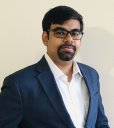
 Rajarshi Bhowmik
· 4 previous affiliations
- Bloomberg (United States)Since 2020
- Research Engineer · Since 2021
- Current
- Summer Research Intern · 2020
- Graduate Teaching Assistant · 2020–2021
- PhD student · 2015–2021
- Graduate Research Assistant · 2018–2020
- Nokia Bell Labs2017
- Summer Research Intern · 2017
- National Institute of Technology Karnataka2012–2014
- MS student · 2012–2014
Research Overview
Rajarshi Bhowmik focuses on natural language processing and information retrieval, with specific emphasis on knowledge graph inference, entity linking, and dynamic fact retrieval. His trajectory spans from explainable link prediction for emerging entities to efficient biomedical entity resolution using dual-encoder architectures. His most recent work addresses the optimization of entity linking models for large-scale document processing.
Research Trajectory
Rajarshi Bhowmik’s research trajectory demonstrates a consistent focus on improving how computational models understand, retrieve, and link entities within complex textual environments and knowledge bases. His early work addresses the fundamental limitations of static knowledge representations, particularly the challenge of integrating new information into existing structures.
In 2020, Bhowmik led research on the problem of knowledge graph incompleteness. Standard embedding-based approaches for link prediction often operate in uninterpretable latent semantic spaces and struggle to accommodate evolving graphs where new entities frequently appear. In Explainable Link Prediction for Emerging Entities in Knowledge Graphs, he and his co-author proposed an inductive approach designed to handle newly emerging entities while maintaining explainability by operating in a symbolic space. This work contributes to the broader area of Knowledge Enhanced Representation of Long Tail Entities, addressing the discrepancy between well-represented "head" entities and the sparse, evolving "tail" of new concepts. During the same year, he also collaborated as a second author on Facts That Matter: Dynamic Fact Retrieval for Entity-Centric Search Queries, further exploring how systems can dynamically surface relevant factual information in response to entity-focused user queries.
By 2021, Bhowmik’s focus shifted toward the computational bottlenecks inherent in modern entity linking systems, particularly within specialized domains. Standard BERT-based models typically employ a retrieve-and-rerank paradigm that, while highly accurate, is computationally expensive because it processes only one entity mention at a time. As first author of Fast and Effective Biomedical Entity Linking Using a Dual Encoder, Bhowmik introduced a dual-encoder architecture capable of resolving multiple biomedical mentions within a document in a single pass. This methodology directly engages with the research direction of Joint Attention for Precise Semantic Matching, seeking to overcome the representation bottlenecks of fixed-length document vectors, and touches upon themes such as Guiding Attention with Explicit Entity Boundary Markers to improve the precision of entity resolution in dense, domain-specific text.
Current Directions
The most recent paper in the evidence is from 2021, indicating a focus on optimizing the computational efficiency of semantic matching and entity resolution. Recent work investigates how to overcome the representation bottlenecks inherent in standard retrieve-and-rerank paradigms, particularly in specialized domains like biomedical text. By exploring dual-encoder architectures that process entire documents simultaneously, this direction seeks to balance the high accuracy of deep contextual models with the speed required for practical, large-scale information retrieval.
Profile updated
Loading new papers…
Other researchers whose papers cluster into the same research directions — a proxy for overlapping technical interests and shared intellectual neighborhoods.
See something wrong? Report a mistake