

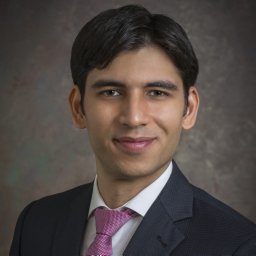
 Rahmatollah Beheshti
· 3 previous affiliations
- University of DelawareSince 2018
- Associate Professor · Since 2025
- Assistant Professor · 2018–2025
- Johns Hopkins University2015–2018
- Health Data Science · 2015–2018
- University of Central Florida2011–2015
- Doctor of Philosophy (PhD), Computer Science · 2011–2015
Research Overview
Rahmatollah Beheshti focuses on machine learning and health artificial intelligence, specifically developing predictive models and clinical decision support systems using electronic health records. His trajectory spans from longitudinal time-series forecasting and dynamic risk stratification to the representation of complex clinical data. Most recently, his work emphasizes the reliable application of large language models in healthcare, addressing critical challenges in algorithmic fairness, bias mitigation, and efficient clinical text summarization.
Research Trajectory
His early research explored multi-agent systems, including work on Normative agents for real-world scenarios. Subsequently, his focus shifted toward clinical machine learning, particularly leveraging electronic health records (EHRs) to build predictive models. A major theme during this period was the area of Dynamic Temporal Modeling for Clinical Risk Assessment. He developed deep learning approaches with interpretable elements for Obesity Prediction with EHR Data: A Deep Learning Approach with Interpretable Elements, aiming to bridge data gaps and model missing signals in clinical settings.
To handle the irregular and longitudinal nature of patient histories, he contributed to the research direction of Recurrent Architectures for Longitudinal Patient Trajectories. Recognizing that traditional models often require fixed observation windows, he addressed these limitations by introducing Flexible-Window Predictions on Electronic Health Records, advancing the broader field of Flexible Horizons for Time Series Forecasting. To facilitate standardized machine learning research on intensive care data, he also guided the development of An Extensive Data Processing Pipeline for MIMIC-IV, creating a unified infrastructure for semantic harmonization and multi-source data linkage.
Building on his longitudinal modeling expertise, he investigated Subtyping Patients With Chronic Disease Using Longitudinal BMI Patterns to extract interpretable features for predicting disease incidence. He also expanded into multimodal clinical data, designing a comprehensive pipeline for Multimodal Sleep Apnea Detection with Missing or Noisy Modalities that compensates for incomplete polysomnography records. Returning to pediatric care, he developed An Interoperable Machine Learning Pipeline for Pediatric Obesity Risk Estimation, an end-to-end system designed for clinical decision support using routinely recorded data.
Recognizing that raw tabular EHR data limits downstream performance, he explored graph-based representations. He introduced HealthGAT: Node Classifications in Electronic Health Records using Graph Attention Networks, a hierarchical framework to generate refined medical code embeddings. He further participated in collaborative research applying Graph Transformers on EHRs: Better Representation Improves Downstream Performance.
A critical evolution in his trajectory involves algorithmic fairness and the integration of large language models (LLMs) into clinical settings. He initially explored federated learning to address disparities in Improving Fairness in AI Models on Electronic Health Records: The Case for Federated Learning Methods. As LLMs became prominent, he investigated the area of Bias Amplification in Specialized Language Models. He conducted a comprehensive evaluation of Bias patterns in the application of LLMs for clinical decision support: A comprehensive study, using standardized clinical vignettes to reveal social biases. To mitigate these issues, he contributed to the direction of Counterfactual Perturbation for Auditing Large Language Model Bias, proposing a preference optimization method in Aligning (Medical) LLMs for (Counterfactual) Fairness.
His most recent work continues to refine foundation models for clinical use. To address the computational bottlenecks of transformer models on long, sparse clinical sequences, he developed HyMaTE: A Hybrid Mamba and Transformer Model for EHR Representation Learning, advancing the area of Continuous Time Modeling of Asynchronous Clinical Observations. In the domain of generative AI, he introduced ConTextual: Improving Clinical Text Summarization in LLMs with Context-preserving Token Filtering and Knowledge Graphs, a framework that prunes redundant text and enriches the remainder with domain-specific knowledge. Furthermore, he addressed reinforcement learning vulnerabilities in Reward Hacking Mitigation using Verifiable Composite Rewards, designing reward functions that penalize models for skipping reasoning steps in high-stakes medical question-answering. He also explored the integration of structured knowledge to identify latent patterns in Leveraging Social Determinants of Health (SDoH) Knowledge Graph to Identify Latent Patterns in Veteran Suicide Risk.
Current Directions
Recent work investigates the reliability, efficiency, and safety of large language models and foundation models in healthcare. A primary focus is on aligning medical LLMs to ensure counterfactual fairness and mitigate implicit biases that could exacerbate health disparities. Additionally, ongoing research addresses the computational challenges of processing massive, irregular clinical contexts. This includes developing hybrid state-space and transformer architectures for linear-time sequence modeling of electronic health records, as well as designing verifiable reward systems to prevent reward hacking during the reinforcement learning phase of medical reasoning models. Finally, the integration of structured medical knowledge graphs with generative AI remains a key theme for improving clinical text summarization and extracting actionable insights regarding social determinants of health.
Profile updated
Loading new papers…
Other researchers whose papers cluster into the same research directions — a proxy for overlapping technical interests and shared intellectual neighborhoods.
See something wrong? Report a mistake