

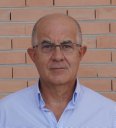
 Rafael Molina
· 1 previous affiliation
- Universidad de GranadaSince 1979
- Full Professor · Since 1979
- Current
Research Overview
Rafael Molina focuses on Bayesian inference, image restoration, and probabilistic modeling for complex inverse problems. His trajectory spans early work in hierarchical Bayesian methods for astronomical and medical imaging to modern hybrid approaches combining physics-based priors with deep learning. Recently, his research emphasizes uncertainty quantification and probabilistic attention mechanisms in multiple instance learning for medical diagnostics.
Research Trajectory
At the University of Granada, his early work established robust statistical frameworks for inverse problems in imaging. In 1994, he explored the area of Automated Regularization via Hierarchical Bayesian Inference with On the Hierarchical Bayesian Approach to Image Restoration: Applications to Astronomical Images. This research introduced a two-stage hierarchical model to estimate hyperparameters for noise and image structures, providing a principled way to handle uncertainty in astronomical image restoration.
Throughout the 2000s, he expanded this Bayesian framework to address a wider variety of visual reconstruction challenges, contributing significantly to the broader direction of Automated Regularization Tuning for Inverse Problems. He framed demosaicing as a super-resolution task in A Bayesian Super-Resolution Approach to Demosaicing of Blurred Images, modeling inter-channel correlations to reduce artifacts compared to sequential pipelines. He continued to refine variational methods for image processing, utilizing variational distribution approximations for total variation (TV) image restoration in Parameter Estimation in TV Image Restoration Using Variational Distribution Approximation and extending these TV priors to blind deconvolution in Variational Bayesian Blind Deconvolution Using a Total Variation Prior.
In the 2010s, his research incorporated sparsity and compressive sensing principles. He investigated Laplace priors for signal recovery in Bayesian Compressive Sensing Using Laplace Priors. He further advanced the field of blind deconvolution by utilizing non-convex sparse priors to automatically estimate blur kernels and parameters, as detailed in Sparse Bayesian blind image deconvolution with parameter estimation. This fully automated Bayesian framework proved highly effective at recovering sharp images from real-world camera shake without prior knowledge of the specific blur kernel.
As deep learning transformed computer vision, his trajectory evolved to integrate classical physics-based models with modern neural architectures, advancing the research area of Hybrid Physics-Based Deep Learning for Image Restoration. With collaborators, he developed DDNet in Learning Moore-Penrose based residuals for robust non-blind image deconvolution, a hybrid framework combining classical Wiener filtering with dynamic filter networks to learn residuals in the blur kernel's null space, ensuring robust restoration even with inaccurate kernel estimates.
Concurrently, he explored scalable probabilistic models, contributing to the direction of Scaling Gaussian Processes Beyond Cubic Complexity and the related field of Deep Gaussian Processes for Hierarchical Probabilistic Modeling. In Scalable Variational Gaussian Processes for Crowdsourcing: Glitch Detection in LIGO, he applied variational Gaussian processes to handle large-scale crowdsourced data for classifying transient noise in high-sensitivity gravitational wave detectors.
A significant portion of his recent trajectory focuses on medical image analysis and Multiple Instance Learning (MIL). He participated in developing data-efficient histopathology frameworks in Efficient Cancer Classification by Coupling Semi Supervised and Multiple Instance Learning, combining MIL with semi-supervised learning to train classifiers with minimal manual annotations. Recognizing the inherent subjectivity in clinical annotations, he modeled expert disagreement in Probabilistic Modeling of Inter- and Intra-observer Variability in Medical Image Segmentation, addressing both inter-observer and intra-observer variability.
This focus on reliability led to deep investigations into the area of Probabilistic Attention for Uncertainty Quantification. He introduced the Attention Gaussian Process for MIL in Probabilistic Attention Based on Gaussian Processes for Deep Multiple Instance Learning, replacing deterministic attention with probabilistic models to flag uncertain predictions in cancer detection. This concept was further refined in Probabilistic smooth attention for deep multiple instance learning in medical imaging, which enforces spatial smoothness for clinical decision support. To support this growing field, he co-developed an open-source framework, detailed in torchmil: A PyTorch-based library for deep Multiple Instance Learning, providing modular building blocks for reproducible MIL research.
Most recently, he has also contributed to advanced generative sampling techniques. In Conditional Diffusion Sampling, he collaborated on a training-free framework that merges the global exploration of parallel tempering with the local transport efficiency of diffusion processes, allowing for high-quality sampling from complex, unnormalized distributions.
Current Directions
The most recent papers in the evidence indicate a strong focus on uncertainty quantification and probabilistic modeling within deep learning, particularly for medical imaging. Current work investigates how to make Multiple Instance Learning (MIL) more reliable for clinical diagnostics by replacing deterministic neural network components with probabilistic alternatives, such as Gaussian Processes. This includes developing spatially smooth, probabilistic attention mechanisms that not only improve classification accuracy but also generate interpretable uncertainty maps. Additionally, recent research addresses the fundamental challenges of sampling from complex multimodal distributions by combining diffusion models with parallel tempering techniques.
Profile updated
| Paper | Venue | Year |
|---|---|---|
| Probabilistic smooth attention for deep multiple instance learning in medical imagingGitHubFranblueee/ | Pattern Recognition | 2026 |
| Learning from crowds for automated histopathological image segmentationGitHubwizmik12/ | Comput. Medical Imaging Graph | 2024 |
| The CrowdGleason dataset: Learning the Gleason grade from crowds and expertsGitHubvipgugr/ | Comput. Methods Programs Biomed | 2024 |
| Learning from crowds in digital pathology using scalable variational Gaussian processesGitHubwizmik12/ | Scientific | 2021 |
Loading new papers…
Other researchers whose papers cluster into the same research directions — a proxy for overlapping technical interests and shared intellectual neighborhoods.
See something wrong? Report a mistake