

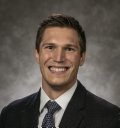
 Quinn Lanners
· 7 previous affiliations
- UpstartSince 2025
- Senior Research Scientist · Since 2026
- Research Scientist · 2025–2026
- Duke UniversityCurrent
- Current
- PHD Candidate · 2021
- Research Scientist Intern · 2024
- Optum (United States)2019–2021
- Data Scientist II · 2019–2021
- Trilogy Education2019–2020
- Data Science Teaching Assistant · 2019–2020
- Undergrad student · 2015–2019
- Loyola Marymount University2015–2019
- Bachelor’s Degree, Major - Applied Mathematics, Minor - Biochemistry · 2015–2019
Research Overview
Quinn Lanners focuses on the development of machine learning methodologies to facilitate interpretable causal inference and improve predictive modeling in high-stakes clinical environments. His work addresses the inherent complexities of real-world data, including high dimensionality, treatment confounding, and extreme class imbalance. By integrating statistical frameworks with algorithmic innovations, he seeks to create models that are not only accurate but also auditable and robust to the domain shifts common in medical and industrial applications.
Research Trajectory
Lanners’ research trajectory began with a focus on deep learning architectures within the field of computational linguistics. In 2017, his work centered on Robust Neural Machine Translation for Domain Shift, investigating the transition from phrase-based statistical models to end-to-end neural frameworks. During this period, he explored the fundamental limitations of sequence generation, specifically examining Why Larger Beam Widths Degrade Generation Quality, where increasing the search space paradoxically led to a degradation in translation quality. This early work established a foundation in understanding how neural architectures respond to data scarcity and distributional shifts, particularly in the context of Neural Machine Translation for Low-Resource Languages.
Following a period as a data scientist in the healthcare industry, Lanners transitioned to doctoral research in biostatistics, where he pivoted toward the intersection of machine learning and causal inference. Since 2023, his work has increasingly focused on making causal estimation more transparent and scalable. This shift is characterized by the development of matching frameworks that utilize variable importance to handle high-dimensional confounders. His recent research has expanded into the domain of Causal Inference for Continuous Treatment Regimes, moving beyond binary treatment effects to model more complex, real-world interventions such as dynamic dosing in intensive care settings.
In parallel with his methodological work in causal inference, Lanners has contributed to predictive modeling for rare clinical events. This work addresses the "data gap" in specialized medical fields by leveraging shared etiologies between common and rare outcomes. His participation in industrial research has also led to investigations into Uncertainty Quantification for Recommender Systems, specifically regarding the offline evaluation of ranking models.
Methodological Focus
A central theme in Lanners’ current work is the creation of "auditable" causal inference methods. Traditional "black-box" machine learning models often lack the transparency required for clinical decision-making. To counter this, Lanners has developed distance-metric learning approaches that allow researchers to troubleshoot and verify the quality of matched groups in observational studies. By learning which variables are most critical to the outcome, these methods ensure that treatment effect estimations are based on comparable subpopulations.
Lanners also addresses the challenge of rare event prediction in medicine. In many clinical datasets, the event of interest (such as a specific cardiovascular complication) occurs in a very small percentage of the population, leading to poor model performance. His approach involves "tethering" these rare events to more common, related outcomes through multi-label learning. This technique allows the model to learn from the stronger signals present in common events to improve the accuracy of rare event detection.
His most recent methodological contributions involve data fusion—the rigorous combination of experimental (randomized controlled trial) and observational data. This work acknowledges that while experimental data is often the gold standard, it may lack the scale or diversity of observational data. Lanners’ frameworks provide a mathematical basis for partial identification of causal effects when neither data source is perfect, offering a path forward for causal discovery in messy, real-world environments.
Representative Work
In Neural Machine Translation, Lanners provided an early, comprehensive analysis of the shift from statistical to neural paradigms in machine translation. This work documented the increased fluency of neural models while highlighting their extreme sensitivity to domain shifts and the "beam search curse," where larger search widths often resulted in shorter, lower-quality translations.
Lanners’ primary contribution to causal methodology is detailed in Variable Importance Matching for Causal Inference. He introduced the "Model-to-Match" framework, which addresses the scalability of observational causal inference in the presence of many potential confounders. The method learns a distance metric based on variable importance measurements from an outcome model, which is then used to create matched groups. This approach ensures that the resulting treatment effect estimates are both accurate and easy for practitioners to audit.
His work on clinical prediction is exemplified by Common Event Tethering to Improve Prediction of Rare Clinical Events. Recognizing that rare medical outcomes often share underlying risk factors with more frequent events, Lanners proposed using regularized multi-label learning to improve model performance. By tethering rare events to common ones, the framework leverages shared etiology to overcome the inherent lack of signal in imbalanced datasets.
In the interdisciplinary study Applied machine learning as a driver for polymeric biomaterials design, Lanners contributed to a perspective on how machine learning can accelerate the design of medical polymers. The work identifies a significant "data gap" in standardized medical properties and argues for the integration of ML to move beyond slow, trial-and-error synthesis in biomaterials science.
Lanners’ recent work on data integration is presented in Data Fusion for Partial Identification of Causal Effects. This research tackles the problem of combining experimental and observational data when neither source satisfies all necessary causal assumptions. The paper provides a rigorous framework for identifying causal effects under these imperfect conditions, which is a critical requirement for modern evidence-based medicine.
Finally, in Double Variable Importance Matching to Estimate Distinct Causal Effects on Event Probability and Timing, Lanners developed a framework to disentangle two distinct aspects of treatment effects: the probability of an event occurring (e.g., a "cure") and the timing of that event for those who are not cured. By learning separate feature importance metrics for these two outcomes, the method provides more precise and interpretable estimates of treatment efficacy across different patient subpopulations.
Current Directions
Lanners is currently expanding his work on dynamic treatment regimes, particularly for patients in the ICU. This involves developing methods that can handle the temporal complexity of medical data, where treatments and patient states evolve over time. He is also continuing to refine methods for the counterfactual evaluation of ranking models, building on his experience in industrial settings to reduce bias in offline simulations. His ongoing research remains focused on the dual goals of improving predictive accuracy and ensuring that machine learning models provide actionable, interpretable insights for clinicians and researchers.
Profile updated
Loading new papers…
Other researchers whose papers cluster into the same research directions — a proxy for overlapping technical interests and shared intellectual neighborhoods.
See something wrong? Report a mistake