

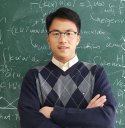
 Quanling Deng
· 6 previous affiliations
- Australian National UniversitySince 2022
- Lecturer · Since 2022
- Lecturer · 2022–2025
- Tsinghua UniversitySince 2025
- Assistant Professor · Since 2025
- University of Wisconsin–Madison2020–2022
- Visiting Assistant Professor · 2020–2022
- Curtin University2016–2020
- Research Associate · 2016–2020
- University of Wyoming2011–2016
- Research Assistant · 2014–2016
- PhD student · 2011–2016
- Teaching Assistant · 2011–2013
- Hebei University of Technology2007–2011
- Undergrad student · 2007–2011
Research Overview
Quanling Deng focuses on computational mathematics, numerical methods for partial differential equations, and the intersection of artificial intelligence with physical modeling. His trajectory spans the development of advanced finite element and isogeometric analysis techniques for complex physical systems, including quantum mechanics and sea-ice dynamics. Recently, his focus has expanded to encompass explainable machine learning and model interpretability.
Research Trajectory
In 2021, Deng introduced "softFEM" in SoftFEM: Revisiting the spectral finite element approximation of second-order elliptic operators. This novel finite element method improves the accuracy of spectral approximations for second-order elliptic operators, particularly in the high-frequency regime. By slightly reducing the stiffness of the system, the approach achieves better eigenvalue and eigenvector approximations and reduces the condition number of the stiffness matrix. This foundational work contributed to the broader area of Mitigating the Pollution Effect in High Frequency Wave Simulations.
He expanded this concept to isogeometric analysis (IGA) the following year with SoftIGA: soft isogeometric analysis. By strategically subtracting high-order derivative-jump terms, SoftIGA tackles persistent numerical stiffness in discretized systems, eliminating spectral outliers while achieving superconvergent eigenvalue accuracy. This work advanced several research directions, including the area of Superconvergent Eigenvalue Analysis via Quadrature Blending, as well as geometric regularity for stable numerical simulation and overcoming the CFL limit in physics simulations. Continuing his focus on IGA, he applied boundary-penalized techniques to hyperbolic systems in A boundary-penalized isogeometric analysis for second-order hyperbolic equations.
In parallel, Deng investigated complex physical domains and interface problems. He guided the development of a high-order enriched method in Higher-Order SGFEM for One-Dimensional Interface Elliptic Problems with Discontinuous Solutions. By employing novel one-sided enrichment functions and strategically removing bubble functions to maintain linear independence, this method achieved optimal convergence rates and numerical stability for models with discontinuous solutions, such as drug-eluting stents, thereby contributing to the numerical simulation of interface problems in heterogeneous media.
His theoretical work also encompassed rigorous spectral analysis. In Spectral analysis of a family of nonsymmetric fractional elliptic operators, he examined nonlocal operators defined by mixed left- and right-sided Riemann-Liouville derivatives. By proving the existence of a real, positive principal eigenvalue and establishing geometric bounds for complex eigenvalues, this research advanced the modeling of anomalous transport with fractional differential equations and spectrally constrained matrix optimization. Applying these computational frameworks to quantum mechanics, he initiated an IGA approach for a notoriously difficult many-body system in Isogeometric Analysis of Bound States of a Quantum Three-Body Problem in 1D. This work represented wavefunctions via B-spline basis functions to solve for eigenstate energies, addressing the challenges of boundary conditions and large degrees of freedom inherent in many-body problems with attractive interactions.
In 2023, Deng's research extended to environmental modeling with Particle-Continuum Multiscale Modeling of Sea Ice Floes. Recognizing that sea ice is traditionally modeled as a continuum under Eulerian coordinates, he developed a multiscale model that coupled these large-scale viscous-plastic representations with Lagrangian particle models (discrete element methods) to characterize the motion of individual sea ice fragments. This hybrid approach facilitated a more effective representation of dynamical and statistical features across scales.
By 2024, his theoretical matrix analysis yielded exact analytical formulas for structured matrices in Exact Eigenvalues and Eigenvectors for Some n-Dimensional Matrices. Moving beyond symmetric and persymmetric assumptions, this work provided exact solutions for complex non-symmetric matrices frequently appearing in engineering simulations, contributing to generalizing spectral algorithms for non-symmetric operators and the numerical stability of randomized linear algebra.
Concurrently, Deng began making significant contributions to artificial intelligence and machine learning interpretability. In EXAGREE: Towards Explanation Agreement in Explainable Machine Learning, he addressed the limitation of conflicting model attributions in safety-critical domains. He introduced a two-stage framework to select a Stakeholder-Aligned Explanation Model from a set of similar-performing models, maximizing a unified metric of faithfulness and plausibility. This research intersected with multiple AI challenges, including the disagreement problem in post hoc interpretability, model multiplicity, and the gap between plausible and faithful AI explanations.
Returning to finite element methods in 2025, his collaborative work produced HoSGFEM: High-order stable generalized finite element method for elliptic interface problem, which enhanced precision and stability using orthogonal polynomial bases for stable numerical learning. He further generalized his earlier softFEM concepts in Generalized soft finite element method for elliptic eigenvalue problems.
Most recently, in 2026, he oversaw research on model interpretability in Practical and Efficient Rashomon Set Sampling for Model Interpretability. Framing the issue of near-optimal models yielding different feature attributions as a Rashomon set sampling problem, this work proposed an $\epsilon$-subgradient-based sampling framework governed by axioms of generalizability and implementation sparsity to ensure reliable model explanations.
Current Directions
The most recent papers in the evidence indicate a dual focus on advanced numerical methods and explainable artificial intelligence. In computational mathematics, recent work continues to refine generalized finite element methods for complex interface and eigenvalue problems, prioritizing numerical stability and high-order accuracy. Concurrently, in machine learning, the focus addresses the reliability of post-hoc explanations. By investigating Rashomon sets—where multiple near-optimal models provide conflicting feature attributions—this research aims to develop practical sampling frameworks that ensure explanations are both faithful to the underlying model and plausible to human stakeholders.
Profile updated
Loading new papers…
Other researchers whose papers cluster into the same research directions — a proxy for overlapping technical interests and shared intellectual neighborhoods.
See something wrong? Report a mistake