

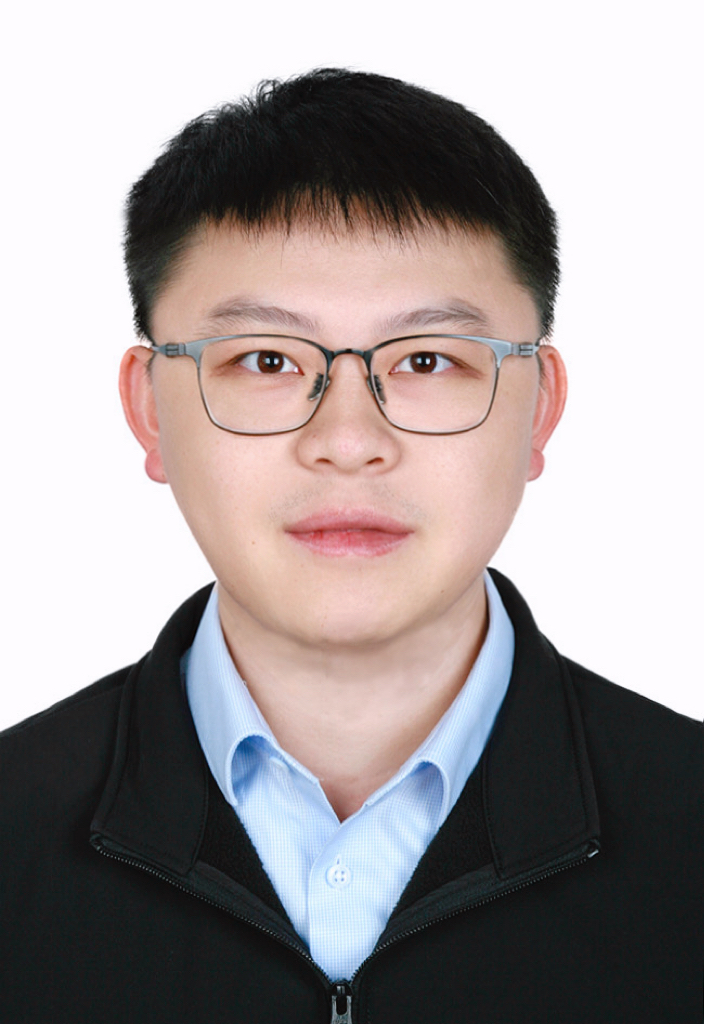
 Qiuping Jiang
· 2 previous affiliations
- Beihang UniversitySince 2023
- Full Professor · Since 2023
- Ningbo UniversityCurrent
- Current
Research Overview
Qiuping Jiang focuses on computer vision, video anomaly detection, and multimedia processing. Early collaborative work addressed complexity control in live video coding and self-supervised frameworks for identifying abnormal events in surveillance footage. More recently, this research has expanded to include point cloud denoising and weakly supervised learning for salient object detection.
Research Trajectory
In 2022, Jiang participated in several collaborative projects centered on video processing and anomaly detection. Early contributions included work on optimizing High Efficiency Video Coding (HEVC), a standard that improves compression efficiency but introduces significant computational overhead. As a co-author on Online Learning-Based Multi-Stage Complexity Control for Live Video Coding, Jiang helped develop an online learning method to manage the computational demands of live video applications on power-constrained devices. This approach utilized multi-accuracy Coding Unit decisions and Coding Tree Unit-level complexity control to accurately allocate encoding resources.
Concurrently, Jiang contributed to multiple studies addressing the challenges of unsupervised and self-supervised visual anomaly detection in surveillance systems. A recurring problem in deep generative models is their tendency to capture low-level shared patterns between normal and abnormal events, leading to similar reconstruction errors that obscure anomalies. Jiang was part of a team that proposed a novel framework to address this in Self-Supervised Attentive Generative Adversarial Networks for Video Anomaly Detection, utilizing a self-attentive predictor to better distinguish unexpected events.
This focus on representation learning continued with Self-Supervision-Augmented Deep Autoencoder for Unsupervised Visual Anomaly Detection, which sought to enlarge the gap in anomaly scores between normal and abnormal data. Further collaborative work in this domain included Abnormal Event Detection Using Deep Contrastive Learning for Intelligent Video Surveillance System. This research leveraged temporal-aware contrastive learning to better exploit discriminative semantics and temporal context, moving beyond single-pretext tasks like image reconstruction which are often misaligned with the ultimate goal of anomaly detection.
Beyond these specific video processing tasks, Jiang's collaborative work is situated within broader computational modeling contexts, intersecting with themes such as Embedding Physical Structures for Parameter-Efficient Deep Learning and the research direction of Retinex Decomposition for Low-Light Image Restoration.
Current Directions
The most recent papers in the evidence, published in 2024, indicate a shift toward 3D vision tasks and label-efficient learning methodologies. Jiang recently contributed to research on 3D point cloud processing, specifically addressing the noise introduced by unstable scanning processes and hardware limitations. This work includes Progressive Point Cloud Denoising with Cross-Stage Cross-Coder Adaptive Edge Graph Convolution Network, which utilizes a multi-stage graph convolution architecture to iteratively denoise point clouds. The proposed network introduces connections between stages and between the encoder and decoder to preserve underlying structures for downstream tasks like rendering and reconstruction.
Additionally, recent collaborative efforts investigate weakly supervised learning to reduce the reliance on labor-intensive pixel-level annotations in computer vision. In A weakly supervised learning framework for salient object detection via hybrid labels, Jiang was part of a team that designed a pipeline to handle label noise and quantity imbalance. By decoupling the task into label refinement and salient object detection, the framework combines coarse labels generated by traditional unsupervised methods with a small set of real labels. Together, these recent projects highlight an ongoing focus on improving the robustness and efficiency of computer vision models under imperfect or limited data conditions.
Profile updated
| Paper | Venue | Year |
|---|---|---|
| Progressive Point Cloud Denoising with Cross-Stage Cross-Coder Adaptive Edge Graph Convolution NetworkGitHubchenwuwq/ | ACM Multimedia | 2024 |
Loading new papers…
Loading research neighbors…
See something wrong? Report a mistake