

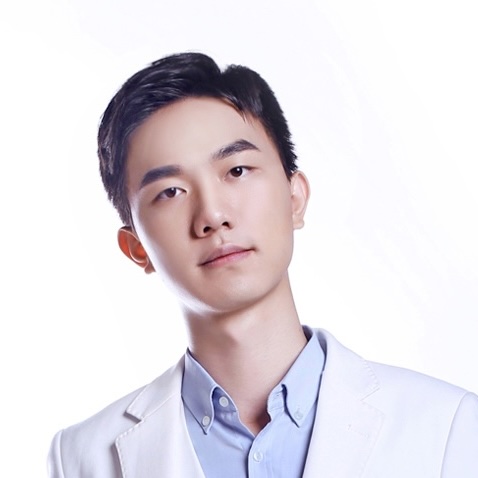
 Qingyun Wang
· 9 previous affiliations
- William & MarySince 2025
- Assistant Professor · Since 2025
- Research Participation Program · 2025
- Intern · 2025
- Doctor of Philosophy - PhD, Computer Science · 2019–2025
- Research Internship · 2022
- Intern · 2021
- SalesForce.com2020
- Intern · 2020
- Research Internsip on Einstein Team · 2020
- Rensselaer Polytechnic Institute2015–2019
- Undergrad student · 2015–2019
Research Overview
Qingyun Wang focuses on natural language generation, knowledge graph construction, and the automation of scientific discovery. Early work explored structured data-to-text generation and iterative refinement techniques for academic writing. More recently, his research investigates autonomous agents and large language models for closed-loop scientific reasoning, cross-lingual alignment, and verifiable claim evaluation.
Research Trajectory
Beginning in 2018, early research centered on structured knowledge and text generation. He introduced frameworks for generating natural language from knowledge bases, such as in Describing a Knowledge Base, which utilized pointer networks and specialized attention mechanisms to capture inter-dependencies among related slots. Concurrently, he explored the research direction of Iterative Refinement for Natural Language Generation by developing editing mechanisms for drafting academic abstracts in Paper Abstract Writing through Editing Mechanism.
This focus on academic text evolved into broader systems for scientific knowledge extraction and generation. In 2019, he developed PaperRobot: Incremental Draft Generation of Scientific Ideas, an automated assistant that constructs background knowledge graphs to predict new links and incrementally draft paper elements. This work contributed significantly to the areas of Semi-Automated Knowledge Synthesis for Expert Workflows and Automated Knowledge Synthesis from Scientific Literature. Building on these synthesis techniques, he subsequently introduced ReviewRobot: Explainable Paper Review Generation based on Knowledge Synthesis, which automated the extraction of domain-specific information to generate constructive, evidence-based peer reviews.
The utility of these automated synthesis methods was demonstrated during the pandemic with COVID-19 Literature Knowledge Graph Construction and Drug Repurposing Report Generation, where he integrated text and images from scientific literature to accelerate the discovery of potential treatments. Alongside applied knowledge graph construction, he continued to refine underlying generation methodologies, proposing new training paradigms in Stage-wise Fine-tuning for Graph-to-Text Generation.
Expanding beyond purely textual data, his research incorporated visual modalities for goal-oriented tasks. In Multimedia Generative Script Learning for Task Planning, he tracked historical states across both text and vision to generate subsequent steps for stereotypical activities, advancing the broader area of Contrastive Objectives for Diverse and Precise Generation. Around this time, he also collaborated on A Survey of Knowledge-enhanced Text Generation, synthesizing the landscape of encoder-decoder models that leverage internal and external knowledge to improve output quality.
As large language models (LLMs) became central to natural language processing, his trajectory shifted toward autonomous agents and complex reasoning frameworks. He participated in developing dual-agent LLM systems for intervention extraction in Automating Knowledge Discovery from Scientific Literature via LLMs: A Dual-Agent Approach with Progressive Ontology Prompting. This line of inquiry expanded into the research direction of Closed-Loop Iterative Scientific Discovery with Language Models through collaborative work on MLR-Copilot: Autonomous Machine Learning Research based on Large Language Models Agents, a framework designed to automatically generate, implement, and execute machine learning research ideas. Concurrently, he investigated the self-correction capabilities of vision-language models during inference and fine-tuning in Self-Correction is More than Refinement: A Learning Framework for Visual and Language Reasoning Tasks.
Moving into 2025 and beyond, his focus expanded to address cross-lingual consistency and verifiable reasoning. He contributed to CALM: Unleashing the Cross-Lingual Self-Aligning Ability of Language Model Question Answering, which leverages direct preference optimization to align knowledge across languages, advancing the research direction of Multilingual Alignment through Preference Optimization. To combat scientific misinformation, he co-developed modular reasoning approaches in Atomic Reasoning for Scientific Table Claim Verification, breaking down complex data verification into reusable skills. Most recently, his work has explored the internal deliberation processes of language models; in When to Think, When to Speak: Learning Disclosure Policies for LLM Reasoning, he collaborated on methods that allow models to interleave private reasoning tokens with public outputs, optimizing when a model discloses its partial answers.
Current Directions
Recent work investigates the alignment, verification, and internal reasoning processes of large language models. A major focus is ensuring that LLMs provide consistent, culture-independent responses across different languages by leveraging cross-lingual self-consistency and preference optimization. Additionally, current research addresses the growing challenge of scientific misinformation by decomposing complex verification tasks—such as evaluating claims against scientific tables—into modular, reusable reasoning skills. Finally, ongoing work explores the dynamics of language model deliberation, specifically designing disclosure policies that allow models to interleave private reasoning steps with public outputs to balance computational deliberation with timely, accurate responses.
Profile updated
| Paper | Venue | Year |
|---|---|---|
| A Survey of Knowledge-Enhanced Text GenerationGitHubwyu97/ | arXiv | 2020 |
Loading new papers…
Other researchers whose papers cluster into the same research directions — a proxy for overlapping technical interests and shared intellectual neighborhoods.
See something wrong? Report a mistake