

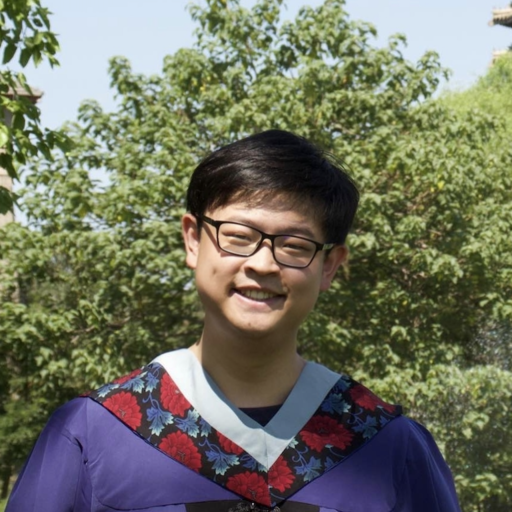
 Qingtian Zhu
· 3 previous affiliations
- The University of TokyoCurrent
- Current
- PhD student · 2023–2026
- Peking University2020–2023
- MS student · 2020–2023
- Undergrad student · 2016–2020
Research Overview
Qingtian Zhu focuses on 3D computer vision, neural rendering, and multi-view stereo, developing algorithms for the reconstruction and analysis of complex scenes. His trajectory spans from deep learning architectures for geometric depth estimation to advanced implicit neural representations and 3D Gaussian splatting. Recently, his work emphasizes robust novel view synthesis, animatable human avatars, and adapting high-dimensional neural representations for spatial transcriptomics.
Research Trajectory
Zhu's early research addressed 2D computer vision tasks, specifically in remote sensing. He contributed to Efficient Multi-Class Semantic Segmentation of High Resolution Aerial Imagery with Dilated LinkNet, which adapted encoder-decoder architectures with dilated convolutions to maintain feature map resolution for aerial image segmentation.
Transitioning to 3D vision, he extensively investigated multi-view stereo (MVS) reconstruction. He authored a comprehensive overview, Deep Learning for Multi-View Stereo via Plane Sweep: A Survey, which contextualized the field's shift from rigid geometric matching to data-driven cost volumes. In the area of Efficient Volumetric Representations for 3D Deep Learning, Zhu developed AA-RMVSNet: Adaptive Aggregation Recurrent Multi-view Stereo Network. This architecture utilized long short-term memory (LSTM) networks with intra-view and inter-view aggregation modules to handle challenging regions like thin objects and varying occlusions. He also explored memory efficiency in MVS through Hybrid Cost Volume Regularization for Memory-efficient Multi-view Stereo Networks. Collaborating on TransMVSNet: Global Context-aware Multi-view Stereo Network with Transformers, he helped integrate feature matching transformers to aggregate long-range context across images. Addressing the reliance on large annotated datasets, Zhu advanced the broader area of Multi-View Geometric Consistency for Self-Supervised 3D Vision with KD-MVS: Knowledge Distillation Based Self-supervised Learning for MVS. This self-supervised pipeline combined an internal featuremetric loss with probabilistic knowledge distillation, bridging the performance gap between self-supervised and fully supervised MVS methods.
Zhu's focus subsequently expanded to coordinate-based neural networks for 3D shapes and light fields. He introduced Sobolev Training for Implicit Neural Representations with Approximated Image Derivatives, contributing to the research direction of Sobolev Training for Derivative Aware Neural Networks. He further refined these architectures in Robustifying Fourier Features Embeddings for Implicit Neural Representations, proposing the use of bias-free MLPs as adaptive linear filters to suppress high-frequency noise in smooth regions while preserving complex details. To scale neural rendering to unstructured environments, he developed RPBG: Towards Robust Neural Point-Based Graphics in the Wild. By framing novel view synthesis as an image restoration task and employing a downgrade-aware neural renderer, this framework improved the robustness and convergence speed of point-based rendering for real-world datasets.
Zhu has also tackled the reconstruction of dynamic subjects and environments. In ToMiE: Towards Modular Growth in Enhanced SMPL Skeleton for 3D Human with Animatable Garments, he introduced an adaptive growth strategy for human skeleton models, allowing the network to dynamically sprout joints to model decoupled elements like loose clothing and hand-held objects. Addressing the challenges of motion blur in dynamic capture, he co-authored Bundle Adjusted Gaussian Avatars Deblurring. This work intersects with the area of Simulating Physical Light Integration with High Speed Video, proposing an end-to-end approach to derive sharp 3D Gaussian avatars from blurry multi-view video by modeling the physics of blur formation alongside human motion. For environments that change over long timescales, he contributed to ChronoGS: Disentangling Invariants and Changes in Multi-Period Scenes. This framework utilized temporally modulated Gaussian representations to separate permanent structures from seasonal or structural changes in multi-period captures.
Current Directions
The most recent papers in the evidence demonstrate a broadening of Zhu's methodological toolkit to new domains and parametric priors. He is currently investigating how to repurpose large-scale pre-trained models for specific geometric tasks. In KaoLRM: Repurposing Pre-trained Large Reconstruction Models for Parametric 3D Face Reconstruction, he projects pre-trained triplane features into the FLAME parameter space, combining learned 3D priors with 2D Gaussian splatting to achieve highly consistent cross-view facial reconstructions.
Additionally, recent work extends implicit neural representations beyond traditional vision tasks into computational biology. In SUICA: Learning Super-high Dimensional Sparse Implicit Neural Representations for Spatial Transcriptomics, Zhu addresses the area of Modeling High-Dimensional Sparsity in Microbiome and Single-Cell Data. This framework employs graph-augmented autoencoders and a regression-by-classification strategy to model spatial transcriptomics continuously, effectively denoising and upsampling super-high-dimensional gene expression data.
Profile updated
Loading new papers…
Other researchers whose papers cluster into the same research directions — a proxy for overlapping technical interests and shared intellectual neighborhoods.
See something wrong? Report a mistake