

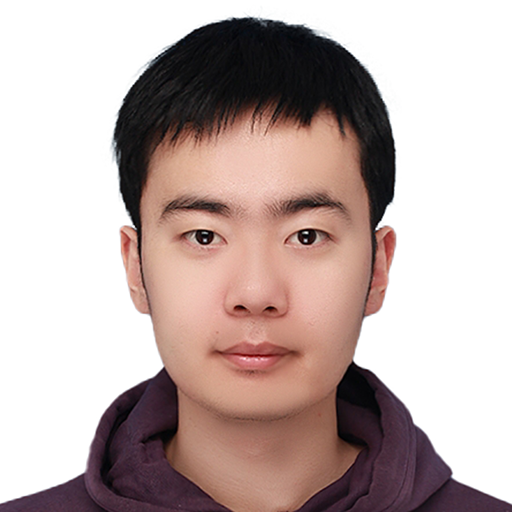
 Qingsong Yao
· 5 previous affiliations
- Renmin University of ChinaSince 2026
- Assistant Professor · Since 2026
- Chinese Academy of SciencesCurrent
- Current
- Current
- Stanford University2024–2026
- Postdoc · 2024–2026
- PhD student · 2019–2024
Research Overview
Qingsong Yao focuses on medical image analysis, emphasizing label-efficient learning and the robustness of computer vision models in clinical settings. His trajectory spans from foundational work on adversarial vulnerabilities in medical imaging to the development of one-shot and universal anatomical landmark detection systems. Recently, his research addresses fairness and parameter-efficient adaptation in medical foundation models.
Research Trajectory
Early in his career, Yao investigated the security and reliability of deep convolutional neural networks deployed for clinical tasks. Recognizing that models could be easily manipulated, he introduced Miss the Point: Targeted Adversarial Attack on Multiple Landmark Detection, which demonstrated how adaptive targeted iterative attacks could precisely control model predictions for specific anatomical landmarks. He expanded on this vulnerability by analyzing adversarial examples in the feature space, proposing A Hierarchical Feature Constraint to Camouflage Medical Adversarial Attacks to show how continuous optimization in vulnerable directions leads to detectable outlier representations. To defend against these threats, he developed Medical Aegis: Robust adversarial protectors for medical images, a framework designed to shield fragile medical AI systems from human-imperceptible noise. This body of work contributed significantly to the area of The Depth Dependent Nature of Adversarial and Backdoor Attacks and the research direction Manifold Projection for Adversarial Input Reconstruction.
Concurrently, Yao addressed the severe annotation bottleneck in medical imaging by pioneering methods that require minimal labeled data. He proposed the Cascade Comparing to Detect (CC2D) framework in One-Shot Medical Landmark Detection, which leverages self-supervised learning to capture consistent anatomical information from a single annotated image. Applying label-efficient principles to segmentation, he also developed Label-Free Segmentation of COVID-19 Lesions in Lung CT, utilizing voxel-level anomaly modeling to synthesize lesions and mine relevant knowledge from normal lung scans without requiring manual lesion annotations.
As his research progressed, Yao contributed to the design of universal architectures capable of generalizing across diverse anatomical regions. With collaborators, he explored You only Learn Once: Universal Anatomical Landmark Detection, an end-to-end network that identifies landmarks across multiple medical imaging datasets with a single model, advancing the broader area of Generalist Foundation Models for Universal Medical Image Representation. This universal approach was further enhanced in DATR: Domain-adaptive transformer for multi-domain landmark detection, which combined domain-adaptive parameters with transformer architectures to share features across anatomies, aligning with work in Global Context and Long Range Dependencies in Medical Imaging.
Returning to the challenge of data scarcity, Yao's subsequent work refined how models select and utilize limited data. He co-developed a Sample Choosing Policy (SCP) in Which images to label for few-shot medical landmark detection? to identify the most informative templates for annotation. He also upgraded his earlier one-shot framework in Relative distance matters for one-shot landmark detection, incorporating a relative distance bias into contrastive learning to prevent the model from predicting landmarks far from their correct anatomical positions. During this period, he also participated in specialized image enhancement research, contributing to Rib Suppression in Digital Chest Tomosynthesis, which modeled 3D rib components to remove artifacts in limited-angle X-ray projections.
In his most recent work, Yao has expanded his methodological scope to include temporal dynamics and the equitable deployment of large-scale models. He contributed to OFELIA: Optical Flow-based Electrode LocalIzAtion, integrating temporal motion information for real-time tracking in cardiac procedures. Addressing the broader implications of AI in healthcare, he participated in FairMedFM: Fairness Benchmarking for Medical Imaging Foundation Models, establishing standardized pipelines to evaluate demographic disparities in automated diagnostics. Continuing his focus on efficient learning, his 2025 work includes Landmarks Are Alike Yet Distinct: Harnessing Similarity and Individuality for One-Shot Medical Landmark Detection, which introduces an adapter-based fusion model to balance parameter sharing with individual landmark accuracy.
Current Directions
The most recent papers in the evidence indicate a strategic shift toward the evaluation and parameter-efficient adaptation of large-scale medical models. A primary focus is the rigorous benchmarking of medical foundation models, specifically addressing how these systems perform across diverse and underrepresented patient populations. This involves developing standardized libraries to measure and mitigate fairness disparities in automated classification and segmentation tasks.
Additionally, recent work investigates the integration of temporal motion features for real-time clinical applications, such as tracking instruments in continuous X-ray sequences. Alongside this, there is an ongoing effort to resolve performance trade-offs in multi-task medical vision through adapter-based architectures. By harnessing both shared anatomical similarities and distinct individual features, these approaches aim to achieve high accuracy in specialized domains while minimizing the computational overhead typically associated with training separate models for every clinical task.
Profile updated
Loading new papers…
Other researchers whose papers cluster into the same research directions — a proxy for overlapping technical interests and shared intellectual neighborhoods.
See something wrong? Report a mistake