

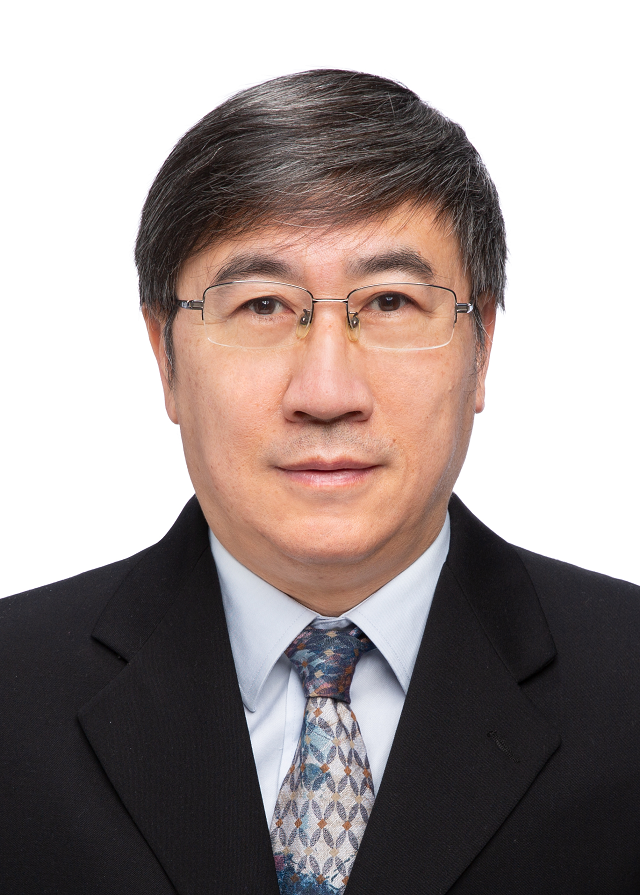
 Qingming Huang
· 1 previous affiliation
- Full Professor · Since 2003
Research Overview
Qingming Huang focuses on multimedia computing, computer vision, and pattern recognition. Their trajectory spans early work in real-time image processing to advanced video analytics and the theoretical optimization of ranking metrics. Recent efforts address the security, alignment, and efficiency of large-scale generative models and vision transformers.
Research Trajectory
The early foundation of this research trajectory includes foundational computer vision applications, such as the 1993 study Research on real-time landmark segmentation and recognition in the Autonomous Land Vehicle, which addressed real-time processing constraints in autonomous navigation. Over time, this focus on visual processing expanded into complex multimedia and video analytics. A major theme in this evolution has been the area of Hierarchical Temporal Modeling for Long Video Understanding. For example, Modeling Temporal Concept Receptive Field Dynamically for Untrimmed Video Analysis introduced a temporal dynamic convolution approach to adaptively adjust receptive field sizes, enabling more accurate event categorization in untrimmed videos. This interest in temporal and semantic alignment also extended to collaborative work on Hierarchical Modular Network for Video Captioning, which bridged video representations and linguistic semantics across entity, predicate, and sentence levels.
In parallel with video understanding, the trajectory encompasses robust multimodal integration. DPANet: Depth Potentiality-Aware Gated Attention Network for RGB-D Salient Object Detection proposed a network that explicitly models the reliability of depth maps to prevent contamination from noisy sensor data, utilizing a gated multi-modality attention module to capture long-range cross-modal dependencies.
A significant and distinct branch of research has concentrated on the theoretical and algorithmic optimization of machine learning evaluation metrics, particularly in the research direction of Optimizing Ranking Metrics Beyond Binary Classification. This work addresses the limitations of standard loss functions when dealing with imbalanced data or complex multiclass scenarios. When All We Need is a Piece of the Pie: A Generic Framework for Optimizing Two-way Partial AUC provided a framework for optimizing specific regions of the ROC curve, contributing to the broader area of Optimizing Partial Area Under the ROC Curve. Building on this, Learning With Multiclass AUC: Theory and Algorithms advanced the field of Linear Complexity Optimization for Ranking Metrics by introducing imbalance-aware generalization bounds and acceleration techniques for large-scale datasets. The focus on metric optimization continued with Optimizing Partial Area Under the Top-k Curve: Theory and Practice, which developed a novel metric to handle semantic ambiguity among classes, and Algorithm-Dependent Generalization of AUPRC Optimization: Theory and Algorithm, which provided the first algorithm-dependent generalization bound for stochastic AUPRC optimization.
More recently, these dual interests in visual representation and metric optimization have converged. When AUC Meets Generative Reconstruction: A Unified Principle for Balanced Visual Representation Learning reformulates generative reconstruction as a discriminative ranking problem, embedding AUC optimization directly into the generative output manifold to balance perceptual fidelity with inter-class discrimination.
The trajectory has increasingly engaged with the architecture and application of large-scale foundation models, vision transformers, and diffusion models. In self-supervised learning, CODI: Improving Self-Supervised Vision Transformers with Cross Distillation addressed the mismatch between image-level and patch-level representations by mixing teacher class-token distributions into patch-token targets. For latent world models, Slot-JEPA: Object-Structured Prediction Interfaces for Latent World Models decomposed dense representations into stable semantic slots and time-varying spatial masks to improve goal-conditioned planning. In 3D perception, PTNET: A PROPOSAL-CENTRIC TRANSFORMER NET- WORK FOR 3D OBJECT DETECTION introduced a dual-stream architecture to align coarse voxel features with fine-grained point features for autonomous driving applications.
Research into diffusion models has yielded both discriminative and generative advancements. Making Training-Free Diffusion Segmentors Scale with the Generative Power developed auto-aggregation and per-pixel rescaling techniques to extract better semantic segmentation maps from pre-trained text-to-image models. On the generative side, CoSyncDiT: Cognitive Synchronous Diffusion Transformer for Movie Dubbing proposed a flow matching-based framework that progressively guides noise-to-speech trajectories to achieve precise lip-sync and vocal identity preservation in in-the-wild scenarios.
Efficiency and reasoning in large language models (LLMs) have also become central themes. ToPA: Block-wise Toeplitz Adaptation for Expressive and Efficient Fine-Tuning introduced a parameter-efficient fine-tuning method using block-wise Toeplitz matrices to stabilize training and improve expressiveness without explicit rank constraints. For inference-time reasoning, Compare to Correct: Pairwise-Guided Logit Adjustment for LLM Test-Time Scaling utilized pairwise confidence comparisons between reasoning paths to correct voting-based ranking errors in mathematical and code generation tasks.
Finally, the security and authorization of multimodal models represent a critical recent focus. GoodDiffusion: Proactive Copyright Protection for Diffusion Bridge Models via Learnable Sample-specific Signatures internalized authorization into the generative process, using a learnable signature network to block unauthorized use while maintaining generation quality. Similarly, Localize and Neutralize: Gradient-Guided Token Suppression Against Visual Prompt Injection Attack addressed vulnerabilities in vision-language models by identifying and masking critical adversarial tokens via gradient analysis, effectively neutralizing prompt injection attacks.
Current Directions
Recent work investigates the security, efficiency, and structural representations of large-scale generative models and transformers. A primary focus is on developing proactive defense mechanisms for multimodal systems, such as internalizing copyright protection into diffusion models and neutralizing visual prompt injection attacks through gradient-guided token suppression. Additionally, current research explores parameter-efficient adaptation techniques for foundation models and the refinement of test-time scaling for LLM reasoning. In the visual domain, efforts continue toward structuring latent world models into reusable, object-centric slots to improve downstream planning and predictive tasks.
Profile updated
Loading new papers…
Other researchers whose papers cluster into the same research directions — a proxy for overlapping technical interests and shared intellectual neighborhoods.
See something wrong? Report a mistake