

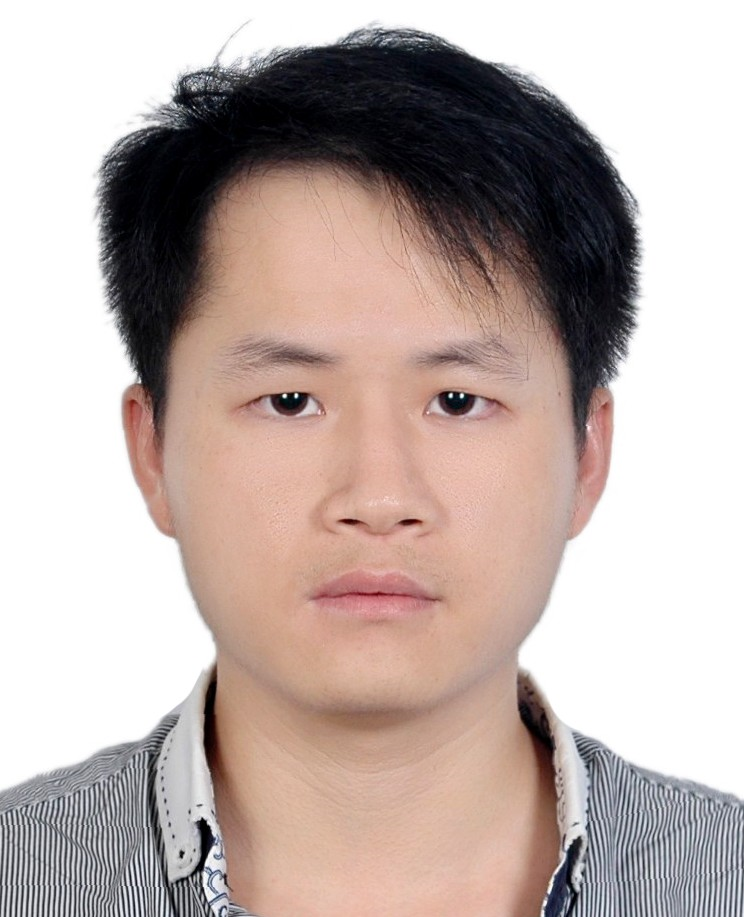
 Qingling ZHU
· 2 previous affiliations
- City UniversityCurrent
- Current
- Shenzhen University2021–2023
- Postdoc · 2021–2023
Research Overview
Qingling ZHU focuses on evolutionary computation, multi-objective optimization, and swarm intelligence. Early research developed novel crossover operators and archive-guided particle swarm techniques to improve convergence in complex optimization tasks. More recently, this trajectory has expanded to include evolutionary reinforcement learning and practical dynamic routing problems.
Research Trajectory
Qingling ZHU’s research trajectory is characterized by a sustained focus on improving the efficiency and convergence properties of evolutionary algorithms, particularly for multi-objective and many-objective optimization problems. The early phase of this work centered on algorithmic refinements to foundational evolutionary computation techniques. In 2016, ZHU led research on A novel adaptive hybrid crossover operator for multiobjective evolutionary algorithm, establishing a baseline interest in adaptive mechanisms that balance exploration and exploitation during the evolutionary search process.
By 2017, this focus expanded into swarm intelligence. As first author, ZHU introduced An External Archive-Guided Multiobjective Particle Swarm Optimization Algorithm (AgMOPSO). A central challenge in multi-objective particle swarm optimization (MOPSO) is the effective selection of swarm leaders—the personal and global bests—to guide particles toward the true Pareto optimal front. ZHU’s approach addressed this by selecting all velocity-update leaders directly from an external archive. Furthermore, the algorithm utilized a decomposition strategy to transform multi-objective problems into a set of subproblems, assigning individual particles to optimize specific subproblems.
Around 2018, ZHU participated in broader collaborative efforts targeting the scaling challenges of many-objective optimization. This included contributions as a co-author to Particle Swarm Optimization With a Balanceable Fitness Estimation for Many-Objective Optimization Problems, reflecting an ongoing interest in how fitness landscapes are evaluated when the number of competing objectives increases significantly. ZHU later returned to leading research in this specific domain, publishing An Elite Gene Guided Reproduction Operator for Many-Objective Optimization in 2021, which further refined reproduction mechanisms to handle high-dimensional objective spaces.
In 2022, ZHU’s work demonstrated a shift toward hybrid methodologies and highly constrained real-world applications. Moving beyond purely theoretical algorithmic design, ZHU co-authored An Efficient Multi-objective Evolutionary Algorithm for a Practical Dynamic Pickup and Delivery Problem. This research tackled complex logistics scenarios characterized by uncertain customer requirements and production processes. The resulting algorithm, MOEA/D-ES, combined decomposition-based evolutionary optimization with four distinct local search strategies to manage strict operational constraints, including time windows, capacity limits, and last-in-first-out loading requirements.
During the same period, ZHU also explored the intersection of evolutionary computation and modern machine learning. In An Efficient Evaluation Mechanism for Evolutionary Reinforcement Learning, ZHU and collaborators addressed a primary bottleneck in Evolutionary Reinforcement Learning (ERL): the computational inefficiency of evaluating entire populations during every algorithmic loop. The proposed mechanism optimized this process by triggering population evaluations only when the primary reinforcement learning agent plateaued, thereby improving overall algorithmic efficiency without sacrificing performance.
Current Directions
Based on the most recent papers in the evidence, which date to 2022, ZHU’s current research directions focus on the practical deployment and hybridization of evolutionary algorithms. A major theme is the integration of evolutionary computation with reinforcement learning. Rather than treating these as competing paradigms, recent work investigates how evolutionary population dynamics can be selectively deployed to help reinforcement learning agents escape local optima, with a specific emphasis on minimizing the computational overhead of these hybrid systems.
Additionally, ZHU is actively engaged in applying multi-objective evolutionary algorithms to dynamic, real-world operations research problems. This includes developing robust solvers for dynamic pickup and delivery problems (DPDP) that must adapt to real-time uncertainties in manufacturing and logistics. By combining decomposition strategies with targeted local search heuristics, this line of research aims to bridge the gap between theoretical multi-objective optimization and the strict, multi-constraint environments found in enterprise logistics.
Profile updated
Loading new papers…
Loading research neighbors…
See something wrong? Report a mistake