

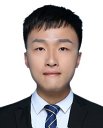
 Qinghe Wang
· 3 previous affiliations
- Kuaishou (China)Since 2024
- Intern · Since 2024
- Dalian University of TechnologySince 2023
- PhD student · Since 2023
- Current
- ByteDance (China)2022–2023
- Intern · 2022–2023
Research Overview
Qinghe Wang focuses on computer vision and generative artificial intelligence, with a particular emphasis on human-centric image and video synthesis. His trajectory spans early work in semantic-guided diffusion for image manipulation to recent advancements in identity preservation and customized motion transfer. Currently, he investigates methods for maintaining consistent character identities and complex interactions within text-to-image and text-to-video diffusion models.
Research Trajectory
Qinghe Wang’s research initially addressed the complexities of localized image manipulation using generative models. In 2022, he introduced HS-Diffusion: Learning a Semantic-Guided Diffusion Model for Head Swapping, which tackled the challenge of seamlessly stitching a source head onto a target body. To preserve the distinct features of both sources while generating a natural transition region, this approach utilized a semantic-mixing latent diffusion model alongside a layout generator to blend semantic features and inpaint the boundaries.
Moving into 2024, his focus expanded significantly into identity preservation and the personalization of text-to-image models. He developed StableIdentity: Inserting Anybody into Anywhere at First Sight, a method designed to generate consistent human identities from a single image without the need for extensive fine-tuning. By leveraging both identity and editability priors, the model allows users to insert specific individuals into diverse scenarios, including video and 3D generation. This work contributes directly to the broader research direction of Balancing Fidelity and Editability in Text-to-Image Personalization. Building on the need for reliable character generation, he also proposed CharacterFactory: Sampling Consistent Characters with GANs for Diffusion Models. This framework samples new, newly coined characters with consistent identities by mapping a generative adversarial network's latent space to celebrity word embeddings, employing a context-consistent loss to maintain identity across varied generations.
In parallel with his core work on identity, Wang has collaborated on techniques for cross-domain face translation, such as converting between photos and sketches or near-infrared and visible images. He helped develop Multi-View Knowledge Ensemble With Frequency Consistency for Cross-Domain Face Translation, a framework that mitigates the structural deformation and identity ambiguity often caused by limited paired training data.
His recent collaborative efforts have also explored complex customizations in both image and video generative models. He participated in research on concept customization for subject interactions, detailed in Customizing Text-to-Image Generation with Inverted Interaction. This work moves beyond transferring static appearances to capturing and transferring the learned concept of interactions between subjects from exemplar images. Additionally, he contributed to advancing video generation capabilities through MoTrans: Customized Motion Transfer with Text-driven Video Diffusion Models. This research addresses the limitations of pretrained text-to-video models in generating intricate, human-centric motions by decoupling motion from appearance in reference videos, thereby enabling the transfer of specific motion patterns into entirely new contexts.
Current Directions
The most recent papers in the evidence address the fine-grained control of generative diffusion models, particularly for human-centric applications. Current work investigates how to decouple and transfer complex attributes—such as specific human identities, intricate subject interactions, and temporal motion patterns—without losing fidelity or requiring exhaustive fine-tuning. This includes exploring hybrid architectures that combine generative adversarial networks with diffusion models to maintain identity consistency, as well as developing multimodal approaches for customized motion transfer in text-to-video generation.
Profile updated
Loading new papers…
Other researchers whose papers cluster into the same research directions — a proxy for overlapping technical interests and shared intellectual neighborhoods.
See something wrong? Report a mistake