

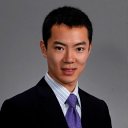
 Qing Wang
· 5 previous affiliations
- Google (United States)Since 2018
- Staff Software Engineer · Since 2026
- Senior Software Engineer · 2021–2026
- Researcher · 2018–2021
- Stanford University2012–2018
- Graduate Fellow, PhD Candidate · 2012–2018
- Doctor of Philosophy (PhD), Mechanical Engineering · 2014–2018
- Teaching Assistant · 2017
- Master of Science (M.Sc.), Mechanical Engineering · 2012–2014
- Research Assistant · 2017
- Nanyang Technological University2008–2012
- Undergraduate Student, Research Assistant · 2009–2012
- Undergrad student · 2008–2012
- Research Assistant · 2011
17 other authors named Qing Wang: Qing Wang (Delft University of Technology · 259 papers), Qing Wang (Australian National University · 250 papers), Qing Wang (University of Science and Technology of China · 38 papers), Qing Wang (22 papers), Qing Wang (Northwestern Polytechnical University · 18 papers), and 12 more
Research Overview
Qing Wang focuses on the intersection of computational fluid dynamics (CFD), high-performance computing (HPC), and machine learning. His work primarily addresses the development of high-fidelity simulation frameworks for complex physical phenomena, including turbulent combustion, cloud dynamics, and wildland fires. By leveraging emerging hardware architectures such as Tensor Processing Units (TPUs) and modern software paradigms like TensorFlow, Wang aims to overcome the computational bottlenecks inherent in traditional large-eddy simulations (LES). His research trajectory reflects a transition from fundamental numerical methods for turbulence modeling toward the creation of scalable, ML-integrated frameworks for environmental and atmospheric science.
Research Trajectory
Wang’s early research centered on improving the physical fidelity of Large-Eddy Simulations (LES) through advanced numerical modeling. In 2019, he introduced a regularized deconvolution method (RDM) designed to address the "closure problem" in turbulence modeling. This work focused on mathematically reconstructing sub-grid scale information that is typically lost during the filtering process of LES. By enforcing physical constraints such as mass conservation and energy similarity, this method improved the accuracy of combustion simulations and achieved faster grid convergence than traditional statistical models. This period established his interest in the Numerical Stability for Incremental and Recursive Updates and the rigorous mathematical treatment of fluid flow discretization.
Starting in 2021, Wang shifted his focus toward the computational infrastructure required to scale these high-fidelity simulations. Recognizing that traditional CPU-based clusters often struggle with the massive data and throughput requirements of modern CFD, he began developing simulation frameworks specifically for Tensor Processing Units (TPUs). This work involved re-implementing the variable-density Navier-Stokes equations within the TensorFlow programming paradigm. This transition allowed for the exploitation of accelerated dense matrix multiplication and high-bandwidth memory, significantly reducing the "time-to-solution" for complex fluid flow predictions. During this phase, he also contributed to the development of distributed data pipelines on cloud services, applying data-science tools like Apache Beam to handle the massive datasets generated by large-scale simulations.
In recent years, Wang has applied these high-performance frameworks to critical environmental challenges, most notably wildland fire prediction. His work in this domain has evolved from using deep learning models for wildfire likelihood estimation based on remote-sensing data to building fully coupled fire-atmosphere simulation tools. These frameworks, such as Swirl-Fire, enable landscape-scale simulations that account for the complex physical interactions between combustion and atmospheric turbulence. His most recent contributions focus on uncertainty quantification (UQ) and ensemble modeling, using surrogate models and optimization platforms to make high-fidelity wildfire risk assessment computationally feasible at scale.
Current Directions
Wang’s current research explores the integration of generative machine learning models with classical physics-based simulations. A primary focus is the use of neural stochastic differential equations (SDEs) and latent diffusion models to synthesize high-fidelity turbulence. For example, his recent work on synthetic inflow turbulence generation utilizes conditional neural fields to create temporally coherent velocity fields that generalize across different Reynolds numbers. This approach seeks to replace computationally expensive deterministic methods with stochastic generators that maintain statistical fidelity while reducing overhead.
Furthermore, Wang is expanding the application of TPU-accelerated LES to atmospheric science, specifically the simulation of low clouds. These simulations are vital for understanding Earth’s energy balance but have historically been limited by their high computational cost. By porting these models to TPUs, Wang is enabling the generation of large-scale datasets necessary for training the next generation of climate model parameterization schemes. His work continues to bridge the gap between high-fidelity physical modeling and the practical requirements of large-scale environmental forecasting.
Representative Work
A regularized deconvolution method for turbulent closure modeling in implicitly filtered large-eddy simulation (2019) – As the lead author, Wang developed the RDM framework to reconstruct sub-grid scale information in LES. The study demonstrated that by enforcing physical consistency, the method could significantly improve the accuracy of combustion simulations, providing a more robust alternative to standard statistical sub-grid models.
A TensorFlow Simulation Framework for Scientific Computing of Fluid Flows on Tensor Processing Units (2021) – This paper details Wang’s development of a CFD framework optimized for TPU architectures. By discretizing the Navier-Stokes equations within a graph-based programming paradigm, the work demonstrated how application-specific integrated circuits (ASICs) could be repurposed for high-performance scientific computing beyond traditional machine learning tasks.
A high-resolution large-eddy simulation framework for wildland fire predictions using TensorFlow (2023) – Wang introduced a coupled fire-atmosphere simulation tool designed for landscape-scale predictions. This framework leverages modern computing architectures to enable high-resolution simulations of wildfire behavior, providing a physical representation of combustion that was previously too computationally expensive for practical use.
Accelerating large-eddy simulations of clouds with Tensor Processing Units (2023) – In this work, Wang served as a primary contributor to the adaptation of LES for cloud dynamics on TPUs. The research addressed the inaccuracy of cloud representation in climate models by providing a means to generate large, high-fidelity datasets for training climate parameterizations, significantly reducing the computational barriers to systematic numerical experimentation.
A high-fidelity ensemble simulation framework for interrogating wildland-fire behaviour and benchmarking machine learning models (2024) – Wang led the development of an ensemble simulation framework that integrates the Swirl-Fire tool with automated optimization platforms. This system allows for the systematic study of wildfire behavior and uncertainty, providing a benchmark for training and validating more efficient machine learning surrogate models.
Uncertainty quantification in coupled wildfire–atmosphere simulations at scale (2024) – Participating in a large-scale study published in PNAS, Wang contributed to a multifidelity uncertainty quantification (UQ) approach. The work demonstrated that surrogate models, when combined with high-fidelity simulations, could scale UQ to problems with billions of degrees of freedom, a critical step for real-time fire management and evacuation decision-making.
Profile updated
Loading new papers…
Other researchers whose papers cluster into the same research directions — a proxy for overlapping technical interests and shared intellectual neighborhoods.
See something wrong? Report a mistake