

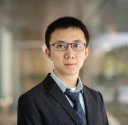
 Qing Qu
· 6 previous affiliations
- University of MichiganSince 2021
- Assistant Professor · Since 2021
- New York University2018–2020
- Postdoc · 2018–2020
- Columbia University2013–2018
- PhD student · 2013–2018
- Research Internship · 2016
- DEVCOM Army Research Laboratory2012–2013
- Research Assistant · 2012–2013
- Johns Hopkins University2011–2013
- Master of Science in Engineering, Electrical and Computer Engineering · 2011–2013
Research Overview
Qing Qu focuses on the theoretical foundations of deep learning, nonconvex optimization, and the representation spaces of generative models. His trajectory spans from proving the global convergence of nonconvex methods in sparse recovery to uncovering the geometric phenomena of neural collapse in deep networks. Most recently, his work investigates generalization, memorization, and alignment in diffusion models and multimodal architectures.
Research Trajectory
His early work focused on the geometric landscape of nonconvex optimization problems in signal processing and machine learning. A central theme was demonstrating that certain nonconvex problems possess benign landscapes, lacking spurious local minima. He contributed to Finding a sparse vector in a subspace: Linear sparsity using alternating directions, which introduced an alternating directions approach for sparse recovery that succeeds even with linear sparsity. This foundational interest in geometric landscapes led to significant advances in the area of Provable Recovery of Overcomplete Dictionaries. In Complete Dictionary Recovery Using Nonconvex Optimization, he presented an efficient algorithm to recover a complete dictionary from densely sparse data by framing the problem on a sphere. This work demonstrated that the objective landscape is well-behaved, a finding further formalized in Complete Dictionary Recovery Over the Sphere I: Overview and the Geometric Picture. These results contributed broadly to the research direction concerning The Absence of Spurious Local Minima in Nonconvex Optimization. He extended this geometric analysis to other domains, such as phase retrieval. In A Geometric Analysis of Phase Retrieval, he proved that with sufficient random measurements, the optimization landscape for phase retrieval becomes benign, allowing algorithms to find global solutions from random initializations and advancing the broader area of Escaping Saddle Points in Nonconvex Optimization. This geometric approach was subsequently applied to deconvolution problems in Short and Sparse Deconvolution - A Geometric Approach.
Transitioning from classical signal processing to the theory of deep neural networks, his focus shifted to understanding the terminal phase of training, particularly the phenomenon of neural collapse. In A Geometric Analysis of Neural Collapse with Unconstrained Features, his group proved that under an unconstrained feature model, the regularized cross-entropy loss exhibits a benign landscape with no spurious local minima. This work demonstrated how features collapse to class means forming a Simplex Equiangular Tight Frame (ETF), contributing significantly to the area of The Unconstrained Feature Model for Neural Network Analysis. Building on this, he investigated the practical implications of neural collapse for transfer learning in What Deep Representations Should We Learn? -- A Neural Collapse Perspective, analyzing how these terminal geometric structures affect downstream task performance and contributing to the direction of Bridging the Architectural Gap in Neural Collapse Theory. The scope of this theory was subsequently broadened beyond standard classification; in Neural Collapse in Multi-label Learning with Pick-all-label Loss, he showed that multi-label features simplify into scaled averages of single-label counterparts, enabling more efficient training and prediction.
In recent years, his research trajectory has expanded to address the representation spaces and generalization capabilities of modern generative and multimodal models. He analyzed the segregation of image and text embeddings in Explaining and Mitigating the Modality Gap in Contrastive Multimodal Learning, using continuous-time gradient flow to develop temperature control techniques that close this modality gap. A major focus has been the area of Understanding Training Data Memorization in Generative Models. In Generalization of Diffusion Models Arises with a Balanced Representation Space, his lab revealed that memorization creates localized activations while generalization produces balanced activations, enabling the detection of memorization without prompts. This evaluation of representation quality continued in Evaluating the Representation Space of Diffusion Models via Self-Supervised Principles, which introduced the Invariant Contamination Ratio to identify optimal noise levels and detect when models cease to generalize. To rigorously measure generalization in distilled models, he developed a new metric in Understanding Generalization in Diffusion Distillation via Probability Flow Distance, uncovering a universal scaling law governed by data size and model parameters.
His work on diffusion models also extends to practical applications and alignment. In ForcingDAS: Unified and Robust Data Assimilation via Diffusion Forcing, he proposed a framework that learns joint-trajectory priors for complex weather data assimilation. Addressing conditional generation, MCLR: Improving Conditional Modeling via Inter-Class Likelihood-Ratio Maximization and Unifying Classifier-Free Guidance with Alignment Objectives introduced a training objective that internalizes the benefits of classifier-free guidance by maximizing inter-class separation.
Alongside generative modeling, he continues to explore the theoretical underpinnings of network architectures and learning paradigms. In Linearly Separable Features in Shallow Nonlinear Networks: Width Scales Polynomially with Intrinsic Data Dimension, he demonstrated how a single nonlinear layer can transform data from low-dimensional subspaces into linearly separable sets. Similarly, applying subspace perspectives to sequence models, Out-of-Distribution Generalization of In-Context Learning: A Low-Dimensional Subspace Perspective provided a theoretical framework explaining how training on a union of subspaces allows Transformers to generalize to unseen task distributions.
Current Directions
Recent work investigates the representation spaces and generalization mechanisms of large-scale generative models. A primary focus is distinguishing between memorization and generalization in diffusion models. By analyzing the activation patterns and deterministic paths of these models, his group is developing rigorous, label-free metrics to evaluate representation quality, detect memorization, and understand scaling laws in diffusion distillation.
Additionally, current research addresses the alignment and geometry of multimodal and conditional models. This includes mitigating the modality gap in contrastive learning architectures like CLIP and internalizing inference-time techniques, such as classifier-free guidance, directly into training objectives via inter-class separation.
Finally, he continues to advance the theoretical understanding of modern architectures by leveraging low-dimensional subspace models. This perspective is actively being used to explain how shallow nonlinear networks achieve linear separability and why sequence models like Transformers are capable of out-of-distribution generalization during in-context learning.
Profile updated
Loading new papers…
Other researchers whose papers cluster into the same research directions — a proxy for overlapping technical interests and shared intellectual neighborhoods.
See something wrong? Report a mistake