

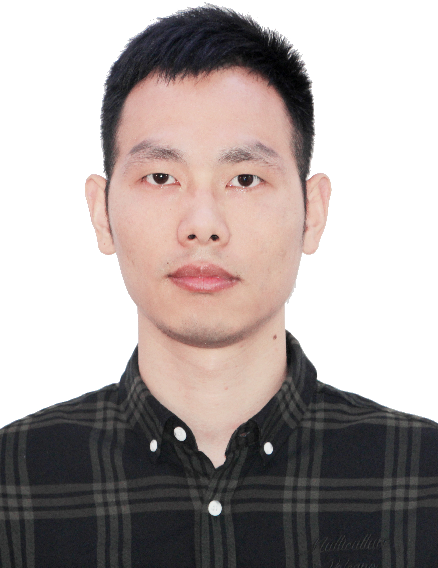
 Qiao Liu
· 2 previous affiliations
- Chongqing Normal UniversitySince 2022
- Associate Professor · Since 2022
- Harbin Institute of Technology2017–2021
- PhD student · 2017–2021
7 other authors named Qiao Liu: Qiao Liu (University of Electronic Science and Technology of China · 16 papers), Qiao Liu (Yale University · 13 papers), Qiao Liu (1 paper), Qiao Liu (1 paper), Qiao Liu (1 paper), and 2 more
Research Overview
Qiao Liu focuses on computer vision, thermal infrared object tracking, and deep feature representation. His research addresses the domain gap between standard RGB imagery and thermal data by developing specialized neural network architectures and large-scale evaluation datasets. Recent efforts emphasize multi-task learning frameworks and multi-level similarity models to improve tracking robustness in complex environments.
Research Trajectory
Qiao Liu’s research addresses the distinct challenges of computer vision in non-visible spectrums, specifically focusing on thermal infrared (TIR) object tracking. A recurring problem in this domain is that deep learning trackers typically rely on feature extraction networks trained on standard RGB images. These models often fail to capture the fine-grained, temperature-based information necessary for robust TIR tracking and struggle to distinguish targets from thermal distractors.
To establish a rigorous foundation for evaluating and training TIR models, Liu served as the first author on LSOTB-TIR: A Large-Scale High-Diversity Thermal Infrared Object Tracking Benchmark. This work introduced an extensive dataset comprising 1,400 sequences and over 600,000 frames, generating more than 730,000 bounding box annotations. To facilitate nuanced evaluation, the benchmark defined 4 scenario attributes and 12 challenge attributes. By providing a large-scale, high-diversity training and evaluation resource, this benchmark enabled the community to move beyond small-scale testing and develop specialized deep learning architectures tailored specifically to thermal imagery.
Building on this foundational dataset, Liu’s subsequent work has focused on designing network architectures that explicitly bridge the representational gap between RGB-trained models and TIR data. In Learning Deep Multi-Level Similarity for Thermal Infrared Object Tracking, Liu introduced a Siamese framework designed to enhance the discriminative capacity of TIR trackers. Recognizing that purely semantic features are insufficient for handling thermal distractors—especially when the underlying feature extraction network is optimized only for RGB images—this research proposed a multi-level similarity network. By computing both global semantic similarity and local structural similarity, the model leverages complementary patterns to maintain robust tracking even when visual features are degraded or cluttered.
Continuing this trajectory, Liu further refined TIR feature representation in Multi-Task Driven Feature Models for Thermal Infrared Tracking. This research identified that effectively adapting RGB models requires learning features that are explicitly discriminative for thermal data. To achieve this, Liu and collaborators developed a multi-task framework incorporating an auxiliary classification network, which guides the generation of TIR-specific features to better distinguish thermal objects across different classes. Additionally, the inclusion of a fine-grained aware module allowed the tracker to capture subtle thermal variations, significantly improving tracking performance over baseline RGB-adapted models.
Current Directions
The most recent papers in the evidence indicate a sustained focus on specialized feature representation for thermal infrared tracking. Current work investigates how multi-task learning and multi-level similarity frameworks can overcome the limitations of relying on visible-spectrum pre-training. By designing auxiliary networks and fine-grained attention modules, this research aims to build tracking systems that are inherently aware of the unique structural and discriminative properties of thermal imagery. The overarching goal of these recent efforts is to develop more reliable and accurate computer vision systems capable of operating in low-light, visually degraded, or complex thermal environments.
Profile updated
| Title | Venue | Year |
|---|---|---|
| Multi-Task Driven Feature Models for Thermal Infrared Tracking | AAAI | 2020 |
| LSOTB-TIR: A Large-Scale High-Diversity Thermal Infrared Object Tracking BenchmarkGitHub resource | Mm '20: Proceedings of the 28th ACM International Conference on Multimedia | 2020 |
| Learning Deep Multi-Level Similarity for Thermal Infrared Object Tracking | IEEE Trans. Multimedia | 2020 |
| Paper | Venue | Year |
|---|---|---|
| LSOTB-TIR: A Large-Scale High-Diversity Thermal Infrared Object Tracking BenchmarkGitHubQiaoLiuHit/ | Mm '20: Proceedings of the 28th ACM International Conference on Multimedia | 2024 |
Loading new papers…
Other researchers whose papers cluster into the same research directions — a proxy for overlapping technical interests and shared intellectual neighborhoods.
See something wrong? Report a mistake