

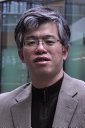
 Qiang Wu
· 1 previous affiliation
- University of Technology SydneySince 2007
- Associate Professor · Since 2014
- Assistant Professor · 2007–2014
5 other authors named Qiang Wu: Qiang Wu (Middle Tennessee State University · 18 papers), Qiang Wu (Zhejiang University · 7 papers), Qiang Wu (Nanjing University · 5 papers), Qiang Wu (后摩智能 HOUMO.AI · houmo.ai · 3 papers), Qiang Wu (Lanzhou University · 2 papers)
Research Overview
Qiang Wu focuses on computer vision and 3D point cloud processing, with specific emphasis on object tracking, person re-identification, and spatial registration. His trajectory spans from early work in video-based human identification to extensive contributions in point cloud understanding and depth map enhancement. Most recently, his research investigates efficient rendering techniques and structured pruning for 3D Gaussian splatting.
Research Trajectory
Wu’s early research addressed video-based human identification and object tracking. In Context-aware fusion: A case study on fusion of gait and face for human identification in video, his group explored combining multiple biometric modalities to improve identification accuracy. Subsequently, he participated in formulating video object tracking as a ranking problem, applying webpage ranking algorithms to adapt to environmental changes in PageRank Tracker: From Ranking to Tracking.
By the late 2010s, his focus expanded significantly into 3D vision and person re-identification. He contributed to the research direction of Robust Non-Rigid Registration of Point Clouds through A Systematic Approach for Cross-Source Point Cloud Registration by Preserving Macro and Micro Structures, which introduced a graph-based method to align 3D data from heterogeneous sensors like LiDAR and RGB cameras. Building on this spatial alignment work, his lab later developed Kpsnet: Keypoint Detection and Feature Extraction for Point Cloud Registration, a Siamese network designed to simultaneously learn keypoint detection and feature extraction without requiring manual pairwise annotations. Concurrently, in the domain of person re-identification, he participated in work addressing the broader area of Dynamic Pseudo-Label Refinement for Self-Training. This included Multi-Pseudo Regularized Label for Generated Data in Person Re-Identification, which leveraged virtual labels for GAN-generated synthetic data to augment limited real-world training sets.
In 2020, Wu’s research output diversified across machine learning architectures and dense prediction tasks. He proposed a field-focused modeling approach for heterogeneous data groups in Field-wise Learning for Multi-field Categorical Data. Returning to 3D vision, his team addressed ambiguities in point-based feature extraction with Exploring Long-Short-Term Context For Point Cloud Semantic Segmentation, designing a feature bank to capture both local block contexts and long-range dependencies. He also led research in guided depth map enhancement, presenting a coarse-to-fine upsampling network that maintains multi-scale intensity guidance in Depth Map Enhancement by Revisiting Multi-Scale Intensity Guidance Within Coarse-to-Fine Stages.
The following year, Wu co-authored several studies tackling extreme challenges in person re-identification and limited-data learning. To handle cross-domain re-identification without relying heavily on data transformation models, he helped develop Unsupervised Domain Adaptation with Background Shift Mitigating for Person Re-Identification. He also investigated the specific difficulties of long-term re-identification where subjects change apparel, co-authoring Clothing Status Awareness for Long-Term Person Re-Identification. In the realm of semi-supervised few-shot learning, he collaborated on PTN: A Poisson Transfer Network for Semi-supervised Few-shot Learning, which utilized a Poisson Merriman–Bence–Osher model to stabilize message passing between labeled and unlabeled examples.
By 2022, Wu’s work demonstrated a strong integration of spatial-temporal modeling and unsupervised techniques. He oversaw the development of Data Augmentation-free Unsupervised Learning for 3D Point Cloud Understanding, advancing representation learning without reliance on manual augmentations. In biometric recognition, his lab integrated decoupling processes into a 3D convolution framework to preserve spatial-temporal correlations in Enhanced Spatial-Temporal Salience for Cross-View Gait Recognition. His continued focus on spatial alignment yielded Overlap-Guided Coarse-to-Fine Correspondence Prediction for Point Cloud Registration, which aggregated point clouds into super-points to better distinguish overlap from non-overlap regions. Additionally, he furthered his prior work on depth maps with MIG-Net: Multi-Scale Network Alternatively Guided by Intensity and Gradient Features for Depth Map Super-Resolution, utilizing gradient-domain features like edges to guide super-resolution. During this period, he also contributed to the research area of Discriminating Categories with Low Inter-Class Variance through his participation in TOAN: Target-Oriented Alignment Network for Fine-Grained Image Categorization With Few Labeled Samples, which aligned support and query image features to handle high intra-class variation.
The most recent evidence in his trajectory extends his 3D vision expertise into neural rendering. He collaborated on CoverPruneGS: Coverage-Preserving Structured Pruning for Hierarchical 3D Gaussian Splatting from Sparse-View Monocular Videos, which introduced a coarse-to-fine structured pruning framework to balance redundancy and coverage in sparse-view reconstructions.
Current Directions
The most recent papers in the evidence indicate a continued focus on efficient 3D scene representation and rendering. Specifically, recent work investigates optimization techniques for 3D Gaussian Splatting, addressing the computational redundancies inherent in sparse-view monocular video reconstructions. By developing structured pruning frameworks that balance rendering quality with inference speed, this research aims to make high-fidelity 3D rendering more tractable. Additionally, his sustained output in point cloud understanding and spatial-temporal biometrics suggests an ongoing interest in robust, unsupervised, and cross-domain feature extraction for complex visual data.
Profile updated
Loading new papers…
Other researchers whose papers cluster into the same research directions — a proxy for overlapping technical interests and shared intellectual neighborhoods.
See something wrong? Report a mistake