

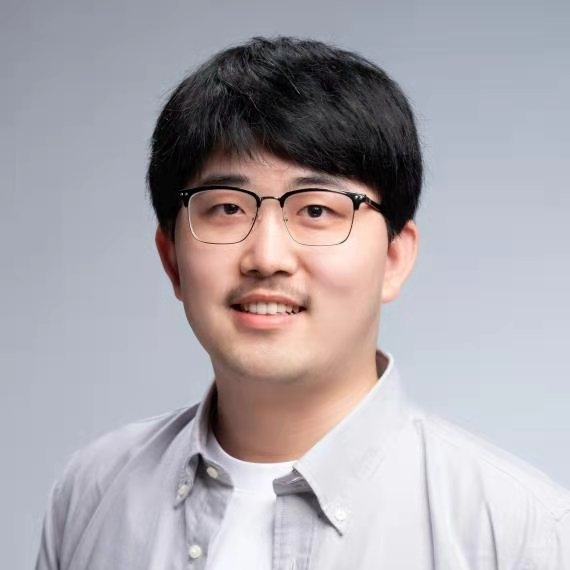
 Qiang Sheng
· 3 previous affiliations
- Chinese Academy of SciencesSince 2023
- Associate Professor · Since 2025
- Current
- Assistant Professor · 2023–2025
- Associate Professor · Since 2025
- PhD student · 2018–2023
- Undergrad student · 2014–2018
Research Overview
Qiang Sheng focuses on misinformation detection, fact-checking, and the identification of machine-generated content across social media platforms. His earlier work developed structural and temporal models to identify false news and controversial narratives in evolving online environments. Currently, he investigates the intersection of large language models and information integrity, building agentic systems to detect synthetic media and mitigate truth decay in news ecosystems.
Research Trajectory
In 2020, he participated in research on modeling threaded conversations as hierarchical trees, contributing to Integrating Semantic and Structural Information with Graph Convolutional Network for Controversy Detection, which used graph convolutional networks to identify controversial posts by analyzing argument structures. Building on this, he developed frameworks to synthesize different signals for misinformation detection. He introduced Integrating Pattern- and Fact-based Fake News Detection via Model Preference Learning to combine textual pattern recognition with external fact retrieval, and designed memory-enhanced matching techniques to identify previously verified claims in Article Reranking by Memory-Enhanced Key Sentence Matching for Detecting Previously Fact-Checked Claims.
Moving into 2022 and 2023, his focus expanded to the broader news environment and the temporal dynamics of misinformation. He explored how news context informs veracity in Zoom Out and Observe: News Environment Perception for Fake News Detection and analyzed cross-domain false news characteristics on Chinese Weibo in Characterizing multi-domain false news and underlying user effects on Chinese Weibo. Recognizing that news topics evolve rapidly, he addressed the challenge of managing concept drift in real-time data streams with Learn over Past, Evolve for Future: Forecasting Temporal Trends for Fake News Detection. This framework predicted future topic distributions to reweight historical training data, mitigating temporal shift. To handle diverse topical domains simultaneously, he developed Memory-Guided Multi-View Multi-Domain Fake News Detection, which utilized a domain memory bank to discover hidden relationships, contributing to the transition from manual feature engineering to neural representations. He also tackled the accuracy-timeliness dilemma in the research direction of Early Rumor Detection with Sparse Propagation Graphs. By distilling knowledge from historical user comments into a content-only model, he enabled accurate identification before public engagement in Exploiting User Comments for Early Detection of Fake News Prior to Users' Commenting, advancing work in the broader area of Detecting Misinformation Beyond Stylistic Mimicry.
As large language models (LLMs) became prominent, his trajectory shifted toward the intersection of generative AI and information integrity. In 2024, he investigated the area of The Generalization Gap in AI Text Detection. He collaborated on Ten Words Only Still Help: Improving Black-Box AI-Generated Text Detection via Proxy-Guided Efficient Re-Sampling, which estimated word generation probabilities to detect synthetic text without accessing internal model states. He also explored how LLMs could assist smaller, specialized models. In Bad Actor, Good Advisor: Exploring the Role of Large Language Models in Fake News Detection, he reframed the LLM as an advisor providing multi-perspective rationales to guide smaller models, contributing to methods for distilling reasoning trajectories into small language models.
In 2025, his research began addressing the systemic impacts of synthetic media and the subtle tactics of deception. He identified a phenomenon termed "Truth Decay" in LLM-Generated Fake News Induces Truth Decay in News Ecosystem: A Case Study on Neural News Recommendation, demonstrating that neural recommendation systems often favor the lower perplexity of LLM-generated fake news over human-written real news. To improve detection systems, he developed Enhancing Fake News Video Detection via LLM-Driven Creative Process Simulation, which used LLMs to simulate the creation of fake news videos, generating synthetic training data to boost detector robustness. He further advanced AI text detection by co-developing PhantomHunter: Detecting Unseen Privately-Tuned LLM-Generated Text via Family-Aware Learning, which identifies family-level probabilistic signatures to catch text from unseen, privately fine-tuned models. Expanding beyond explicit falsehoods, he participated in work on detecting deception through strategic omission and half-truths with Reasoning About the Unsaid: Misinformation Detection with Omission-Aware Graph Inference, using graph neural networks to compare news against broader media contexts to spot strategic omissions.
Most recently, in 2026, he contributed to the area of agentic search for iterative knowledge synthesis through FactGuard: Agentic Video Misinformation Detection via Reinforcement Learning. This work treats video misinformation detection as an iterative evidence-gathering process, utilizing reinforcement learning to overcome the limitations of static models when evidence is scarce.
Current Directions
The most recent papers in the evidence indicate a strong focus on the intersection of generative AI and complex misinformation ecosystems. Recent work investigates the systemic vulnerabilities introduced by large language models, particularly how neural recommendation systems exhibit biases toward synthetic content, leading to "truth decay" in digital environments. To combat increasingly sophisticated deception, current research explores agentic frameworks that simulate the creative processes of bad actors to generate robust synthetic training data, as well as reinforcement learning systems that iteratively gather evidence for video misinformation detection. Additionally, ongoing efforts address the challenge of identifying privately fine-tuned AI-generated text through family-aware probabilistic signatures and detecting subtle deception by reasoning about strategic omissions in news narratives.
Profile updated
Loading new papers…
Other researchers whose papers cluster into the same research directions — a proxy for overlapping technical interests and shared intellectual neighborhoods.
See something wrong? Report a mistake