

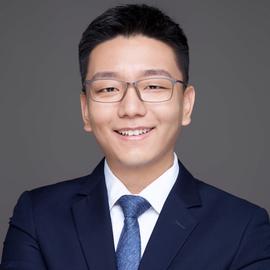
 Qiang Liu
· 2 previous affiliations
- Institute of AutomationSince 2021
- Associate Professor · Since 2021
- PhD student · 2015–2018
- Tsinghua University2018–2021
- Postdoc · 2018–2021
8 other authors named Qiang Liu: qiang liu (The University of Texas at Austin · 128 papers), Qiang Liu (Technical University of Munich · 44 papers), Qiang Liu (Zhejiang University · 3 papers), Qiang Liu (Meta (United States) · 2 papers), Qiang Liu (Nanjing University · 1 paper), and 3 more
Research Overview
Qiang Liu focuses on data mining, misinformation detection, and trustworthy large language models. His early work developed deep learning architectures for predictive modeling in user behavior and social media analysis. More recently, his research has shifted toward out-of-distribution generalization, graph representation learning, and the application of generative models to complex scientific domains like molecular design.
Research Trajectory
Liu’s early research concentrated on extracting actionable patterns from user interaction data using emerging deep learning architectures. He introduced A Convolutional Click Prediction Model (2015), which utilized convolutional neural networks to capture local-global feature interactions for online advertising. The following year, he applied recurrent neural networks to spatial and temporal contexts in Predicting the Next Location: A Recurrent Model with Spatial and Temporal Contexts (2016), addressing the limitations of traditional Markov chain and tensor factorization methods in user behavior prediction.
He subsequently expanded his focus to social media analysis, particularly the identification of false information. In A Convolutional Approach for Misinformation Identification (2017), he proposed treating social media events as a series of phases, using convolutional networks to identify misinformation earlier than standard recurrent models. This foundational work contributed to the broader research area of Early Rumor Detection with Sparse Propagation Graphs.
In parallel, Liu contributed to advances in graph neural networks and their application to complex systems. With collaborators, he developed TAGNN: Target Attentive Graph Neural Networks for Session-based Recommendation (2020), which dynamically adapted user session representations based on candidate items. His research also extended into the physical sciences; he led the development of a physics-guided framework in Physics-Guided Discovery of Highly Nonlinear Parametric Partial Differential Equations (2021), successfully identifying complex 3D governing equations from sparse data and advancing the area of Noise Amplification in Numerical Differentiation.
A major theme in Liu's subsequent work is out-of-distribution (OOD) generalization and the mitigation of spurious correlations across diverse domains. In healthcare, his team proposed Deep Stable Representation Learning on Electronic Health Records (2022) to prevent models from exploiting shifting statistical correlations between medical procedures and diagnoses. He applied similar stability principles to recommendation systems in Mining Stable Preferences: Adaptive Modality Decorrelation for Multimedia Recommendation (2023) and Deep Stable Multi-Interest Learning for Out-of-distribution Sequential Recommendation (2023), ensuring models learn genuine user preferences rather than coincidental feature overlaps. This focus on robustness extended to social media and finance, where he introduced Out-of-distribution Evidence-aware Fake News Detection via Dual Adversarial Debiasing (2023) and addressed missing-not-at-random selection bias in RMT-Net: Reject-Aware Multi-Task Network for Modeling Missing-Not-At-Random Data in Financial Credit Scoring (2023). He also developed noise-robust frameworks for natural language processing, treating noisy data as a semi-supervised learning asset in Noise-Robust Semi-Supervised Learning for Distantly Supervised Relation Extraction (2023).
Alongside his work in data mining and recommendation, Liu began exploring generative models for scientific discovery and graph representation. He contributed to DecompDiff: Diffusion Models with Decomposed Priors for Structure-Based Drug Design (2023), a novel approach that decomposes ligand molecules into functional components to generate high-affinity 3D structures, aligning with the research direction of Unified Diffusion for 3D Molecular Geometry and Connectivity. He also participated in theoretical investigations of graph self-supervised learning in Rethinking Graph Masked Autoencoders through Alignment and Uniformity (2024).
Most recently, Liu has focused extensively on the capabilities, reliability, and application of Large Language Models (LLMs). Returning to his earlier interest in misinformation, he investigated zero-shot reasoning for social media in Can Large Language Models Detect Rumors on Social Media? (2024). His collaborative work includes improving the efficiency of LLMs in knowledge retrieval through reinforcement learning in KBQA-R1: Reinforcing Large Language Models for Knowledge Base Question Answering (2026), and developing targeted model editing techniques to prevent collateral knowledge loss in Disentangling Knowledge Representations for Large Language Model Editing (2026). Concurrently, he has continued to advance AI for science, contributing to Reading the Cell, Designing the Cure: Perturbation-Conditioned Molecular Diffusion for Function-Oriented Drug Design (2026) and SpectraLLM: Uncovering the Ability of LLMs for Molecule Structure Elucidation from Multi-Spectra (2026), the latter demonstrating how unified language models can resolve structural ambiguity across diverse spectroscopic modalities, contributing to the field of Multi-modal Spectroscopic Fusion for Molecular Elucidation. Liu also participated in developing Binding Mode Matters: Hotspot-Aware Drug Discovery via Explorative Preferences (2026), framing target-based drug design as multi-objective reinforcement learning to uncover molecules with diverse binding modes, and senior-authored XDecomposer: Learning Prior-Free Set Decomposition for Multiphase X-ray Diffraction (2026), introducing a set prediction framework for prior-free decomposition and identification of multiphase crystal structures.
Current Directions
The most recent papers in the evidence indicate a dual focus on trustworthy large language models and AI-driven scientific discovery. In the domain of scientific AI, recent work investigates the intersection of machine learning and physical sciences, spanning hotspot-aware generative drug discovery, multiphase X-ray diffraction decomposition, and molecular structure elucidation from multi-modal spectroscopic data.
A second major focus is the reliability and reasoning capabilities of LLMs. This includes developing reinforcement learning frameworks to ground LLM reasoning in structured knowledge bases, creating zero-shot reasoning pipelines for complex tasks like rumor detection, and designing surgical knowledge-editing techniques that allow models to be updated with new facts without degrading their existing, fine-grained knowledge representations. Across these areas, a unifying theme is the drive to make complex, over-parameterized models more robust, interpretable, and reliable when deployed in specialized or out-of-distribution environments.
Profile updated
Loading new papers…
Other researchers whose papers cluster into the same research directions — a proxy for overlapping technical interests and shared intellectual neighborhoods.
See something wrong? Report a mistake