

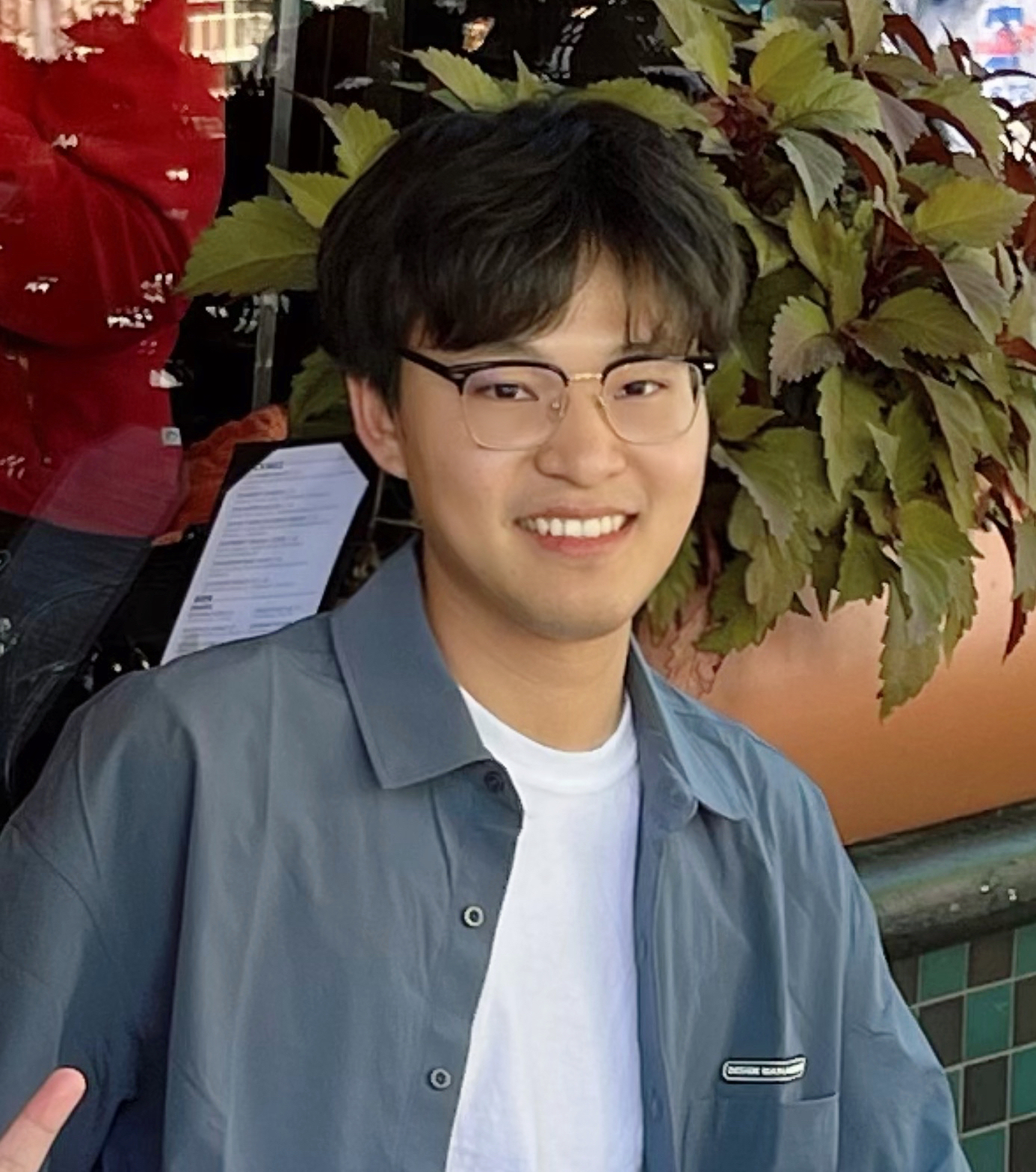
 Qi Zhang
· 2 previous affiliations
- Amazon (United States)Since 2026
- Researcher · Since 2026
- Temple University2021–2026
- PhD student · 2021–2026
30 other authors named Qi Zhang: Qi Zhang (Tongji University · 270 papers), Qi Zhang (Fudan University · 210 papers), Qi Zhang (Vivo · 67 papers), Qi Zhang (Shenzhen University · 33 papers), Qi Zhang (Microsoft (United States) · 22 papers), and 25 more
Research Overview
Qi Zhang focuses on the extraction of structured knowledge from complex scientific artifacts and the development of robust, self-correcting autonomous agents. Their work addresses the limitations of current large-scale models in understanding specialized visual-linguistic structures and maintaining consistency in multi-step reasoning tasks. By bridging the gap between unstructured scientific data and formal representations, Zhang’s research facilitates the automation of domain-specific knowledge acquisition and improves the reliability of multi-agent systems in idiosyncratic environments.
Research Trajectory
The trajectory of Zhang’s research reflects a transition from foundational data acquisition and information extraction (IE) to the higher-level orchestration of autonomous agents. In 2025, Zhang’s work was primarily concerned with the "knowledge engineering bottleneck," a long-standing challenge in natural language understanding where the manual encoding of linguistic rules and domain mappings limits the scalability of systems. This phase of research focused on Scaling Information Extraction by Automating Domain Knowledge Acquisition, specifically within the scholarly domain. Zhang contributed to the development of datasets that move beyond simple abstract-level extraction to full-text analysis, recognizing that critical entity mentions and relations are often lost when models are restricted to truncated document segments.
During this same period, Zhang expanded their focus to include cross-modal understanding, particularly the interpretation of graphical representations of logic. This work addressed the Complexity Mismatch in Generative Reasoning by evaluating how Large Vision-Language Models (LVLMs) handle structured visual data like flowcharts. This research direction highlighted a fundamental tension in Efficient Cross-Modal Retrieval: while models may excel at general image-to-text tasks, they often struggle with the fine-grained, hierarchical relationships inherent in technical diagrams.
In 2026, Zhang’s focus shifted toward the operational reliability of Large Language Model (LLM) agents. This work acknowledges that while LLMs are powerful reasoning engines, they remain brittle when deployed in multi-agent systems (MAS) or when required to use external tools. Zhang’s recent contributions involve developing metacognitive frameworks for real-time error detection and neuro-symbolic methods for tool adaptation. This evolution suggests a move toward "system-level" AI research, where the goal is not just to improve model performance on static benchmarks, but to ensure the stability and adaptability of models acting within dynamic, multi-step workflows.
Current Directions
Zhang’s current research is concentrated on two primary pillars: metacognitive self-correction in autonomous systems and the adaptation of agents to domain-specific tools.
The first pillar addresses the "cascading error" problem in multi-agent systems, where a single faulty reasoning step by one agent can derail an entire collaborative trajectory. Zhang is investigating unsupervised methods for detecting these anomalies by comparing predicted execution embeddings against actual model outputs. This approach aims to provide agents with a form of internal "causal consistency" check, allowing them to self-correct without human intervention.
The second pillar focuses on the adaptation of LLMs to idiosyncratic or under-documented APIs. Standard prompting often fails in specialized environments where tool behavior does not align with the model's pre-training data. Zhang’s work in this area utilizes neuro-symbolic techniques to distill interpretable rules from failure traces. By applying a Minimum Description Length (MDL) objective, these systems can learn generalizable rules that improve tool-use reliability while maintaining a compact and efficient prompt space. This direction aligns with broader efforts in the field to move away from Circularity in Model Generated Benchmarks and toward verifiable, rule-based performance improvements.
Representative Work
Zhang’s contributions to scientific information extraction are exemplified by the development of SciER: An Entity and Relation Extraction Dataset for Datasets, Methods, and Tasks in Scientific Documents. As a key contributor to this work, Zhang addressed the limitations of existing SciIE datasets, which frequently rely on abstracts due to the high cost of full-text annotation. By releasing a manually annotated dataset of 106 full-text scientific articles, the project provided a more robust ground truth for extracting entities related to datasets, methods, and tasks. This work is significant for its emphasis on Hierarchical Document Modeling for Retrieval Augmented Generation, as it treats scientific papers not as flat sequences of text but as complex structures where context is distributed across various sections.
In the domain of visual reasoning, Zhang played a significant role in the creation of FlowLearn: Evaluating Large Vision-Language Models on Flowchart Understanding. This research introduced a large-scale resource comprising over 13,000 flowcharts, split between authentic scientific literature and simulated examples. Zhang’s involvement in this project focused on the multi-faceted annotation of these charts, including OCR, Mermaid code representations, and visual question-answering (VQA) pairs. The study revealed that even advanced LVLMs struggle with the structural logic of flowcharts, providing a critical benchmark for future work in cross-modal reasoning and diagrammatic understanding.
Zhang’s work on agentic reliability is represented by the Metacognitive Self-Correction for Multi-Agent System via Prototype-Guided Next-Execution Reconstruction (MASC) framework. In this second-author paper, Zhang helped develop a system for unsupervised, step-level error detection in multi-agent environments. The framework utilizes two primary mechanisms: Next-Execution Reconstruction, which predicts future step embeddings to ensure causal consistency, and Prototype-Guided Enhancement, which uses a learned prior of "normal" execution steps to identify anomalies. This work addresses the inherent fragility of generative reasoning by providing a real-time monitoring system that does not rely on external labels or human feedback.
Finally, Zhang participated in the development of Improving Tool-Using Language Agents via MDL‑Guided Rule Learning (RIMRULE). As the third author, Zhang contributed to a neuro-symbolic approach for adapting LLMs to task-specific tools. The system identifies failure traces during tool interaction and uses the LLM to propose corrective rules. These rules are then consolidated using a Minimum Description Length objective, which ensures that the resulting rule set is both general and concise. This research provides a pathway for deploying language agents in private or specialized workflows where standard documentation is insufficient, emphasizing the importance of interpretable, dynamic rule injection over static fine-tuning. This approach also touches upon the need for Estimating Parameter Importance, as it seeks to modify model behavior through externalized rules rather than internal weight adjustments.
Profile updated
Loading new papers…
Other researchers whose papers cluster into the same research directions — a proxy for overlapping technical interests and shared intellectual neighborhoods.
See something wrong? Report a mistake