

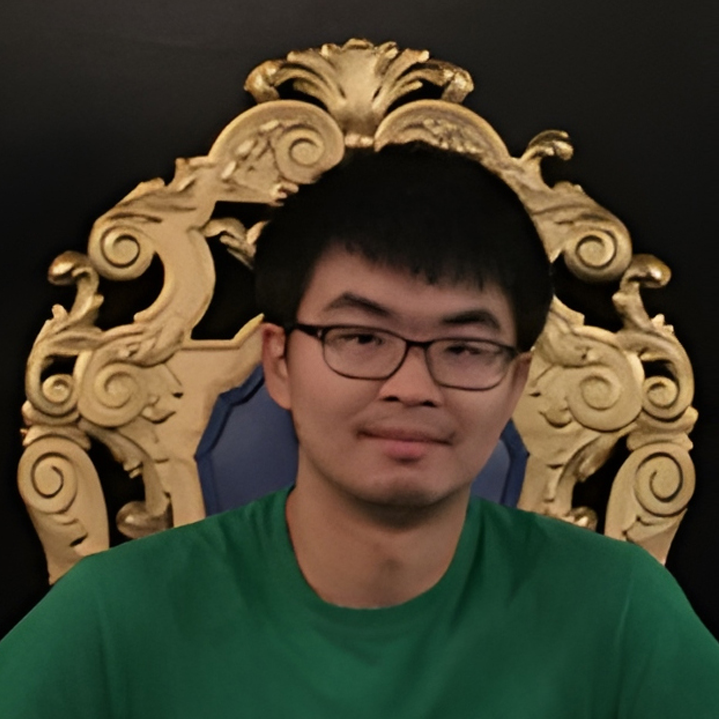
 Qi Wu
· 3 previous affiliations
- Nvidia (United States)Since 2024
- Researcher · Since 2024
- Deloitte (United States)2018–2024
- PhD student · 2018–2024
- University of Utah2016–2018
- MS student · 2016–2018
6 other authors named Qi Wu: Qi Wu (Adelaide University · 239 papers), Qi Wu (ByteDance (China) · 29 papers), Qi WU (Jingdong (China) · Laboratory for AI-Powered Financial Technologies Limited · 28 papers), Qi Wu (Carnegie Mellon University · 3 papers), Qi Wu (1 paper), and 1 more
Research Overview
Qi Wu focuses on large-scale scientific visualization, real-time rendering, and the application of implicit neural representations to massive datasets. His early work addressed high-performance computing challenges in exascale volume visualization and in situ data analysis. More recently, his research emphasizes neural reconstruction and 3D Gaussian splatting to enable interactive, photorealistic exploration of complex volumetric and sensor data.
Research Trajectory
Wu’s early research concentrated on scaling visualization systems to meet the demands of high-performance computing environments. He addressed the bottlenecks of massive simulation data with VisIt-OSPRay: Toward an Exascale Volume Visualization System, which redesigned rendering architectures to utilize hybrid-parallel approaches for exascale workflows. Recognizing that traditional procedural programming struggled with the unpredictable nature of scientific phenomena during live simulations, he subsequently introduced DIVA: A Declarative and Reactive Language for in situ Visualization. This work provided a more robust paradigm for coordinating adaptive in situ workflows. These foundational efforts in managing massive datasets culminated in his overarching methodology for extreme-scale data, detailed in A Programmable Streaming Framework for Extreme-Scale Scientific Visualizations, which tackled the slow processing times inherent in modern scientific acquisition.
Transitioning into neural rendering, Wu began integrating implicit neural representations (INRs) to compress and render volume data more efficiently. With collaborators, he developed HyperINR: A Fast and Predictive Hypernetwork for Implicit Neural Representations via Knowledge Distillation, achieving significant speedups for interactive scientific visualizations by generalizing to unseen parameters like new timesteps. He also advanced volumetric rendering techniques to handle complex lighting, as seen in Photon Field Networks for Dynamic Real-Time Volumetric Global Illumination. This project introduced a multi-light neural representation to mitigate stochastic noise and reduce convergence times in path tracing.
His focus on the research area of Multi-resolution Hash Encoding for Coordinate Based Networks led to Interactive Volume Visualization via Multi-Resolution Hash Encoding Based Neural Representation. By combining hash encoding with GPU acceleration and out-of-core training, this method significantly reduced memory footprints, enabling the interactive exploration of massive datasets. Continuing to optimize rendering pipelines for specialized data structures, he contributed to Beyond ExaBricks: GPU Volume Path Tracing of AMR Data, which focused on adaptive mesh refinement formats. He then brought INRs back to his earlier focus on in situ workflows with Distributed Neural Representation for Reactive In Situ Visualization, eliminating inter-process data exchanges to achieve high-speed compression and caching for distributed simulations.
In recent years, now serving as a Senior Research Scientist at NVIDIA, Wu has expanded his methodological toolkit to include 3D Gaussian splatting and advanced caching mechanisms. He co-developed GSCache: Real-Time Radiance Caching for Volume Path Tracing Using 3D Gaussian Splatting, which caches path-space radiance in a multi-level structure to improve photorealistic volume rendering without added computational costs. Addressing specific domain challenges, he participated in creating Glyph-Based Multiscale Visualization of Turbulent Multi-Physics Statistics, a framework utilizing the discrete curvelet transform and spatial statistical aggregation to map complex turbulence data directly onto physical structures.
To further democratize access to massive datasets, Wu introduced From Cluster to Desktop: A Cache-Accelerated INR framework for Interactive Visualization of Tera-Scale Data. This system combines INRs with a multi-resolution GPU cache to render tera-scale data interactively on standard desktop hardware. Most recently, his work has extended into sensor simulation for autonomous systems. In SimULi: Real-Time LiDAR and Camera Simulation with Unscented Transforms, he and his colleagues designed a neural rendering pipeline that jointly simulates camera and LiDAR sensors, utilizing factorized 3D Gaussian splatting to resolve cross-sensor inconsistencies and support complex camera models.
Current Directions
The most recent papers in the evidence indicate a strong focus on real-time neural rendering and the application of 3D Gaussian splatting to complex simulation environments. Current work investigates advanced caching mechanisms to make photorealistic volume path tracing and tera-scale data visualization accessible on standard desktop hardware, bridging the gap between high-performance computing clusters and local workstations. Additionally, recent research addresses the joint simulation of multi-modal sensors—such as cameras and LiDAR—using factorized neural representations to ensure high-fidelity, consistent rendering for autonomous vehicle testing and dynamic scene reconstruction.
Profile updated
Loading new papers…
Other researchers whose papers cluster into the same research directions — a proxy for overlapping technical interests and shared intellectual neighborhoods.
See something wrong? Report a mistake