

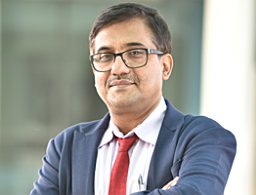
 Pushpak Bhattacharyya
· 7 previous affiliations
- Indian Institute of Technology BombaySince 2003
- Professor Incharge · Since 2021
- Full Professor · Since 2003
- PhD, Computer Science and Engineering · 1988–1993
- Monash UniversitySince 2021
- Professor Incharge · Since 2021
- Member At Large · Since 2023
- Bureau of Indian StandardsSince 2023
- Chairman · Since 2023
- Chairman · Since 2024
- Reserve Bank of IndiaSince 2025
- Chairman Committee · Since 2025
- Visiting Research Fellowship, Artificial Intelligence · 1990–1991
Research Overview
Pushpak Bhattacharyya focuses on natural language processing, machine translation, and sentiment analysis, with a particular emphasis on morphologically rich languages. His trajectory spans early work in lexical resources and word sense disambiguation to cognitive modeling of reading behavior and multi-modal emotion recognition. Recently, his research addresses disfluency correction in spoken language processing and the efficiency of non-autoregressive diffusion language models.
Research Trajectory
Bhattacharyya’s early research addressed probabilistic modeling and morphological analysis for natural language processing. He introduced a Bayesian model capable of estimating uncertainties to handle noisy labels in A model for handling approximate, noisy or incomplete labeling in text classification. Moving to morphologically rich languages, his work in the area of Inducing Linguistic Structure from Sparse Data demonstrated that morphological richness can offset the need for large training corpora, as detailed in Morphological Richness Offsets Resource Demand - Experiences in Constructing a POS Tagger for Hindi. This research bridged symbolic rules and statistical models by utilizing morphological features as structural anchors for syntactic parsing.
Expanding his focus on Indian languages, he addressed fluency in English-Hindi statistical machine translation by leveraging factored representations and syntactic reordering in Case markers and Morphology: Addressing the crux of the fluency problem in English-Hindi SMT. Around this time, he also contributed to robust natural language processing for noisy social media data, participating in the development of a rule-based sentiment analyzer for Twitter in C-Feel-It: A Sentiment Analyzer for Micro-blogs. To support global linguistic infrastructure, he developed a unified schema for lexical databases in World WordNet Database Structure: An Efficient Schema for Storing Information of WordNets of the World and built a comprehensive transliteration system for the Indian subcontinent in Brahmi-Net: A transliteration and script conversion system for languages of the Indian subcontinent. Concurrently, he advanced unsupervised word sense disambiguation by combining Markov Random Fields with dependency parsing in Unsupervised Word Sense Disambiguation Using Markov Random Field and Dependency Parser, contributing to the broader direction of Shortest Dependency Path Filtering for Relation Extraction.
His research subsequently integrated cognitive features and multi-modal signals into NLP tasks. He explored physiological proxies for real-time cognitive load estimation by incorporating eye-tracking data into predictive models. This included Harnessing Cognitive Features for Sarcasm Detection and modeling reading effort in Scanpath Complexity: Modeling Reading Effort Using Gaze Information. He further demonstrated that gaze behavior improves automated text evaluation in Eyes are the Windows to the Soul: Predicting the Rating of Text Quality Using Gaze Behaviour. In parallel, he advanced the area of Quantifying the Intensity of Subjective Language by developing sentiment-specific word embeddings for continuous sentiment intensity regression in Sentiment Intensity Ranking among Adjectives Using Sentiment Bearing Word Embeddings. This sentiment analysis work naturally extended into multi-modal domains, leading to architectures for contextual inter-modal attention in Contextual Inter-modal Attention for Multi-modal Sentiment Analysis and multi-task frameworks in Multi-task Learning for Multi-modal Emotion Recognition and Sentiment Analysis.
Most recently, his trajectory encompasses advanced generation, disfluency correction, and generative modeling. He proposed a joint multi-task learning approach for automatic post-editing and quality estimation in machine translation in Quality Estimation-Assisted Automatic Post-Editing. Addressing structural disfluency detection in spontaneous speech, he introduced a large-scale multilingual corpus for spoken-to-written conversion in DISCO: A Large Scale Human Annotated Corpus for Disfluency Correction in Indo-European Languages. Expanding beyond text, he participated in evaluating the cultural awareness and diversity of generative vision models in Beyond Aesthetics: Cultural Competence in Text-to-Image Models. Finally, he investigated non-autoregressive decoding efficiency in Faster Inference for Conditional Masked Diffusion Language Models by Knowledge Distillation of Guidance and Trajectory, developing a two-stage distillation framework to accelerate inference in masked diffusion language models. Most recently, Bhattacharyya's group addressed document understanding in financial contexts by introducing SAVIOR: Sample-efficient Adaptation of Vision-Language Models for OCR Representation, which pairs targeted data curation on operational failure modes with a structure-aware layout evaluation metric to adapt vision-language models for complex OCR.
Current Directions
Recent work investigates the refinement and efficiency of generative models across modalities, as well as the processing of spontaneous speech. Specifically, the most recent papers in the evidence address the acceleration of conditional masked diffusion language models through knowledge distillation, aiming to reduce the inference costs associated with non-autoregressive decoding. Alongside this, current research explores the evaluation of cultural competence—encompassing both cultural awareness and diversity—in text-to-image generation systems. In the domain of spoken language processing, recent efforts focus on multilingual disfluency correction, while emerging multimodal work targets robust document understanding by adapting vision-language models to handle complex layouts and degraded financial OCR scenarios.
Profile updated
Loading new papers…
Other researchers whose papers cluster into the same research directions — a proxy for overlapping technical interests and shared intellectual neighborhoods.
See something wrong? Report a mistake