

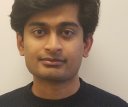
 Promit Ghosal
· 5 previous affiliations
- University of ChicagoSince 2024
- Assistant Professor · Since 2024
- Brandeis University2023–2024
- Assistant Professor · 2023–2024
- Instructor · 2020–2023
- Columbia University2015–2020
- PhD student · 2015–2020
- Indian Statistical Institute2013–2015
- M. Stat, Statistics · 2013–2015
2 other authors named Promit Ghosal: PROMIT GHOSAL (University of Chicago · 7 papers), Promit Ghosal (University of Chicago · 2 papers)
Research Overview
Promit Ghosal focuses on the theoretical foundations of machine learning, optimal transport, and causal discovery. His trajectory spans the mathematical analysis of neural network dynamics and variational inference to the development of scalable algorithms for high-dimensional data. Recently, his work investigates differential privacy in large language models and generative approaches to biological data analysis.
Research Trajectory
Beginning in 2021, Ghosal's research addressed optimal transport, specifically focusing on the area of Dimension Independent Optimal Transport via Regularization. By analyzing plug-in estimators defined via barycentric projections, he and his collaborators provided stability estimates that operate under minimal smoothness assumptions in Rates of Estimation of Optimal Transport Maps using Plug-in Estimators via Barycentric Projections.
Moving into 2022 and 2023, his focus expanded to the theoretical properties of neural networks and optimization dynamics. Contributing to the research direction of The Width Gap Between Deep Learning Theory and Practice, he investigated the expressivity of untrained networks in Randomly Initialized One-Layer Neural Networks Make Data Linearly Separable, establishing explicit width bounds required for linear separability. He also participated in analyzing the complex behaviors of optimization algorithms, as seen in From Stability to Chaos: Analyzing Gradient Descent Dynamics in Quadratic Regression. This work mapped gradient descent trajectories to cubic dynamical systems to characterize distinct training phases ranging from monotonic convergence to chaotic regimes.
Concurrently, Ghosal advanced the mathematical foundations of variational inference, specifically Stein Variational Gradient Descent (SVGD). In Towards Understanding the Dynamics of Gaussian-Stein Variational Gradient Descent, he helped establish a rigorous framework for Gaussian-restricted SVGD, proving linear convergence and connecting it to broader variational inference algorithms. This aligns with the broader area of Mitigating Variance Collapse in High-Dimensional Particle Inference. He subsequently derived near-optimal convergence rates for finite-particle SVGD in Improved Finite-Particle Convergence Rates for Stein Variational Gradient Descent, tracking the joint entropy of the particle system to significantly improve existing error bounds.
In 2024, his research incorporated causal discovery, focusing on scalable algorithms for complex data. He contributed to the field of Breaking Distributional Symmetry for Causal Identifiability through the development of LoSAM, a top-down algorithm detailed in LoSAM: Local Search in Additive Noise Models with Unmeasured Confounders, a Top-Down Global Discovery Approach. This method reconstructs directed acyclic graphs from observational data containing a mix of linear and nonlinear relationships. His research group further expanded on this top-down hierarchical approach in Hybrid Global Causal Discovery with Local Search, introducing algorithms that identify root causes first to improve accuracy and computational speed.
By 2025, Ghosal's work diversified into randomized numerical linear algebra, biological data analysis, and privacy-preserving machine learning. He co-developed a randomized algorithm for trace estimation in BOLT: Block-Orthonormal Lanczos for Trace estimation of matrix functions, which efficiently estimates log-determinants and KL divergences without full matrix access. Alongside his role as a founding member of the healthcare research group bHAI, his recent work has applied generative models to computational biology. He introduced the DICE framework in Clustering by Denoising: Latent plug-and-play diffusion for single-cell data, utilizing diffusion models to denoise single-cell RNA sequencing data for improved cell-type clustering and uncertainty quantification.
Addressing the intersection of privacy and large language models, Ghosal explored the areas of The Privacy-Utility Trade-off in Differentially Private Learning and Managing Noise Accumulation in Private Iterative Optimization. In How Private is Your Attention? Bridging Privacy with In-Context Learning, he provided a theoretical analysis of differentially private pretraining for linear attention, demonstrating that privacy constraints can inadvertently confer robustness against adversarial attacks. Most recently, his theoretical investigations into optimization algorithms culminated in Statistical Inference for Linear Functionals of Online Least-Squares SGD When t ≳ d1+δ, which establishes new inferential properties for stochastic gradient descent in online settings.
Current Directions
The most recent work in the evidence points toward a dual focus on the theoretical properties of modern machine learning algorithms and their application to complex, high-dimensional data. A major current direction involves understanding the statistical and inferential behavior of stochastic optimization methods, particularly online stochastic gradient descent. Concurrently, recent research investigates the theoretical trade-offs in privacy-preserving machine learning, exploring how differential privacy mechanisms interact with in-context learning and adversarial robustness in attention-based models. Finally, there is an ongoing interest in applying advanced generative frameworks, such as diffusion models, to extract reliable biological signals and quantify uncertainty in single-cell transcriptomics.
Profile updated
Loading new papers…
Other researchers whose papers cluster into the same research directions — a proxy for overlapping technical interests and shared intellectual neighborhoods.
See something wrong? Report a mistake