

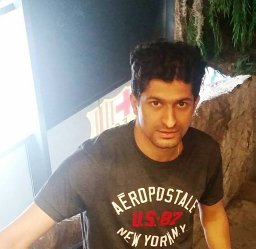
 Prashant Khanduri
· 6 previous affiliations
- Wayne State UniversitySince 2022
- Assistant Professor · Since 2022
- University of Minnesota2020–2022
- Postdoctoral Researcher · 2020–2022
- The Ohio State University2020–2022
- Postdoctoral Researcher · 2020–2022
- Syracuse University2014–2020
- Postdoc · 2019–2020
- Graduate Research Assistant · 2014–2019
- IMT Atlantique2017
- Visiting PHD Student · 2017
- Punjab Engineering College2009–2011
- Master of Engineering (M.E.), Electrical, Electronics and Communications Engineering · 2009–2011
Research Overview
Prashant Khanduri focuses on distributed machine learning, bilevel optimization, and robust statistical learning. His early work addressed sequential decision-making and decentralized non-convex optimization, eventually expanding into communication-efficient federated learning and single-loop momentum algorithms. More recently, his research investigates the theoretical foundations of constrained bilevel optimization, distributionally robust learning, and the security of large language models.
Research Trajectory
Khanduri’s early research was grounded in statistical signal processing and sequential decision-making. In 2019, he introduced Sequential Random Distortion Testing of Non-Stationary Processes, developing adaptive thresholding techniques for non-parametric sequential change detection.
Moving into large-scale machine learning, his focus shifted toward communication-efficient distributed optimization. He contributed significantly to the area of Fully Decentralized Peer-to-Peer Optimization with Distributed Stochastic Non-Convex Optimization: Momentum-Based Variance Reduction (2020), which introduced momentum-based single-loop algorithms (AD-STORM and D-STORM) that achieve linear speedups without requiring massive batch sizes. Building on this momentum-based variance reduction, he developed STEM: A Stochastic Two-Sided Momentum Algorithm Achieving Near-Optimal Sample and Communication Complexities for Federated Learning (2021), addressing the challenge of selecting optimal update directions and frequencies for both worker nodes and servers in non-convex federated environments. He further expanded on communication efficiency in Decentralized Learning for Overparameterized Problems: A Multi-Agent Kernel Approximation Approach (2022), proposing a framework where agents distributedly estimate kernel functions without directly exchanging local data or parameters.
Concurrently, Khanduri established a major research arc in bilevel optimization. He advanced the research direction of Single Loop Stochastic Bilevel Optimization through A Near-Optimal Algorithm for Stochastic Bilevel Optimization via Double-Momentum (2021). This work introduced the SUSTAIN algorithm, which utilizes a stochastic momentum-assisted gradient estimator to control errors in both upper and lower-level updates without relying on double-loop techniques. To synthesize the growing field, he authored a comprehensive review, An Introduction to Bi-level Optimization: Foundations and Applications in Signal Processing and Machine Learning (2023). He also tackled complex constraints in this domain, contributing to the broader area of Differentiating Through the Equilibrium of Nested Optimization Tasks with Linearly Constrained Bilevel Optimization: A Smoothed Implicit Gradient Approach (2023), which applied random linear perturbations to smooth non-differentiable lower-level objectives.
In 2023, his optimization work extended into distributionally robust learning (DRO). He designed FedDRO: Federated Compositional Optimization for Distributionally Robust Learning, a framework that efficiently solves compositional optimization problems in federated settings by sharing low-dimensional embeddings. He built upon these principles in Proximal Compositional Optimization for Distributionally Robust Learning, introducing Prox-DRO to achieve sample complexity comparable to standard optimization methods without requiring large batch computations.
Khanduri's algorithmic expertise has increasingly been applied to foundation models and generative AI. In computer vision, he contributed to the areas of Automated Prompting for Foundation Segmentation Models and Self-Prompting Mechanisms for Vision Foundation Models with Auto-Prompting SAM for Mobile Friendly 3D Medical Image Segmentation (2023). This work adapted Meta's Segment Anything Model for 3D multi-organ CT segmentation by generating automated prompts, eliminating the need for manual human inputs. In the domain of natural language processing, he collaborated on research in the direction of Automated Discovery of Adversarial Triggers in Generative Models, participating in the development of Hijacking Large Language Models via Adversarial In-Context Learning (2023), which demonstrated how adversarial suffixes can manipulate in-context learning to bypass safety filters.
His most recent publications continue to push the boundaries of these established themes. Returning to bilevel optimization, he developed A Doubly Stochastically Perturbed Algorithm for Linearly Constrained Bilevel Optimization (2025), which guarantees finite-time convergence for non-smooth objectives in adversarial training. In federated learning, he provided theoretical proofs for overparameterized models in Linear Convergence of Decentralized FedAvg for PL Objectives: The Interpolation Regime (2025). Finally, overseeing work on AI security, he guided the development of Automatic Calibration for Membership Inference Attack on Large Language Models (2025), introducing the ACMIA framework to reduce false positive rates when determining if specific text was part of an LLM's pre-training data.
Current Directions
Recent work investigates the theoretical limits of decentralized federated learning, particularly convergence guarantees for overparameterized models operating in the interpolation regime. Alongside distributed optimization, Khanduri's most recent research addresses the security and privacy of large language models, focusing on membership inference attacks and probability calibration to better detect pre-training data leakage. He also continues to advance the mathematical foundations of constrained bilevel optimization, developing novel perturbation methods to handle non-smooth objectives in adversarial training and complex machine learning pipelines.
Profile updated
Loading new papers…
Other researchers whose papers cluster into the same research directions — a proxy for overlapping technical interests and shared intellectual neighborhoods.
See something wrong? Report a mistake