

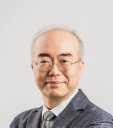
 PooGyeon Park
· 1 previous affiliation
- Full Professor · 1996–2030
Research Overview
PooGyeon Park focuses on control theory, the stability analysis of time-delay systems, and the optimization of deep state space models. His trajectory spans foundational work in robust control and Kalman filtering to recent advances in machine learning architecture efficiency. Currently, he investigates structured pruning and portable inference techniques for long-context sequence modeling.
Research Trajectory
The early phase of Park's research concentrated on foundational problems in control theory and filtering. In 1993, he investigated Lower bounds for the trace of the solution of the discrete algebraic Riccati equation, establishing mathematical constraints for optimal control formulations. This was followed by the development of New square-root algorithms for Kalman filtering in 1995, which provided numerically stable approaches for state estimation.
By the late 1990s, his attention shifted toward the stability analysis of systems affected by time delays, a theme that would define much of his subsequent output. He introduced A delay-dependent stability criterion for systems with uncertain time-invariant delays, offering less conservative bounds for robust control. Expanding into nonlinear domains, he formulated Stability criteria of sector- and slope-restricted Lur'e systems, and later addressed dynamic environments with Stability and robust stability for systems with a time-varying delay.
In the 2010s, Park advanced both signal processing and control methodologies. He contributed to the Mean-Square Deviation Analysis of Affine Projection Algorithm, refining the theoretical understanding of adaptive filters. Returning to time-delay systems, he proposed a Reciprocally convex approach to stability of systems with time-varying delays, a technique that significantly reduced conservatism in stability conditions. He also applied these rigorous mathematical frameworks to fuzzy logic control, developing Stabilization for Takagi-Sugeno fuzzy systems based on partitioning the range of fuzzy weights. Continuing to refine the mathematical tools used in stability analysis, he introduced Auxiliary function-based integral inequalities for quadratic functions and their applications to time-delay systems.
Moving into the 2020s, Park's work bridged classical control theory with complex, distributed, and learning-based systems. In robotics, he collaborated on An Improved Adaptive Sliding Mode Control Based on Time-Delay Control for Robot Manipulators, enhancing precision in mechanical control. He also extended his reciprocally convex techniques to neural architectures, establishing Relaxed Stability Criteria for Delayed Generalized Neural Networks via a Novel Reciprocally Convex Combination. His expertise in fuzzy control and robust optimization continued with the Structural Relaxation Approach to H∞ Control With Quadratic Fuzzy Lyapunov Function for Continuous-Time Takagi-Sugeno Fuzzy Systems. Concurrently, he addressed multi-agent coordination in Distributed Prescribed Performance Fault-Tolerant Control of Multi-UAVs With Input Delays via Dynamic Event-Triggered Observers, applying delay-aware control to autonomous drone fleets.
Most recently, Park has translated his deep expertise in state space formulations and $\mathcal{H}_{\infty}$ norms into the domain of deep learning, specifically targeting the efficiency of modern sequence models. He guided the development of Layer-Adaptive State Pruning for Deep State Space Models, introducing a structured pruning method that minimizes output energy loss to significantly reduce model states without retraining. Building on this intersection of control theory and machine learning, he contributed to Recovering Selectivity with LTI State Space Operators for Portable Long-Context Inference, which wraps standard Linear Time-Invariant models in lightweight gates to achieve high performance in long-context tasks using standard, hardware-portable tensor operations.
Current Directions
The most recent papers in the evidence indicate a strategic pivot toward the intersection of classical control theory and modern deep learning architectures. Specifically, Park investigates the efficiency and deployment of deep State Space Models (SSMs) for long-context sequence modeling. Recent work addresses the computational bottlenecks of these models by applying rigorous mathematical tools—such as $\mathcal{H}_{\infty}$ norms and energy normalization—to perform layer-adaptive state pruning. Furthermore, he is exploring hardware-portable inference techniques, demonstrating how standard Linear Time-Invariant (LTI) operators can be adapted with input-dependent gating to match the performance of specialized, hardware-bound sequence models. This direction highlights an ongoing effort to make advanced sequence modeling more computationally efficient and universally deployable across diverse hardware environments.
Profile updated
| Paper | Venue | Year |
|---|---|---|
| Layer-Adaptive State Pruning for Deep State Space ModelsGitHubmsgwak/ | NeurIPS | 2024 |
Loading new papers…
Other researchers whose papers cluster into the same research directions — a proxy for overlapping technical interests and shared intellectual neighborhoods.
See something wrong? Report a mistake