

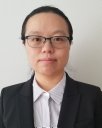
 Ping Wang
· 2 previous affiliations
- Stevens Institute of TechnologySince 2021
- Assistant Professor · Since 2021
- Virginia Tech2016–2021
- PhD student · 2016–2021
9 other authors named Ping Wang: Ping Wang (Peking University · 319 papers), Ping Wang (Wuhan University · 101 papers), Ping Wang (Mayun University · 91 papers), Ping Wang (Tianjin University · 7 papers), Ping Wang (University of Science and Technology of China · 4 papers), and 4 more
Research Overview
Ping Wang focuses on data mining and machine learning, with a primary specialization in healthcare analytics, clinical informatics, and natural language processing. Her work addresses the challenges of extracting actionable insights from unstructured and semi-structured data, particularly electronic health records (EHRs), clinical notes, and heterogeneous networks. Her research trajectory has evolved from fundamental predictive modeling and survival analysis toward complex information extraction tasks, including question answering, graph-based representation learning, and the application of large language models (LLMs) to specialized medical domains.
Research Trajectory
Wang’s early research, beginning around 2016, was grounded in the development of robust predictive models and statistical frameworks for high-dimensional data. During this period, she focused on regularization techniques to improve the generalization and interpretability of regression models. A key contribution was the development of consensus-based selection methods, which sought to harmonize diverse regularizers to capture specific data properties like temporal smoothness and structured sparsity. This foundational work in predictive modeling naturally extended into survival analysis, where she investigated the intersection of traditional statistical methods and modern machine learning. Her work in this area provided a structured taxonomy for handling censored time-to-event data, a critical requirement for applications in healthcare and reliability engineering.
By 2019, Wang’s focus shifted significantly toward natural language processing (NLP) within the clinical domain. Recognizing the difficulty medical experts face when retrieving information from complex, multi-relational electronic medical records, she began developing natural language interfaces for databases. This work involved the creation of specialized datasets and the design of "Translate-Edit" architectures capable of converting natural language questions into SQL queries. These models were specifically designed to handle the unique challenges of healthcare data, such as the frequent use of abbreviations, domain-specific terminology, and the inherent noise in clinical documentation.
In the early 2020s, Wang expanded her methodological repertoire to include graph mining and self-supervised learning. She addressed the limitations of static node embeddings in heterogeneous networks by developing frameworks that learn contextual representations. By utilizing local subgraphs and attention mechanisms, this work allowed for more dynamic and task-specific node representations, which significantly improved performance in link prediction tasks. Simultaneously, she advanced the field of clinical question answering by integrating knowledge base construction with machine reading comprehension. This allowed for reasoning across multiple clinical notes and patient records, moving beyond the analysis of isolated text blocks.
Most recently, Wang has integrated large language models and interactive auditing tools into her research program. Her current work explores the use of LLMs for medical symptom coding and mental health support, while also investigating the reliability of event detection models. This phase of her research is characterized by an emphasis on "task-as-context" prompting and the development of interactive systems to visualize and audit large-scale NLP datasets, ensuring that automated models are both accurate and robust.
Current Directions
Wang’s current research is increasingly focused on the intersection of generative AI and domain-specific data management. A significant portion of her current work, supported by an NSF CRII award, explores reasoning-augmented searching on NoSQL databases. This direction aims to bridge the gap between natural language querying and the flexible schema of non-relational data stores, particularly in the context of vaccine adverse event reporting and other large-scale biomedical databases.
Furthermore, she is investigating the application of LLMs to sensitive areas such as depression detection from narrative interviews and the analysis of student sentiment regarding mental health support. These projects emphasize the need for models that can capture nuanced emotional and clinical contexts. Wang also continues to refine information extraction techniques, such as automatic ICD coding and event detection, by employing contrastive learning and tree-based architectures to handle the hierarchical nature of medical taxonomies.
Representative Work
CRISP: Consensus Regularized Selection based Prediction (2016) In this work, Wang addresses the challenge of learning predictive models from high-dimensional data where different regularizers (e.g., least squares, hinge loss) capture different data-specific properties like correlation or temporal smoothness. She introduced a consensus-regularized framework that determines an optimal balance among diverse regularizers. This approach improves the generalization ability and interpretability of regression models, providing a more stable method for feature selection in complex datasets.
Machine Learning for Survival Analysis: A Survey (2017) This comprehensive survey bridges the gap between traditional statistical survival models and modern machine learning techniques. Wang provides a structured taxonomy for handling "censored" data, where the time-to-event is only partially observed. The work serves as a foundational resource for applying machine learning to healthcare outcomes and reliability engineering, clarifying how various algorithms can be adapted to account for the unique temporal constraints of survival data.
Text-to-SQL Generation for Question Answering on Electronic Medical Records (2020) Addressing the difficulty of searching electronic medical records (EMRs), Wang developed TREQS (a Translate-Edit model) and introduced MIMICSQL, a large-scale dataset for healthcare-domain Text-to-SQL tasks. The model utilizes a two-stage process: first generating a template-based SQL query and then editing it to match the specific constraints of the question. This approach effectively handles the abbreviations and typos common in clinical notes, making EMRs more accessible to medical professionals through natural language.
A Simple and Effective Self-Supervised Contrastive Learning Framework for Aspect Detection (2020) In this second-author paper, Wang contributed to the development of a self-supervised contrastive learning (SSCL) framework for unsupervised aspect detection. The research introduced a "Smooth Self-Attention" mechanism and knowledge distillation to produce more coherent and interpretable aspect categories from text. The framework outperformed existing weakly supervised models, demonstrating the power of contrastive learning in identifying latent themes within unstructured review data.
Self-Supervised Learning of Contextual Embeddings for Link Prediction in Heterogeneous Networks (2021) Wang developed SLiCE (Self-supervised LearnIng of Contextual Embeddings) to overcome the limitations of static node representations in heterogeneous graphs. Unlike traditional methods that use fixed vectors, SLiCE employs a "mask-and-predict" approach on local subgraphs to learn dynamic, context-aware embeddings. This allows the model to shift node representations based on the specific neighborhood and task, leading to superior performance in link prediction without the need for manually defined metapaths.
Attention-based Aspect Reasoning for Knowledge Base Question Answering on Clinical Notes (2021) This work addresses the limitations of machine reading comprehension in the clinical domain, which typically focuses on single blocks of text. Wang introduced the ClinicalKBQA dataset and a reasoning framework that constructs a knowledge base from clinical notes. By linking different patients and notes, the system can answer complex questions that require aggregating information across multiple documents. The model uses aspect-based reasoning to identify relevant clinical entities and their relationships, significantly advancing the capability of QA systems in healthcare.
Wang has also participated in collaborative efforts to improve the reliability of NLP systems. This includes work on the Event Detection Explorer, an interactive tool for auditing large-scale datasets, which identified significant label bias and annotation challenges in standard benchmarks. This line of inquiry aligns with Optimal Incentive Design for Crowdsourcing and Sharing Economies by examining how the involvement of non-experts in the annotation process affects the quality and "sensemaking" of complex event attributes. Additionally, her participation in the development of the TACO (Task as Context) framework demonstrates a shift toward unifying extraction and linking tasks in medical symptom coding using LLMs, improving accuracy for rare and complex clinical conditions.
Profile updated
| Paper | Venue | Year |
|---|---|---|
| Machine Learning for Survival Analysis: A SurveyGitHubwangpinggl/ | ACM Computing Surveys | 2019 |
Loading new papers…
Other researchers whose papers cluster into the same research directions — a proxy for overlapping technical interests and shared intellectual neighborhoods.
See something wrong? Report a mistake